
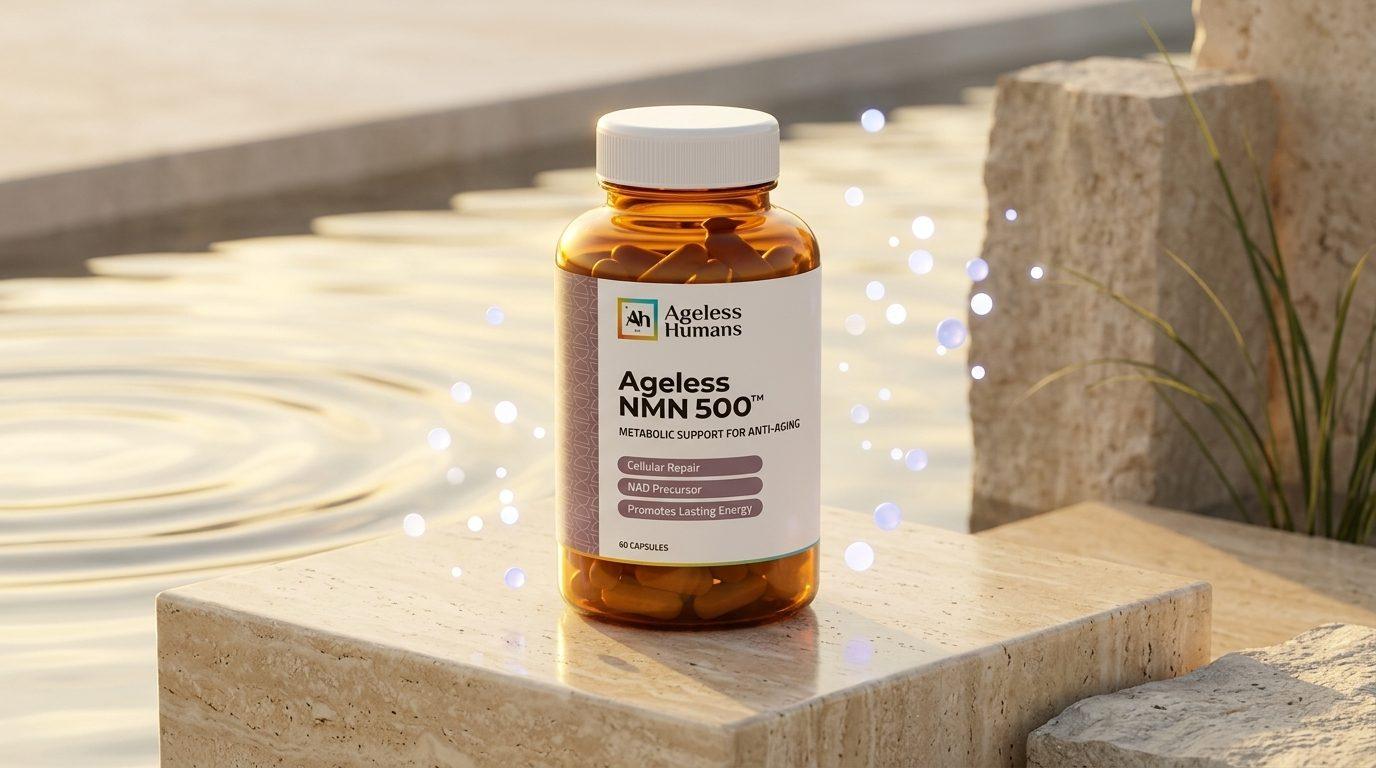
NMN and rapamycin are not two versions of the same thing. NMN (nicotinamide mononucleotide) is a dietary supplement and NAD+ precursor that supports cellular energy. Rapamycin (sirolimus) is a prescription drug that inhibits a growth-signaling pathway called mTOR, and it should only be used under a doctor's care. One is not a substitute for the other.
The Short Answer: Different Categories, Different Jobs
NMN is a nutrient-derived supplement. Rapamycin is a prescription medication. They are often named together because both come up in longevity discussions, but they work through different pathways, carry different risk profiles, and are regulated in completely different ways.
NMN gives your cells a building block they use to make NAD+, a coenzyme involved in energy metabolism and cellular maintenance. Rapamycin does something very different. It deliberately slows down mTOR, a signaling hub that tells cells when to grow and when to conserve and recycle.
It helps to think of it this way: NMN is about supply, giving cells raw material for a molecule they already make. Rapamycin is about signaling, changing how a major cellular control system behaves. That difference explains almost everything else in this article, from safety to who should be making the decision.
If you take one thing away, make it this: you can choose a supplement yourself. A prescription drug is a decision you make with a physician.
What NMN Is and What It Does
NMN is a molecule your body already makes. Cells convert it into NAD+, which supports energy production and normal cellular repair. Small amounts occur naturally in foods like broccoli, cabbage, avocado, and edamame. The amounts in food are far below what's in a supplement.
NAD+ is involved in hundreds of enzymatic reactions. It helps turn the food you eat into usable cellular energy. It also serves as fuel for sirtuins and PARPs, enzymes linked to DNA maintenance and cellular stress responses. Research suggests NAD+ levels tend to decline with age. That observation is the main reason NMN has drawn so much interest.
Human research on NMN is still early. Studies have looked at how well it's tolerated and whether it raises NAD+ levels in the blood. Other studies have looked at markers of metabolism and physical function. The findings are promising in places and modest in others, and larger, longer trials are still needed. For a deeper look at what the evidence does and doesn't support, read our full guide to NMN benefits.
Bottom line: NMN is studied for supporting NAD+ levels, cellular energy, and healthy aging at the cellular level. It is a dietary supplement, not a drug.
What Rapamycin Is and Why It's Prescription-Only
Rapamycin (generic name sirolimus) is an FDA-approved prescription drug that inhibits mTOR. Its approved uses are in transplant medicine and certain specialized conditions. Any longevity use is off-label. The compound was originally isolated from soil bacteria collected on Easter Island, known locally as Rapa Nui, which is where the name comes from.
mTOR (mechanistic target of rapamycin) works like a cell's growth switch. When nutrients and growth signals are plentiful, mTOR pushes cells to build proteins and grow. When mTOR is dialed down, cells shift toward conservation and autophagy, the process of breaking down and recycling worn-out components.
Rapamycin became famous in aging research because it extended lifespan in mice in studies run through the National Institute on Aging's Interventions Testing Program. That result is real and widely discussed. It is also animal data. Whether those effects carry over to healthy people is an open research question.
Rapamycin is prescription-only for good reason. At clinical doses it affects immune function. Its prescribing information lists known side effects, including mouth sores and changes in blood sugar and lipids. It can also interact with other medications. Some physicians prescribe it off-label on intermittent schedules for longevity-minded patients. That decision belongs to a licensed clinician who can monitor bloodwork and weigh your individual risks.
NMN vs Rapamycin: Side-by-Side
The clearest way to see the difference is to compare them on the questions that matter most.
- Category: NMN is a dietary supplement. Rapamycin is a prescription drug.
- How it works: NMN supplies a precursor for NAD+ production. Rapamycin inhibits mTOR signaling.
- Direction of effect: NMN supports a molecule that declines with age. Rapamycin dials down a growth pathway.
- Who decides: You can choose NMN on your own, though checking with your doctor is always smart. Rapamycin requires a prescription and medical oversight.
- Monitoring: Most people taking NMN at label directions don't need routine lab work for the supplement itself. Rapamycin typically involves physician-ordered bloodwork.
- Evidence base: NMN has early human studies on NAD+ levels and tolerability. Rapamycin has strong animal lifespan data and an established clinical safety record in its approved uses, but limited data in healthy aging adults.
- Regulation: NMN is regulated as a supplement, so quality depends heavily on the manufacturer. Rapamycin is regulated as a drug and dispensed by pharmacies.
Seeing them side by side makes one point obvious. These are not two brands of the same product. They are different tools in different categories.
Why People Compare Them Anyway
People compare NMN and rapamycin because both act on nutrient-sensing pathways that researchers link to the biology of aging. Scientists often describe a small group of these pathways: mTOR, AMPK, sirtuins, and insulin/IGF-1 signaling. Together they help cells decide whether to grow or conserve, and whether to spend energy or repair.
Rapamycin targets mTOR directly. NMN works upstream of sirtuins by supporting NAD+, the molecule sirtuins need to function. Because both pathways sit inside the same broad network, longevity podcasts and forums often discuss them together. Many listeners come away thinking they're interchangeable or competing. They aren't.
There's also a practical reason. Many people hear about rapamycin, realize it requires a prescription and carries real side effects, and wonder whether a supplement can do the same thing. The honest answer is no. NMN does not inhibit mTOR and is not a rapamycin alternative. It supports a different part of cellular health.
If you're building a broader routine, our guide to the best longevity supplements explains where NAD+ support fits alongside other well-studied ingredients.
What the Research Does and Doesn't Show
Neither NMN nor rapamycin has been proven to extend human lifespan. Anyone who tells you otherwise is overselling. Here is an honest summary of where things stand.
What research suggests about NMN:
- Supplementation can raise blood NAD+ levels in humans.
- It has been generally well tolerated in short-term human studies.
- Effects on metabolic and physical-function markers have been mixed and modest, and more research is needed.
What research suggests about rapamycin:
- It has extended lifespan in multiple animal models, including mice.
- Its mechanism, mTOR inhibition, is well characterized.
- Human studies in healthy aging adults are limited. Optimal schedules, if any, are not established, and its side-effect profile at clinical doses is well documented.
What we don't know: We don't have long-term human data showing that either one changes how long people live. Head-to-head comparisons don't exist. Research on combining them in humans is also lacking.
We think that honesty matters. NMN is a reasonable choice for someone who wants to support NAD+ and cellular energy as part of a healthy routine. It is not a shortcut, and it is not a substitute for medical care or for the fundamentals: sleep, movement, protein, and not smoking.
Questions to Ask Your Doctor
If you're curious about rapamycin, or about combining it with supplements, bring specific questions to a physician. A good doctor will appreciate it. Start with these:
1. Am I a reasonable candidate for off-label rapamycin, given my health history and current medications? 2. What bloodwork would you order before I start and while I'm taking it? 3. What side effects should I watch for, and when should I call you? 4. How could it affect my immune response, vaccines, wound healing, or upcoming procedures? 5. Are there interactions with my current prescriptions or supplements, including NMN? 6. What does the evidence in humans actually show, and what is still unknown? 7. How will we decide whether it's worth continuing?
If you already take NMN, tell your doctor. Bring the bottle or the label. Full transparency about everything you take, including supplements, helps your clinician give you safe, personalized guidance.
One firm rule: never start, stop, or adjust a prescription drug based on what you read online, including here. This article is for education only.
If You Choose NMN, Choose Quality
Because supplements aren't approved like drugs, the manufacturer's standards determine what's actually in the bottle. That makes sourcing and testing the most important factors when you choose NMN.
Look for these markers of quality:
- Third-party lab testing on every lot, with a Certificate of Analysis (COA) you can review.
- A known manufacturing facility, ideally FDA-registered, rather than an anonymous supply chain.
- Clear labeling of the NMN amount per serving, with no proprietary blends that hide the dose.
- A real guarantee that shows the brand stands behind its product.
At Ageless Humans, every product is made in our own FDA-registered facility in Carlsbad, California. Every lot is third-party tested with a COA, and every order is backed by a 60-day money-back guarantee. Take any supplement according to its label directions, and talk with your healthcare provider if you have questions about your situation.
Frequently asked questions
Is NMN a natural alternative to rapamycin?+
No. NMN is a dietary supplement that supports NAD+ levels and cellular energy. Rapamycin is a prescription drug that inhibits the mTOR pathway. They work through different mechanisms, so NMN is not a substitute for rapamycin or any other prescription medication.
Can you take NMN and rapamycin together?+
There's no established human research on combining them. Rapamycin is a prescription drug that requires medical supervision, so ask the prescribing physician before adding NMN or any other supplement. Tell your doctor about everything you take so they can check for interactions.
What is the main difference between NMN and rapamycin?+
NMN is a precursor your cells use to make NAD+, a coenzyme involved in energy metabolism and cellular maintenance. Rapamycin, also called sirolimus, inhibits mTOR, a signaling hub that controls cell growth and autophagy. NMN is sold as a supplement, while rapamycin requires a prescription.
Does rapamycin extend lifespan in humans?+
That hasn't been shown. Rapamycin has extended lifespan in animal studies, including mice in the National Institute on Aging's Interventions Testing Program. Long-term human data in healthy adults is limited, and any longevity use is off-label and should be supervised by a physician.
Do I need a prescription for NMN?+
No. NMN is sold as a dietary supplement and doesn't require a prescription. It's still smart to check with your healthcare provider, especially if you take medications. Choose a brand that third-party tests every lot and provides a Certificate of Analysis.
Why do people talk about NMN and rapamycin together?+
Both relate to nutrient-sensing pathways that researchers study in the biology of aging. NMN supports NAD+, which sirtuins depend on, and rapamycin targets mTOR. They appear in the same longevity conversations, but they belong to different categories and are not interchangeable.