
Caffeine is a well-studied stimulant that increases alertness by blocking adenosine, the molecule that builds up and makes you feel tired. Semax is a synthetic peptide developed in Russia and studied for its effects on brain signaling, but its human evidence is far thinner, and it is not an FDA-approved drug or a dietary supplement in the U.S. In short, caffeine is the proven, predictable choice for short-term alertness, while Semax remains an early-stage research compound.
The Short Answer: Proven Stimulant vs. Experimental Peptide
Caffeine wins on evidence, access, and predictability. Semax is interesting, but its human data is limited. Researchers have studied caffeine in thousands of trials for decades. Its effects on alertness, reaction time, and attention when you are tired are some of the most consistently reproduced findings in nutrition science.
Semax sits in a different category. It is a lab-made peptide based on a fragment of a natural hormone, and most of the published research comes from Russian institutions, animal models, and small clinical studies. Independent Western replication is sparse. That does not mean Semax does nothing. It means we cannot speak about it with the same confidence.
If you want a quick decision rule: use caffeine when you need alertness you can count on, and treat Semax as a research topic, not a daily tool. The rest of this guide explains why, so you can make the call yourself.
What Each Compound Actually Is
Caffeine is a naturally occurring plant compound. Semax is a synthetic peptide built from part of a human hormone.
Caffeine is found in coffee beans, tea leaves, cacao, guarana, and yerba mate. It is the most widely consumed psychoactive substance in the world. It is legal, inexpensive, regulated in foods and beverages, and listed in many dietary supplements.
Semax is a seven-amino-acid peptide. Its sequence is based on a fragment of ACTH (adrenocorticotropic hormone), with a short added chain that researchers designed to make it more stable. The modified fragment is not meant to act like ACTH in the hormone system. Instead, it has been studied for its activity in the brain. Semax was developed in Russia, where it is used in clinical medicine, and it is usually given as a nasal spray.
In the United States, Semax is not FDA-approved and not a legal dietary supplement ingredient. It is usually sold online as a "research chemical," which means purity, dose accuracy, and sterility are not guaranteed. For a deeper look at what has been studied, see our breakdown of Semax benefits and the research behind them.
How They Work: Blocking Fatigue vs. Signaling Support
Caffeine masks tiredness. Semax has been studied for influencing the brain's own signaling and growth factors. These are fundamentally different approaches.
Caffeine's mechanism is well mapped. Through the day, adenosine accumulates in the brain and binds to receptors that promote drowsiness. Caffeine has a similar shape and occupies those receptors without activating them. Less adenosine signaling means you feel more awake. Caffeine also increases the release of dopamine and norepinephrine indirectly, which adds to its alert, motivated feeling.
Semax's mechanism is less settled. Animal and cell research suggests it may influence:
- BDNF (brain-derived neurotrophic factor), a protein involved in how neurons grow and adapt
- Dopamine and serotonin systems, based on rodent studies
- Gene expression related to immune and vascular activity in brain tissue, again mostly in animal models
The practical difference: caffeine does not give you new energy. It hides the signal that you are tired. Semax is being investigated for supporting the underlying systems involved in focus and brain adaptability, but how much of that carries over to healthy humans remains an open question.
Onset and Duration: What to Expect and When
Caffeine reaches its peak effect in roughly 30 to 60 minutes and lasts several hours. Semax's onset is described as fast because it is taken through the nose, but its human timing data is limited.
Caffeine profile:
- Onset: Many people notice it within 15 to 45 minutes. Blood levels typically peak within about an hour.
- Half-life: Usually cited as roughly 3 to 7 hours in healthy adults, with wide individual variation. Genetics, pregnancy, smoking, and some medications all change how fast you clear it.
- Practical tail: Because of that half-life, a mid-afternoon coffee can still be active at bedtime.
Semax profile:
- Route: Taken intranasally, where it can be absorbed through the nasal lining and quickly reach the brain.
- Half-life: The peptide itself breaks down quickly in the blood. Researchers have reported that some of its downstream effects, such as changes in gene expression, may last longer than the peptide stays in circulation.
- Honest caveat: There are no large, well-controlled human studies that clearly map how long effects last in healthy adults. Most user reports online are anecdotal and cannot be verified.
If predictability matters to you, for example timing focus for a meeting or a workout, caffeine's profile is much easier to plan around.
Evidence Labels: An Honest Scorecard
Caffeine earns a strong evidence label for alertness and attention. Semax earns an early or limited label for nearly everything. Here is how we would grade them:
| Question | Caffeine | Semax |
|---|---|---|
| Alertness when tired | Strong: consistently replicated in human trials | Limited: small studies, mostly non-Western |
| Reaction time and attention | Strong | Early: suggestive, not conclusive |
| Mood and motivation | Moderate: short-term lift is common | Early: mostly animal data |
| Brain adaptability (BDNF etc.) | Not its main role | Preclinical: promising in animals, unproven in healthy humans |
| Long-term safety data | Extensive | Limited outside Russian clinical use |
| Regulatory status (U.S.) | Legal food and supplement ingredient | Not approved, sold as research chemical |
The key takeaway: absence of strong evidence is not proof that Semax fails. It means the claims you see online usually go beyond what the research supports. Be skeptical of anyone describing Semax as a proven focus upgrade over caffeine.
Downsides and Trade-Offs of Each
Caffeine's downsides are well known and manageable. Semax's biggest risk is the unknown: unregulated sourcing and thin safety data.
Caffeine trade-offs:
- Tolerance: Regular use dulls the effect, so the same cup does less over time.
- Sleep disruption: Even when you fall asleep, late caffeine can reduce deep sleep quality.
- Jitters and crash: Larger amounts can bring restlessness, a racing heart, and a slump as it wears off.
- Withdrawal: Skipping your usual intake can lead to headache, fatigue, and irritability for a few days.
Semax trade-offs:
- Product quality: Research-chemical peptides are not made to supplement or pharmaceutical standards. What is in the vial may not match the label.
- Limited safety picture: Reported side effects in studies appear mild, but the data set is small and not focused on long-term use by healthy people.
- Legal and sport considerations: It is not approved in the U.S., and athletes should check their governing body's rules before using any unapproved peptide.
Anyone with a health condition, taking medication, or who is pregnant or nursing should talk to a qualified healthcare provider before using either one.
How to Choose: A Practical Decision Guide
Most people should start with caffeine habits, then consider evidence-backed supplements, before experimenting with unapproved peptides. Use these scenarios as a guide:
- You need reliable alertness for a deadline or early shift: Caffeine. Its timing is predictable, and the evidence is strong.
- You are sensitive to caffeine or it wrecks your sleep: Lower your dose, move it earlier in the day, or look into caffeine-free options designed to support cellular energy and focus.
- You are curious about neuropeptides: Read the research first. Our comparison of Selank vs. Semax explains how the two Russian peptides differ. Then weigh the sourcing and legal issues before acting.
- You want sustained daily energy, not a spike: Think foundations first. Sleep, hydration, light exposure, and movement matter more than any compound.
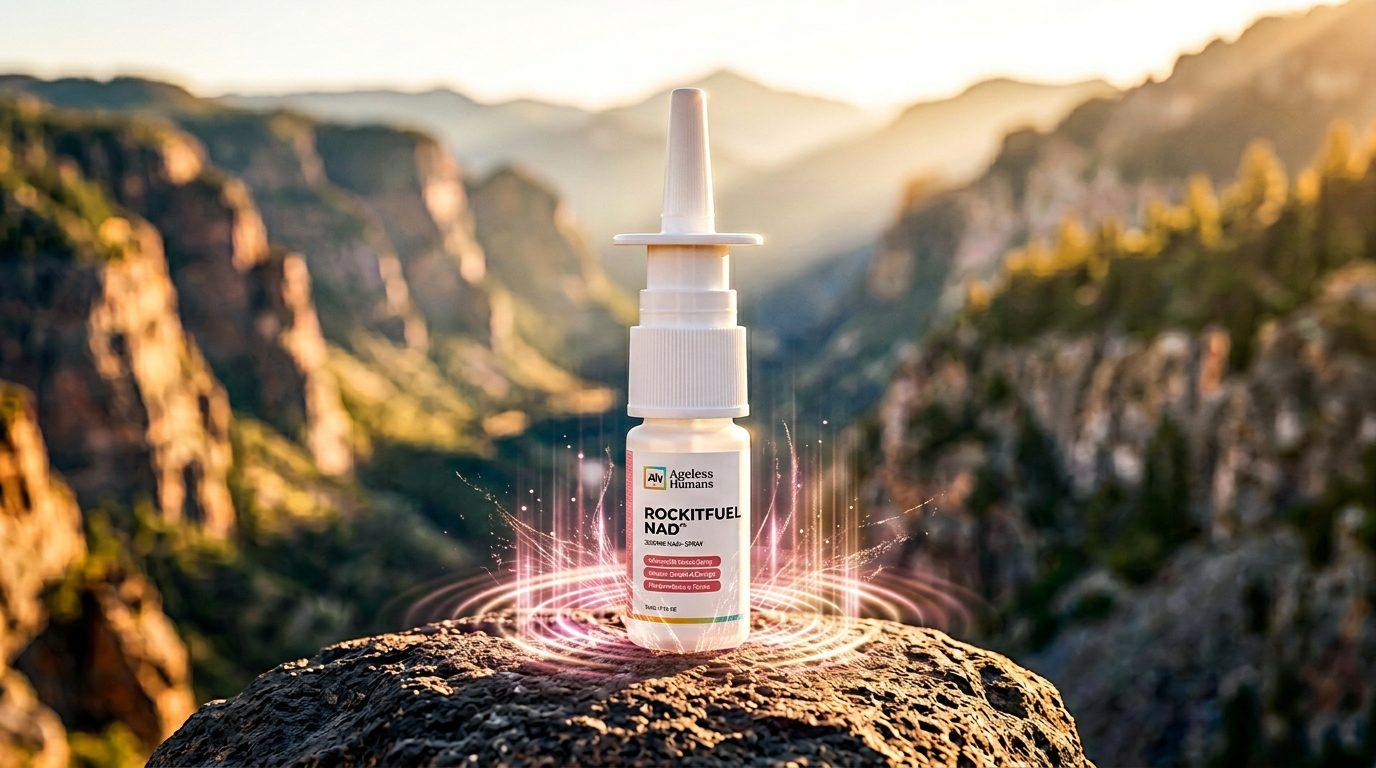
There is also a middle ground. Some people want support for the cellular energy systems behind focus, not a stimulant buzz. NAD+ is a coenzyme involved in how cells make energy, and levels are understood to decline with age. Our RockitFuel with Focus NAD+ Nasal Spray uses the same convenient nasal route that makes Semax appealing, but in a properly manufactured, lot-tested format.
Where Mitochondria Fit Into the Focus Conversation
Your brain runs on mitochondrial energy, so supporting that system is a different strategy from either blocking fatigue or tweaking signaling. The brain makes up a small share of body weight but uses a large share of its energy. When cellular energy production is running well, mental stamina tends to follow.
That is why compounds studied for mitochondrial function show up in longevity conversations. Methylene blue, for example, has been studied for its role in the mitochondrial electron transport chain, the process cells use to produce ATP. Our Methylene Blue Capsules are formulated to support mitochondrial function and cellular energy. Methylene blue can interact with certain medications, especially some antidepressants, so check with your healthcare provider first and follow label directions.
The bigger point: caffeine and Semax are not your only two options. Whatever you choose, quality and transparency matter. Every Ageless Humans product is made in our FDA-registered facility in Carlsbad, California, every lot is third-party lab tested with a COA, and each one comes with a 60-day money-back guarantee.
Frequently asked questions
Is Semax stronger than caffeine?+
There is no good evidence that Semax is stronger than caffeine for focus or alertness in healthy adults. Caffeine's effects on alertness and reaction time are supported by many well-controlled human studies. Semax works through different pathways and has mostly been studied in animals and small clinical trials, largely in Russia. "Stronger" claims online are usually anecdotal.
Can you take Semax and caffeine together?+
No published research has carefully studied combining Semax and caffeine in healthy people, so their combined effects and safety are not well understood. Semax is also not FDA-approved and is usually sold as an unregulated research chemical. Anyone considering combining stimulants or unapproved compounds should speak with a qualified healthcare provider first.
How long does caffeine last compared to Semax?+
Caffeine typically peaks within about an hour and has a half-life often cited as roughly 3 to 7 hours, so its effects can last well into the evening. Semax is broken down in the blood within a short time, though researchers have reported some downstream effects that may outlast the peptide itself. Reliable human data on how long Semax's effects last is limited.
Is Semax legal in the United States?+
Semax is not approved by the FDA as a drug, and it is not a legal dietary supplement ingredient in the United States. It is generally sold online as a research chemical labeled "not for human consumption." That means purity, dose, and sterility are not verified to pharmaceutical or supplement standards.
What is a good alternative to caffeine for focus?+
Many people start by adjusting caffeine timing and dose and by improving sleep, hydration, and daily light exposure. Others look at supplements studied for supporting cellular energy, such as NAD+ or methylene blue, which work on energy production rather than blocking fatigue signals. Talk with your healthcare provider before starting any new supplement, especially if you take medication.
Why is Semax taken as a nasal spray?+
Semax is a peptide, and peptides are largely broken down in the digestive tract when swallowed. A nasal spray lets it be absorbed through the nasal lining, which researchers believe offers a more direct route to the brain. That is also why it is usually described as fast-acting compared with oral compounds.