
Cerebrolysin is a prescription peptide preparation made from purified pig brain proteins. It is given by injection or IV infusion in some countries and has been studied mainly for recovery after stroke, traumatic brain injury, and age-related cognitive decline. Research suggests it has neurotrophic-like activity, but clinical results are mixed, and it is not FDA-approved in the United States.
What Is Cerebrolysin?
Cerebrolysin is a mixture of small peptides and free amino acids taken from purified pig (porcine) brain tissue. It is not one molecule. Manufacturers use a controlled enzyme process to break brain proteins into low-molecular-weight fragments small enough to be biologically active.
An Austrian pharmaceutical company developed it, and it has been used clinically for decades. It is registered as a prescription medicine in a number of countries across Europe, Asia, and the former Soviet Union. It is not approved by the FDA for any use in the United States.
In approved markets, cerebrolysin is given by intramuscular injection or intravenous infusion under medical supervision. No legitimate oral or nasal version exists. Products sold online in those forms do not match the studied preparation.
If you're new to this category, our primer on what peptides are explains how short amino acid chains act as signaling molecules. For a quick reference profile, see the cerebrolysin peptide page.
How Is Cerebrolysin Thought to Work?
Researchers believe cerebrolysin acts like the brain's own growth-factor signals. Its peptide fragments may mimic neurotrophic factors that help neurons survive, connect, and repair. Because it is a mixture, it probably works through several pathways at once rather than one target.
Mechanisms proposed in laboratory and animal research include:
- Neurotrophic-like activity: Some fragments appear to behave like brain-derived neurotrophic factor (BDNF), nerve growth factor (NGF), and ciliary neurotrophic factor (CNTF). These proteins support neuron survival and growth.
- Neuroplasticity: Studies have looked at its effects on forming new connections between neurons and on new neuron development in certain brain regions.
- Neuroprotection: Preclinical work suggests it may help neurons withstand stressors such as excitotoxicity, oxidative stress, and inflammatory signaling.
- Cellular cleanup and structure: Some research has explored its effects on protein handling and the stability of neuron structures.
These mechanisms come mostly from cell cultures and animal models. They explain why researchers became interested. They do not prove the same effects happen in people at clinical doses. That gap matters when you read benefit claims online.
What Has Research Studied Cerebrolysin For?
Cerebrolysin has been studied mainly in neurological recovery settings: after stroke, after traumatic brain injury, and in age-related cognitive decline. Almost all of this research takes place in hospitals or under prescription, using injections or infusions.
Stroke recovery. This is the largest body of research. Trials have examined whether cerebrolysin, added to standard care and rehabilitation, is associated with better motor function and daily-living outcomes in the weeks and months after an ischemic stroke.
Traumatic brain injury (TBI). Researchers have studied it in people recovering from moderate to severe head injuries, looking at cognitive and functional recovery scores.
Cognitive decline and dementia. Several trials have explored cerebrolysin in people with Alzheimer's-type and vascular cognitive impairment. They measured changes in cognition and overall clinical impression over treatment cycles.
Other areas. Smaller or earlier-stage studies have looked at conditions such as cerebral palsy in children, spinal cord injury, and recovery after brain surgery. These areas have less data and should be treated as exploratory.
What Does the Evidence Actually Show?
The honest answer: the evidence is mixed. Some trials and meta-analyses report modest functional improvements. Independent systematic reviews have often concluded that the overall data are not strong enough to confirm a clear, consistent benefit.
Several factors make the research hard to interpret:
- Small and varied trials. Many studies enrolled modest numbers of patients and used different doses, timing, and outcome measures. That makes results hard to pool.
- Industry involvement. A meaningful share of trials were funded or run with manufacturer support. That does not invalidate them, but independent replication matters more as a result.
- Conflicting reviews. Some meta-analyses report favorable trends on specific recovery scales. Others, including independent reviews of stroke data, did not find convincing improvement in major outcomes and called for better-designed trials.
- Outcome selection. Benefits sometimes appear on secondary measures or in subgroups rather than on the main endpoint a trial was designed to test.
The fair summary is this: cerebrolysin is a biologically interesting compound with a plausible mechanism and a long clinical history in some countries, but its benefits in people remain uncertain and debated. Anyone who calls it a proven brain enhancer is going past the data.
Is Cerebrolysin Safe and Legal?
Cerebrolysin is a prescription drug in the countries where it is approved. It is not approved in the U.S., and it should only be used under a physician's care. Clinical trials have generally described it as reasonably well tolerated in supervised hospital settings. It is still an injectable biologic with real risks.
Key safety points:
- Route matters. Injections and IV infusions carry risks of infection, injection-site reactions, and hypersensitivity, especially outside sterile clinical settings.
- Listed contraindications. Labeling in approved markets has listed concerns such as known hypersensitivity, epilepsy, and severe kidney impairment.
- Animal origin. Because it comes from pig brain tissue, people with allergies, dietary restrictions, or concerns about animal-derived biologics should know where it comes from.
- No healthy-user data. Most studies involve people with significant neurological injury. There is little research on healthy adults using it for performance or longevity.
In the U.S., cerebrolysin sold online usually appears as a "research chemical" labeled not for human use. These products are not regulated for purity, sterility, or identity. That is a serious concern for anything meant to be injected.
How Does Cerebrolysin Compare to Other Peptides and Bioregulators?
Cerebrolysin is a complex, animal-derived peptide mixture, not a single defined peptide. That sets it apart from most compounds people mean when they talk about "peptides."
- Single-sequence peptides (such as BPC-157) have one known amino acid chain. You can name, measure, and study them precisely.
- Bioregulators are short peptides, often two to four amino acids long, that researchers have studied for tissue-specific signaling. Some come from animal organs and others are synthesized. Our guide to what bioregulators are explains this category in detail.
- Cerebrolysin sits closer to an organ-extract biologic. It contains many fragments working together, which may help explain its broad proposed activity and why its effects are hard to isolate.
Related brain-derived polypeptide preparations, such as cortexin, are used in some Eastern European markets. They share the same core issues: interesting mechanisms, regional clinical use, and limited high-quality independent evidence.
The practical point: "peptide" is a broad label. A compound's form, source, route, and evidence base matter far more than the category it falls into.
Red Flags When Shopping for "Cerebrolysin" Online
If you see cerebrolysin sold as an oral capsule, nasal spray, or over-the-counter supplement, treat it as a red flag. The studied product is an injectable prescription medicine made under pharmaceutical controls.
Watch for:
- Oral or nasal "cerebrolysin." No clinical research supports these forms as equivalent to the injectable preparation.
- "For research use only" labels on products clearly marketed to consumers.
- Missing or vague lab documentation. Look for a certificate of analysis (COA) from an independent lab that matches the specific lot.
- Disease or cure claims. Any seller promising to fix memory loss or reverse brain aging is making claims the evidence does not support.
For anything you put in your body, the basic standard is the same: a known manufacturer, a defined formula, and independent testing for each lot.
Supporting Your Brain and Body Without Cerebrolysin
For most healthy adults, the best-supported ways to maintain cognitive and physical resilience are sleep, exercise, nutrition, and stress management, not prescription neurological drugs. Aerobic exercise and resistance training are among the most studied lifestyle factors associated with healthy brain aging. Consistent, high-quality sleep supports the brain's overnight maintenance processes.
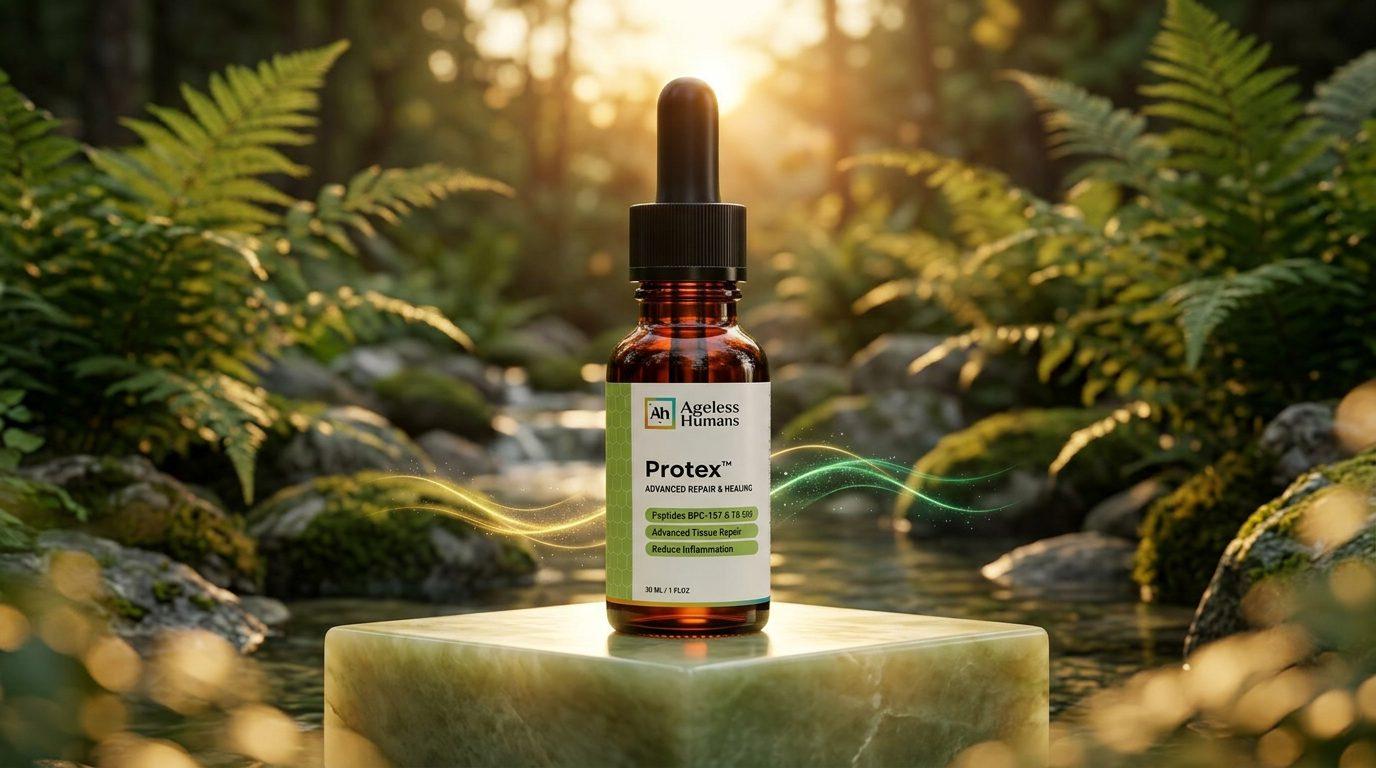
Some people add targeted supplements on top of those foundations. If peptides interest you for recovery, an oral formula such as Protex BPC-157 & TB-500 is designed to support recovery from training and daily wear. It is a different compound with a different purpose from cerebrolysin. If you want a structured routine rather than single products, the Metamorphic Anti-Aging Protocol organizes daily longevity support into one plan.
Ageless Humans makes every product in its own FDA-registered facility in Carlsbad, California. Every lot is third-party lab tested with a COA, and every purchase is backed by a 60-day money-back guarantee. Talk with your healthcare provider before starting any new supplement, and follow label directions.
Frequently asked questions
What is cerebrolysin used for?+
Cerebrolysin is a prescription peptide preparation used in some countries outside the U.S., mainly in neurological recovery settings. Research has studied it in people recovering from stroke and traumatic brain injury, and in age-related cognitive decline. It is not FDA-approved, and clinical evidence for its benefits remains mixed.
How does cerebrolysin work?+
Cerebrolysin is a mixture of small peptides and amino acids from purified pig brain proteins. Laboratory and animal research suggests its fragments may mimic natural neurotrophic factors such as BDNF and NGF, which support neuron survival, connection, and repair. Whether these effects translate to meaningful benefits in people is still being studied.
Is cerebrolysin legal in the United States?+
Cerebrolysin is not approved by the FDA for any medical use in the United States. It is a registered prescription medicine in a number of other countries. Products sold online in the U.S. are usually labeled as research chemicals, which are not regulated for purity, sterility, or identity.
Does cerebrolysin really work?+
The evidence is mixed. Some trials and meta-analyses report modest improvements in recovery scores, while independent systematic reviews have found the overall data insufficient to confirm a consistent benefit. Researchers generally agree that larger, independent, well-designed trials are still needed.
Can you take cerebrolysin orally?+
No studied oral form of cerebrolysin exists. In clinical use it is given by intramuscular injection or intravenous infusion under medical supervision. Oral or nasal products marketed as cerebrolysin are not equivalent to the preparation used in research.
Is cerebrolysin a peptide or a bioregulator?+
Cerebrolysin is a complex peptide mixture derived from animal brain tissue, not a single defined peptide. It resembles an organ-extract biologic more than single-sequence peptides like BPC-157 or the short peptides usually called bioregulators. That complexity is one reason its effects are hard to isolate and study.