
Chonluten is a synthetic three-amino-acid peptide (Glu-Asp-Gly) developed by Russian bioregulator researchers and studied mainly for its potential to support the cells lining the airways and lungs. Its proposed benefits come from early research, mostly cell, tissue, and animal studies, that looked at how it may influence gene expression and normal cellular repair in respiratory tissue. The evidence is interesting but early, and large independent human trials are lacking.
What Is Chonluten?
Chonluten is a tripeptide, a chain of just three amino acids: glutamic acid, aspartic acid, and glycine (often written Glu-Asp-Gly or EDG). It belongs to a family of compounds called short peptide bioregulators. These were developed over several decades by Professor Vladimir Khavinson and colleagues at the St. Petersburg Institute of Bioregulation and Gerontology in Russia.
The bioregulator idea is simple to state. Certain very short peptides are thought to act as tissue-specific signals that help cells keep their normal function as they age. Each bioregulator is linked to a particular organ or tissue. Chonluten is the one researchers associate with bronchial and lung tissue.
If you're new to this category, start with our primer on what peptides are. Then read our deeper guide to what bioregulators are. For a quick reference card on this compound, see our Chonluten peptide overview.
What Has Chonluten Been Studied For?
Chonluten has been studied mainly for its potential role in supporting healthy respiratory tissue, specifically the cells lining the bronchi and lungs. Most of the published work comes from the same Russian research network that developed it.
The main areas of interest include:
- Bronchial epithelial cell function. Researchers have looked at whether Chonluten influences the normal activity and renewal of the cells lining the airways.
- Gene expression in respiratory tissue. Several studies explore whether the peptide changes the activity of genes involved in cell maintenance and stress response.
- Inflammatory signaling. Some research has looked at markers of the body's inflammatory response in tissue and animal models. Researchers frame this as support for normal, balanced signaling.
- Age-related tissue changes. Chonluten sits within a broader gerontology program, so much of the interest centers on how respiratory tissue changes over time.
None of this establishes a clinical benefit in people. These are research directions, not proven outcomes. Any source that promises Chonluten will fix a lung problem is going well beyond the evidence.
How Is Chonluten Thought to Work?
The leading hypothesis is that Chonluten, like other short bioregulator peptides, may enter cells and interact with DNA or the proteins packaging it, nudging the expression of genes involved in normal tissue function. This comes from the Khavinson group's model of how ultrashort peptides behave.
The reasoning goes like this. A three-amino-acid peptide is small enough that it may cross cell membranes and reach the nucleus. Once there, it may bind to specific DNA sequences or to histone proteins. That could influence which genes are switched on or off. Because each bioregulator has its own sequence, each is proposed to act preferentially on certain tissues.
A few points matter here:
- It is a hypothesis, not settled science. The model has been described and studied mostly by the group that proposed it. Broad independent confirmation is limited.
- Oral activity is debated. Short peptides can be broken down by digestive enzymes. Some research suggests very small peptides may survive digestion better than larger ones, but how much intact Chonluten reaches target tissue after oral intake is not well established.
- Tissue specificity is proposed, not proven in humans. The idea that EDG acts mainly on respiratory tissue rests largely on cell and animal work.
The Honest Evidence State: What Research Shows and What It Doesn't
The bottom line: Chonluten has an intriguing but early evidence base, built mostly on lab and animal research from one research tradition, with little independent, large-scale human data. That doesn't mean it does nothing. It means we don't yet know with confidence what it does in people.
What the research does offer:
- A defined, simple molecule with a known sequence
- Several decades of work within the bioregulator program
- Cell culture and animal studies exploring gene expression and respiratory tissue markers
- A coherent, testable mechanistic hypothesis
What the research does not yet offer:
- Large, randomized, placebo-controlled human trials on Chonluten alone
- Wide independent replication outside the originating research group
- Clear human data on absorption, distribution, or long-term safety
- Evidence that would let anyone responsibly claim a specific health outcome
When you read about "Chonluten benefits" online, check where the claims come from. Strong, specific promises usually trace back to vendor marketing, not published data. A fair summary is that Chonluten has been studied for respiratory tissue support, and research suggests mechanisms worth exploring further.
Chonluten vs. Other Peptide Bioregulators
Chonluten is one of a family of short bioregulator peptides, each proposed to target a different tissue. Its niche is the respiratory system. Seeing the family side by side helps put it in context.
Commonly discussed members of the Khavinson bioregulator family include:
- Epitalon (Ala-Glu-Asp-Gly): a tetrapeptide associated with pineal gland research and the most widely discussed bioregulator in longevity circles
- Vilon (Lys-Glu): a dipeptide associated with thymus and immune tissue research
- Pinealon (Glu-Asp-Arg): a tripeptide studied in the context of brain tissue
- Chonluten (Glu-Asp-Gly): a tripeptide associated with bronchial and lung tissue
Chonluten's sequence closely resembles part of Epitalon's. Researchers in this field point to that kind of overlap when they argue that very small sequence changes may shift which tissue a peptide favors. That is still a research question.
Chonluten is also different from the larger "recovery peptides" that get the most attention online, such as BPC-157 and TB-500. Those are longer sequences, studied in different contexts, and proposed to work through different pathways. They don't swap for each other.
Quality, Safety, and Regulatory Reality
If you encounter Chonluten for sale, know that the market is loosely regulated and quality varies widely. Purity, identity, and safety are your biggest concerns. Many listings are sold as "research chemicals" and are explicitly labeled not for human use, with little verification of what's in the vial or capsule.
Before considering any bioregulator, ask:
- Is there a certificate of analysis (COA) from an independent lab confirming identity and purity for that specific lot?
- Where is it manufactured, and under what quality standards?
- What is its legal status where you live? It varies by country and by how a product is marketed.
- Have you talked with a qualified healthcare professional? This matters most if you have a respiratory condition, take medication, or are pregnant or nursing.
Only follow label directions, and be skeptical of dosing "protocols" passed around in forums. Safety data in humans is limited. Chonluten should never stand in for medical care if you have breathing concerns.
Where Chonluten Fits in a Longevity Mindset
For most people, Chonluten is best seen as an interesting area of research, not a foundation of a longevity routine. The habits with the strongest evidence for long-term respiratory and whole-body vitality are still the basics: not smoking, regular aerobic movement, good sleep, clean indoor air, and a nutrient-dense diet.
If you're drawn to peptides because you want to support recovery and resilience as you age, it helps to separate two things. One is compounds under early investigation, like Chonluten. The other is products that are made, tested, and sold to a consistent standard. At Ageless Humans, everything we sell is made in our FDA-registered facility in Carlsbad, California, and every lot is third-party lab tested with a COA.
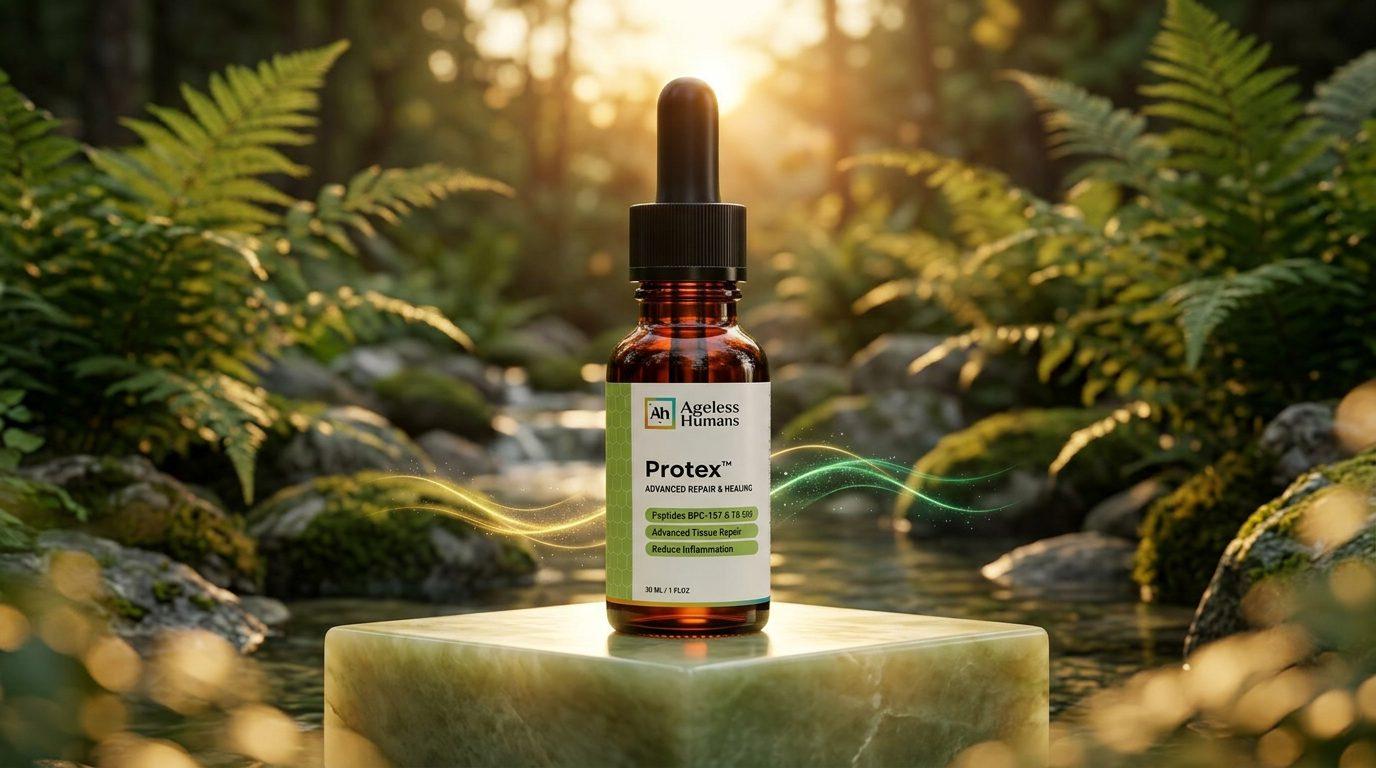
People interested in oral peptides often look at our ProTex BPC-157 and TB-500 oral peptide formula, which is designed to support recovery. It is a different compound from Chonluten and is not a respiratory bioregulator. Those who want a structured, whole-system approach may prefer the Metamorphic Anti-Aging Protocol, built to support energy and healthy aging habits together. Both come with our 60-day money-back guarantee.
Frequently asked questions
What is Chonluten?+
Chonluten is a synthetic tripeptide made of three amino acids: glutamic acid, aspartic acid, and glycine (Glu-Asp-Gly). It was developed by Russian bioregulator researchers led by Professor Vladimir Khavinson. It is classed as a short peptide bioregulator associated with bronchial and lung tissue research.
What are the claimed benefits of Chonluten?+
Chonluten has been studied mainly for its potential to support healthy respiratory tissue, including the normal function of cells lining the airways. Research suggests it may influence gene expression and inflammatory signaling in tissue and animal models. These are research directions, not proven benefits in people, and large independent human trials are lacking.
How does Chonluten work?+
The leading hypothesis is that Chonluten, like other ultrashort bioregulator peptides, may enter cells and interact with DNA or histone proteins to influence the expression of genes tied to normal tissue function. This model comes mainly from the research group that developed it. It has not been broadly confirmed by independent researchers.
Is there good human evidence for Chonluten?+
Not yet. Most Chonluten research consists of cell culture, tissue, and animal studies from a single research tradition. Large, randomized, placebo-controlled human trials and broad independent replication are missing. Claims of specific health outcomes therefore go beyond what the evidence supports.
Is Chonluten the same as Epitalon or BPC-157?+
No. Chonluten (Glu-Asp-Gly) and Epitalon (Ala-Glu-Asp-Gly) are both Khavinson bioregulators with overlapping sequences, but they are linked to different tissues: lungs for Chonluten, the pineal gland for Epitalon. BPC-157 is a much longer peptide studied in recovery contexts through different proposed pathways. None of these are interchangeable.
Does Ageless Humans sell Chonluten?+
No. Ageless Humans does not sell Chonluten, and this article is for education only. The company makes other products, including oral peptide and anti-aging formulas, in its FDA-registered facility in Carlsbad, California. Every lot is third-party lab tested with a COA.