
Emideltide is the official name for delta sleep-inducing peptide (DSIP), a 9-amino-acid neuropeptide first isolated in 1977. It has been studied for its possible role in deep (delta-wave) sleep, the stress response, pain perception, and hormone signaling. Decades later, the human evidence is still small, dated, and mixed, and no approved product or confirmed receptor exists. This guide covers what DSIP is, what it has been studied for, how it might work, and where the research falls short.
What Is Emideltide (DSIP)?
Emideltide is a short peptide made of nine amino acids: tryptophan, alanine, glycine, glycine, aspartic acid, alanine, serine, glycine, and glutamic acid (often written WAGGDASGE). "Emideltide" is its International Nonproprietary Name. "DSIP" (delta sleep-inducing peptide) is the name researchers gave it based on its earliest observed effect.
A peptide is a short chain of amino acids that often acts as a signaling molecule. For background, see our guide to what peptides are and how they work. DSIP is classed as a neuropeptide because most research has focused on its activity in the brain and nervous system.
Researchers have reported DSIP-like material in the brain, the pituitary and other glands, blood plasma, and some peripheral tissues. Two mysteries remain open. No dedicated gene encoding DSIP has been firmly identified, and no specific DSIP receptor has been confirmed. Those gaps shape almost every honest discussion of what it does.
For a quick reference profile, see our emideltide (DSIP) peptide page.
Where DSIP Came From: A 1970s Sleep Discovery
DSIP was discovered in 1977 by Swiss researchers studying sleep in rabbits. The team induced sleep by electrically stimulating part of the animals' brain (the thalamus). They then collected blood draining from the brain and transferred extracts to other rabbits.
The receiving animals showed more delta-wave activity, the slow brain waves that define deep, non-REM sleep. The researchers isolated the peptide behind the effect and named it for that result.
The discovery drew strong interest through the late 1970s and 1980s. Researchers hoped they had found a natural "sleep factor." Follow-up work turned out to be less tidy. Results varied between species, labs, and study designs, and interest faded. That history explains why much of the DSIP literature is decades old and why many questions were never settled.
What Has DSIP Been Studied For?
DSIP has been studied mainly for sleep regulation, plus several areas tied to stress and nervous-system balance. Most of this work is preclinical (animal or cell studies). Human studies are few and small. The main research areas are:
- Sleep architecture: whether DSIP influences the amount or quality of slow-wave (delta) sleep and overall sleep patterns. This is the original and most-studied area.
- Stress response: how DSIP may interact with the hypothalamic-pituitary-adrenal (HPA) axis, the body's main stress-signaling system. Some animal research suggests it may help moderate stress-related hormone activity.
- Pain perception: animal studies have explored interactions with the body's opioid signaling pathways and pain thresholds.
- Withdrawal states: a small number of older clinical reports looked at DSIP during opioid and alcohol withdrawal. These were limited, early-stage studies, not established findings.
- Hormone signaling: researchers have looked at DSIP's possible influence on pituitary hormones, including luteinizing hormone, growth hormone-related signaling, and corticotropin (ACTH).
- Cellular stress and antioxidant activity: some animal studies suggest DSIP may affect oxidative stress markers and mitochondrial function under stressful conditions.
The pattern across these areas is broad, intriguing, and thin. Many effects were seen in one model or one lab and never firmly replicated in humans.
How Might DSIP Work? Proposed Mechanisms
No one knows exactly how DSIP works, because no specific receptor for it has been confirmed. Researchers have proposed several mechanisms. Each rests mostly on animal or lab data.
- Neurotransmitter modulation: DSIP may influence GABA (the brain's main calming signal) and glutamate signaling, including NMDA receptor activity. That could help explain reported effects on sleep and excitability.
- Opioid system interaction: some studies suggest DSIP interacts with the body's own opioid pathways. This is the basis for research on pain and withdrawal.
- HPA axis and circadian influence: DSIP may affect stress-hormone release and timing signals. Some researchers describe it as a "modulator" that nudges systems back toward balance rather than an on-off sleep switch.
- Cellular protection: animal work points to possible effects on mitochondrial efficiency and antioxidant enzymes during stress.
Two practical details complicate the picture. DSIP appears to cross the blood-brain barrier, which is unusual for a peptide. It also has a short half-life in blood because enzymes break it down quickly. Some researchers suspect it circulates bound to carrier proteins, or that it acts through more stable related molecules. That could explain inconsistent results between studies.
The Honest Evidence State: What Research Does and Doesn't Show
The research suggests DSIP has biological activity worth studying, but it does not show reliable, proven benefits in people. Here is a fair summary.
What research does suggest:
- DSIP is biologically active in animal models, especially in sleep and stress-related systems.
- Some small, older human studies reported changes in sleep patterns or stress-related measures.
- It appears to have broad modulating effects rather than one narrow target.
What research does not show:
- Consistent, replicated effects on human sleep. Results across studies have been mixed, and some found little or no effect.
- A defined mechanism, receptor, or gene.
- Long-term safety data in humans.
- Large, modern, well-controlled clinical trials.
Much of the human data comes from the 1980s and 1990s, with small groups and methods that would not meet today's standards. Online claims that DSIP "guarantees deep sleep" or works as a reliable stress fix go well beyond the evidence. Treat confident marketing about DSIP with skepticism.
Safety, Legal Status, and Quality Concerns
Emideltide is not an FDA-approved drug and is not a legal dietary supplement ingredient in the United States. Where it is sold, it is usually labeled as a "research chemical" not intended for human use. That label exists because it has not been approved for people.
The main concerns are:
- Limited safety data: short-term human studies reported few serious problems, but they were small. Long-term effects are unknown.
- Product quality: research-chemical peptides are not held to supplement or pharmaceutical manufacturing standards. Purity, identity, sterility, and actual content can vary widely.
- Unknown interactions: because DSIP may affect stress hormones, opioid pathways, and brain signaling, interactions with medications are poorly understood.
If you are struggling with sleep, stress, or recovery, talk with a qualified healthcare provider before trying any unapproved compound. Sleep problems can have many causes that deserve a proper evaluation.
DSIP vs. Other Peptides and Bioregulators
DSIP is a signaling neuropeptide, which makes it different from the short bioregulator peptides often discussed in longevity circles. Bioregulators are very short peptides (often two to four amino acids) studied for tissue-specific gene signaling. Learn more in our guide to what bioregulators are.
DSIP also differs from recovery-focused peptides such as BPC-157 and TB-500. Those compounds are studied mainly for tissue and repair signaling, not sleep. They are not substitutes for DSIP, and DSIP is not a substitute for them. Each peptide has its own structure, research history, and evidence gaps.
The practical lesson is to judge every peptide on its own evidence. A strong result for one peptide tells you nothing about another, even when they are marketed together.
How to Evaluate DSIP Claims (and What to Focus on Instead)
Ask three questions about any DSIP claim: Is it from human research? Was it replicated? Is the product approved and verified? For DSIP, the honest answers are usually "rarely," "not consistently," and "no."
If your real goal is better rest, steadier energy, and recovery, the basics have the strongest support: a regular sleep schedule, morning light, a cool, dark bedroom, regular movement, and stress management. These habits shape the same systems DSIP research targets, and they are proven and free.
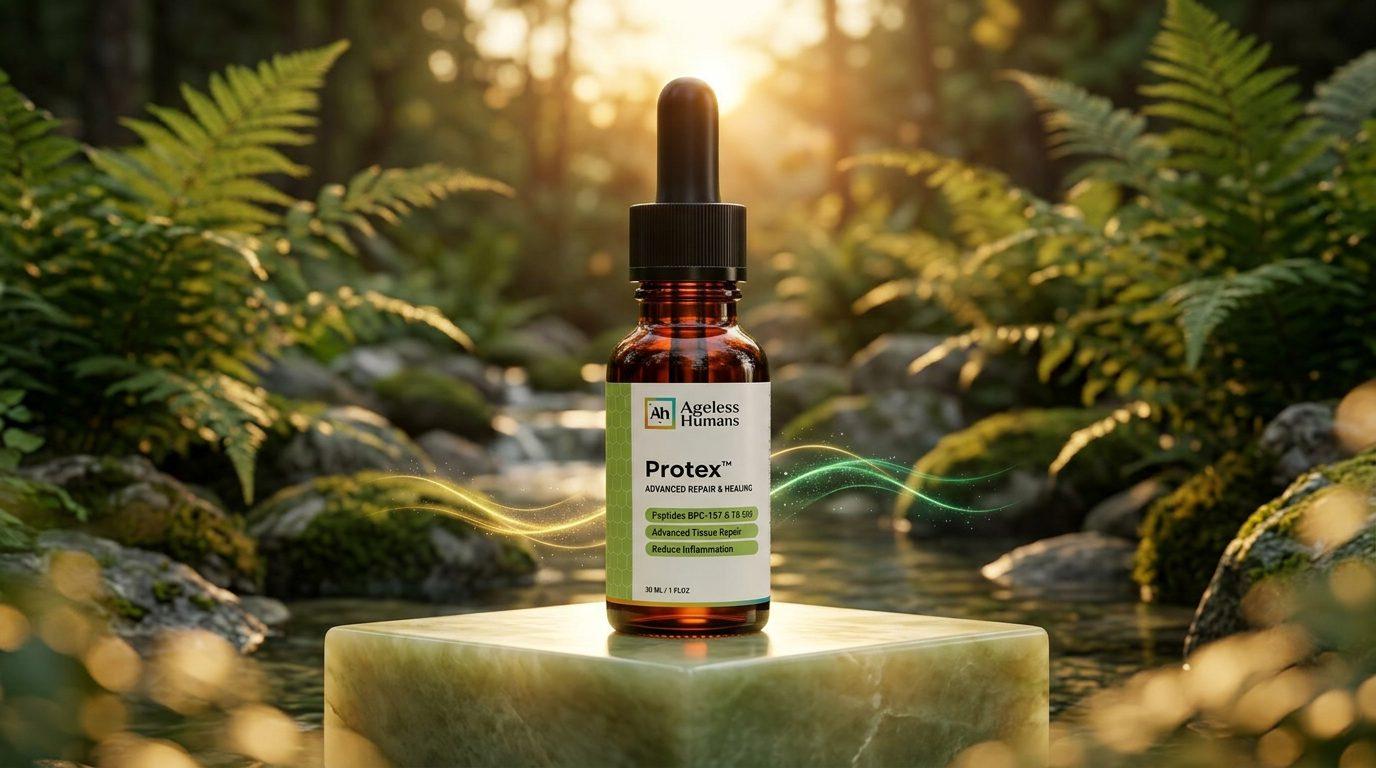
Some people also add legal supplements to a well-built routine. Options include an oral peptide formula like Protex BPC-157 and TB-500 Peptides (Oral), designed to support recovery, or a broader system like the Metamorphic Anti-Aging Protocol for whole-body longevity support. Neither is DSIP or a replacement for it. They are separate products built for different goals.
Frequently asked questions
What is emideltide?+
Emideltide is the official International Nonproprietary Name for delta sleep-inducing peptide (DSIP). It is a nine-amino-acid neuropeptide first isolated in 1977 from rabbits in induced sleep. It has been studied for its possible roles in deep sleep, the stress response, and hormone signaling.
Does DSIP actually help you sleep?+
The evidence is mixed. Early animal studies linked DSIP to increased delta-wave (deep) sleep. Small human studies, mostly from the 1980s and 1990s, produced inconsistent results, and some found little or no effect. No large, modern clinical trials have confirmed a reliable sleep benefit in people.
Is DSIP FDA approved?+
No. Emideltide (DSIP) is not an FDA-approved drug and is not a legal dietary supplement ingredient in the United States. Where it is sold, it is typically labeled as a research chemical not intended for human use, which means quality and purity are not guaranteed.
How is DSIP thought to work?+
No specific DSIP receptor has been confirmed, so its mechanism remains unclear. Research suggests it may modulate GABA and glutamate signaling, interact with the body's opioid pathways, and influence the stress-hormone (HPA) axis. Most of this evidence comes from animal and lab studies.
Can DSIP be taken orally?+
Most DSIP research used injected or intravenous forms, not oral ones. Peptides are generally broken down by digestive enzymes, and DSIP is also rapidly degraded in the blood. There is little reliable evidence on how well oral DSIP would be absorbed or whether it would have any effect.
Does Ageless Humans sell DSIP?+
No. Ageless Humans does not sell emideltide or DSIP. Content about DSIP in the Longevity Library is for education only. The brand makes separate oral peptide and longevity products that are not equivalent to DSIP.