
Melatonin is a hormone your pineal gland makes every night to signal darkness and time sleep. Epitalon is a lab-made four-amino-acid peptide modeled on a pineal extract and studied mainly for telomerase activity and cellular aging. They are not substitutes: melatonin's research centers on sleep onset and circadian timing, while epitalon's research is earlier-stage and centers on long-term aging biology.
The Short Answer: One Is a Nightly Signal, the Other Is a Research Peptide
Melatonin tells your body what time it is. Epitalon is studied for how cells age. They share an origin story, since both connect to the pineal gland, but they answer different questions.
Melatonin is a hormone you already make. Its levels rise in the evening, peak during the night, and drop with morning light. Supplemental melatonin is studied for how quickly you fall asleep and for shifting the timing of your internal clock.
Epitalon (also spelled epithalon) is a synthetic tetrapeptide, a chain of four amino acids: alanine, glutamic acid, aspartic acid, and glycine. Researchers designed it to mimic an active part of epithalamin, a peptide extract from animal pineal glands. Its research centers on telomerase activity, telomere length, and markers of biological aging, mostly in cell and animal studies.
If your question is "what helps me wind down tonight?", you are asking about melatonin. If your question is "what does the research say about pineal peptides and cellular aging?", you are asking about epitalon.
What Melatonin Is and What the Research Supports
Melatonin is a timing hormone, not a knockout pill. Your pineal gland releases it in response to darkness. It acts as a biological "lights out" signal that helps coordinate sleep, body temperature, and other daily rhythms.
Supplemental melatonin has a large body of human research behind it. The most consistent themes are:
- Sleep onset: Studies suggest melatonin can modestly shorten the time it takes to fall asleep for some people.
- Circadian timing: It has been studied for helping the body adjust to new schedules, such as travel across time zones or shifted work hours.
- Age-related change: Natural melatonin output tends to decline with age in many people, which is one reason older adults often look into it.
The effects are usually described as modest and timing-dependent. Melatonin does not sedate you the way sleep medications do. It nudges your clock. That makes when you take it, along with light exposure, often as important as whether you take it.
Melatonin is sold over the counter in the U.S. but regulated more tightly in some other countries. Always follow label directions and talk with a clinician if you take medications, are pregnant, or manage a health condition. For a broader look at how sleep supports nightly repair, see our sleep and overnight recovery guide.
What Epitalon Is and What the Research Actually Shows
Epitalon's research is intriguing but early, and it comes largely from one research tradition. Most of the work comes from a group in St. Petersburg, Russia, led by Vladimir Khavinson, which studied pineal peptides over several decades.
Here is what that research has reported, stated honestly:
- Cell studies: In lab work on human cells, epitalon was reported to increase telomerase activity. Telomerase is the enzyme that helps maintain telomeres, the protective caps on chromosomes. The same work reported longer telomeres in those cells.
- Animal studies: Rodent and some primate studies examined lifespan, antioxidant markers, and pineal function, with reported favorable effects.
- Pineal and melatonin research: Some studies looked at whether epitalon influences melatonin output in older animals. This is where the two compounds' stories connect.
- Human studies: A limited number of small studies in older adults have been published, mostly by the originating group.
Here is what the research does not show: there are no large, independent, placebo-controlled human trials confirming these effects. Results from cell cultures and animals do not reliably predict outcomes in people. Raising telomerase is also not simply "good." Telomere biology is complex, and researchers continue to study its trade-offs.
In the U.S., epitalon is not an FDA-approved drug and is generally sold as a research compound, so product quality varies widely. For a deeper walkthrough of the research, read our full guide to epitalon benefits and what the studies say.
Epitalon vs Melatonin: Side-by-Side
The fastest way to see the difference is to compare them on the same criteria.
- What it is: Melatonin is a hormone your body makes naturally. Epitalon is a synthetic peptide modeled on a pineal extract.
- Pineal connection: Melatonin is produced by the pineal gland. Epitalon is derived from research on pineal extracts.
- Primary research focus: Melatonin centers on sleep onset and circadian timing. Epitalon centers on telomerase, telomeres, and aging markers.
- Strength of human evidence: Melatonin has many human trials, including independent ones. Epitalon has limited human data, mostly from one group.
- Time horizon: Melatonin works on a tonight-and-this-week timescale. Epitalon research is about long-term cellular biology.
- Regulatory status (U.S.): Melatonin is sold as a dietary supplement. Epitalon is generally sold as a research compound, not an approved drug.
- What you'd notice: With melatonin, people may notice changes in sleep timing. Epitalon has no reliable short-term effect you would expect to feel.
That last point matters. People sometimes expect epitalon to work like a sleep aid because of the pineal link. The research does not frame it that way.
Totally Different Use Logic
Melatonin is a timing tool. Epitalon is a long-horizon research question. Mixing up the two leads to bad expectations.
The logic for melatonin is simple and testable. You care about falling asleep at the right time, especially when your schedule, travel, or evening light exposure throws you off. The signal is fast, you can judge whether it helps your sleep timing within days, and the evidence base is broad.
The logic for epitalon is speculative and slow. People who explore it are usually interested in aging biology: telomeres, cellular maintenance, and how pineal function changes with age. There is no quick feedback, no validated consumer test that shows it "working," and the human evidence is thin. Anyone exploring it should treat it as an experimental area and work with a qualified clinician.
A useful rule: if you can't describe the outcome you're looking for and how you'd measure it, you're not ready to choose between them. For most people asking about sleep, the answer starts with light, schedule, and evening habits, not peptides.
Can They Be Used Together?
There is no solid human research on combining epitalon and melatonin, so no one can honestly call the pairing proven or optimal.
The idea of combining them comes from the shared pineal story. Some animal research asked whether epitalon influences the pineal gland's own melatonin rhythm. That is a reasonable research question. It is not evidence that taking both produces a better result.
Practical points if you are weighing this:
- Don't stack to solve a sleep problem. If falling asleep is the issue, melatonin and sleep habits have the evidence behind them. Adding a research peptide does not strengthen that case.
- Involve a clinician. This matters most with epitalon, given its regulatory status and limited human safety data.
- Change one variable at a time. If you change several things at once, you can't tell what helped or what caused a problem.
How to Judge Quality Before Trying Either
Quality and transparency matter more than the ingredient name, especially in categories with loose oversight.
For melatonin, independent analyses have found that the amount in some products doesn't match the label. For research peptides like epitalon, purity and identity are even harder to verify, because they are not made under supplement or drug manufacturing standards.
Before buying anything in the longevity space, ask:
- Who makes it, and where? Look for a named facility, not just a distributor.
- Is every lot third-party tested? Ask for a Certificate of Analysis (COA) that matches the lot you are buying.
- Are the claims honest? Be wary of any product that promises to reverse aging or fix a medical condition. Legitimate supplements make structure/function claims, such as "supports" or "helps maintain."
- Is there a guarantee? A real money-back policy signals that a brand stands behind its product.
At Ageless Humans, every product is made in our FDA-registered facility in Carlsbad, California. Every lot is third-party lab tested with a COA, and every product carries a 60-day money-back guarantee.
Where This Fits in a Longevity Routine
Sleep is the foundation; cellular-aging research is the frontier. A sensible routine builds the foundation first.
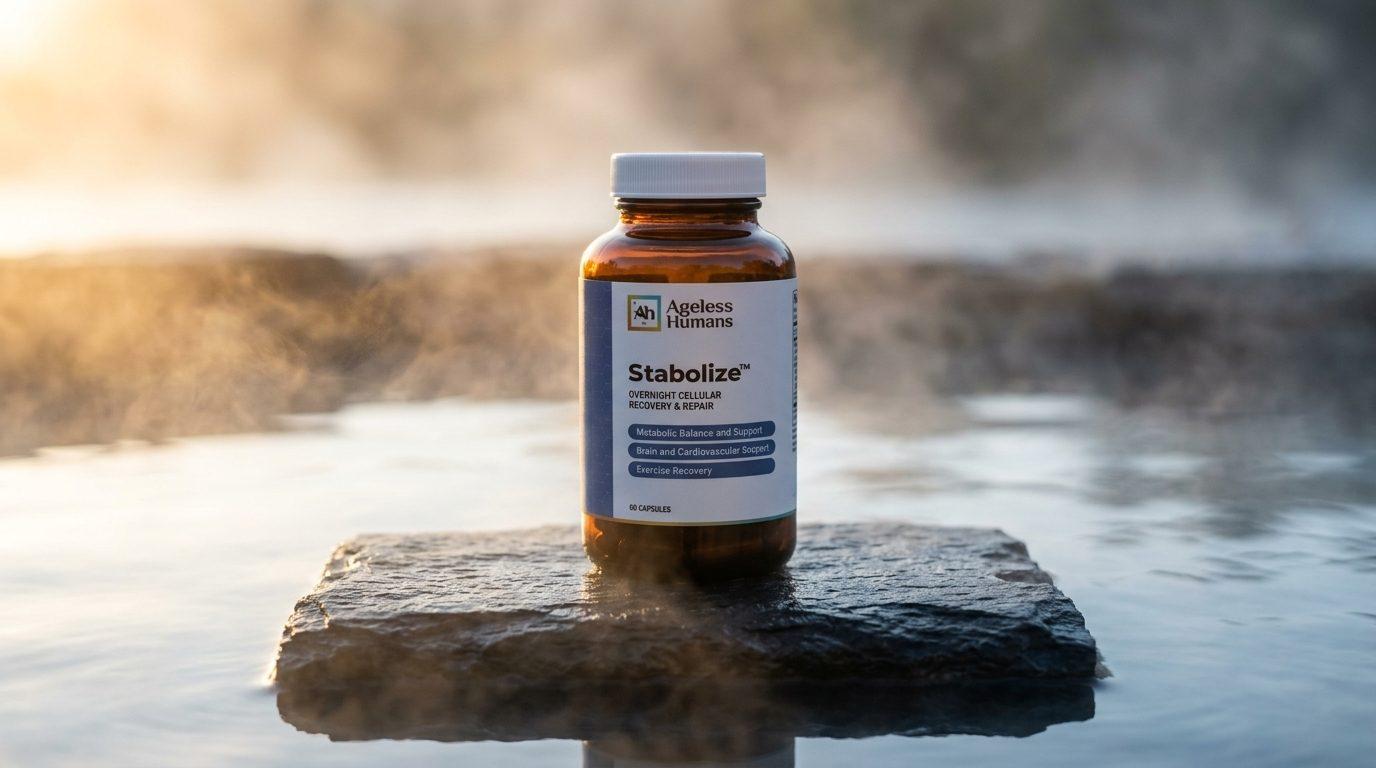
Nightly sleep is when much of the body's recovery happens. That is why consistent timing, darkness, and a calm wind-down are the highest-return habits for most people, whether or not they ever use melatonin. If you want to support the overnight window specifically, Overnight Metabolic Recovery & Support is built around that part of the day.
For people who want a structured, long-term approach to healthy aging rather than one ingredient at a time, the Metamorphic Anti-Aging Protocol organizes daily support into a single routine.
Whatever you choose, keep expectations matched to the evidence. Melatonin's evidence is about timing. Epitalon's evidence is about early-stage aging research. A routine built on sleep, movement, nutrition, and quality supplements rests on much firmer ground than either one alone.
Frequently asked questions
What is the difference between epitalon and melatonin?+
Melatonin is a hormone the pineal gland produces at night to signal darkness and help time sleep. Epitalon is a synthetic four-amino-acid peptide modeled on a pineal gland extract and studied mainly for telomerase activity and cellular aging. Melatonin's research focuses on sleep onset and circadian timing, while epitalon's research is earlier-stage and focuses on long-term aging biology.
Does epitalon help you sleep like melatonin?+
Epitalon is not researched or positioned as a sleep aid, and there is no reliable evidence that it works like melatonin for falling asleep. Some animal research has examined whether epitalon influences the pineal gland's natural melatonin rhythm, but this has not been confirmed in large human trials. For sleep timing, melatonin and consistent sleep habits have far more human research.
Does epitalon really lengthen telomeres?+
In laboratory studies on human cells, epitalon was reported to increase telomerase activity and telomere length. Those findings come mostly from one research group and have not been confirmed in large, independent human trials. Cell culture results do not reliably predict what happens in the human body, so the question remains open.
Is epitalon legal to buy in the United States?+
Epitalon is not an FDA-approved drug in the U.S. and is generally sold as a research compound rather than an established dietary supplement. Because of this, its purity and identity are hard to verify, and quality varies widely between sellers. Anyone considering it should talk with a qualified clinician first.
Can you take epitalon and melatonin together?+
No solid human research has studied epitalon and melatonin together, so the combination is not proven to offer any added benefit. If your goal is better sleep timing, melatonin and good sleep habits have the evidence behind them. Talk with a clinician before combining any research compound with supplements or medications.
Why does melatonin decline with age?+
Natural melatonin production tends to decrease with age in many people. This is one reason sleep timing can shift later in life. Researchers continue to study why this happens, including how pineal gland function changes over time. Supporting healthy sleep through light exposure, consistent schedules, and an evening wind-down routine is a practical starting point at any age.