
Sleep aids and overnight recovery support do different jobs. A sleep aid is designed to help you fall asleep or stay asleep. Overnight recovery support is designed to support the repair processes your body runs once you are asleep, including deep sleep, hormone rhythms, cellular cleanup, and metabolic reset. Being knocked out is not the same as being recovered, so the right choice depends on which problem you actually have.
The Short Answer: Sedation Gets You to Sleep. Recovery Is What Sleep Does.
A sleep aid works on the front door of the night. Overnight recovery support works on what happens inside. Most sleep aids act on how quickly you lose consciousness or how long you stay down. Recovery-focused formulas aim to support the body's own repair work during those hours: muscle and tissue maintenance, hormone signaling, and the metabolic housekeeping that sets up how you feel the next morning.
Here is the difference in plain terms:
- Sleep aid: The goal is to fall asleep faster or stay asleep. The question it answers is 'Am I unconscious?' You judge it by time to sleep and how often you wake.
- Overnight recovery support: The goal is to support the quality of the repair window. The question it answers is 'Did my body do its overnight work?' You judge it by how you feel and perform the next day.
The two can overlap, because you can't recover without sleeping. But they aren't interchangeable. A product that knocks you out hard can still leave you waking up flat. A product built for recovery won't necessarily make you drowsy at all.
What Actually Happens During the Overnight Repair Window
Sleep is an active, structured process, not an off switch. Through the night your brain cycles through stages, roughly every 90 minutes. Each stage appears to handle different work, and the mix shifts as the night goes on.
- Deep (slow-wave) sleep: This stage is concentrated in the first half of the night. It's associated with physical restoration, and research links it to the body's largest natural pulses of growth hormone, which plays a role in tissue maintenance.
- Brain clearance: Research, much of it in animal models so far, suggests the brain's waste-clearance system (often called the glymphatic system) becomes more active during sleep.
- REM sleep: This stage is concentrated toward morning. It's studied for its role in memory consolidation and emotional processing.
- Metabolic reset: Overnight, the body shifts how it uses fuel and regulates hormones tied to appetite, stress, and blood sugar balance. These rhythms follow your circadian clock.
This is the repair window. Its value comes from moving through all of these stages in a normal pattern, night after night. Total hours matter, but so does architecture: how much time you spend in each stage and how cleanly you move between them. For a fuller walkthrough of the stages, see our sleep and overnight recovery guide.
Why Knocked Out Isn't the Same as Recovered
Unconsciousness is not the goal. A normal, complete sleep cycle is. Research suggests that some sedating substances can change sleep architecture. They may help you drop off faster while shifting how much time you spend in deep or REM sleep.
Alcohol is the clearest everyday example. It can make you fall asleep quickly. Research consistently shows it tends to fragment the second half of the night and suppress REM sleep. Many people know the pattern: out cold at 11, wide awake at 3, groggy at 7. They were knocked out. They were not recovered.
The same logic applies to any approach that relies purely on sedation. Common signs that you got the knockout without the recovery include:
- Morning grogginess or a 'hangover' feeling that lingers past your first coffee
- Waking at the same time every night, mid-cycle
- Logging enough hours but still feeling unrested
- Needing more of the same thing over time to get the same effect
None of this means sedation is always wrong. It means sedation answers a different question than recovery does, and treating them as the same thing is why so many people 'sleep' eight hours and still feel worn down.
What Sleep Aids Are Designed to Do (and Where They Fit)
Sleep aids are tools for sleep onset and sleep continuity. They are useful in the right situation and are not built to optimize repair. They generally fall into a few categories, and it helps to know which is which.
- Timing signals: Melatonin is a hormone your body makes to signal that night has arrived. As a supplement, it's mainly studied for supporting sleep timing, such as adjusting to a new time zone or shifted schedule. It works more like a clock-setter than a sedative.
- Sedating ingredients: Some over-the-counter sleep products use ingredients whose main effect is drowsiness. They are designed to make you sleepy, not to support what happens after.
- Calming botanicals and nutrients: Ingredients like chamomile or L-theanine are studied for promoting relaxation, which can make it easier to wind down.
- Prescription options: These belong in a conversation with your clinician, not a supplement article.
If your real problem is that you can't fall asleep or your schedule is out of sync, a sleep-timing or relaxation approach targets that directly. If you have trouble sleeping that lasts for weeks, talk to a healthcare professional rather than stacking products. Persistent sleep problems deserve a proper look.
What Overnight Recovery Support Is Designed to Do
Overnight recovery support is designed to supply and support the systems your body already runs during sleep. It is not designed to force sleep. The idea is to help your body make better use of the hours you're already getting.
Ingredients in this category are typically chosen for roles like these:
- Supporting relaxation and normal sleep quality without heavy sedation. Magnesium and glycine, for example, are studied for their roles in muscle relaxation and sleep quality.
- Supporting healthy metabolic function overnight, when the body is fasting and shifting fuel sources.
- Supporting cellular maintenance and antioxidant defenses, the background cleanup work the body does while you rest.
- Promoting normal hormone rhythms tied to the sleep-wake cycle.
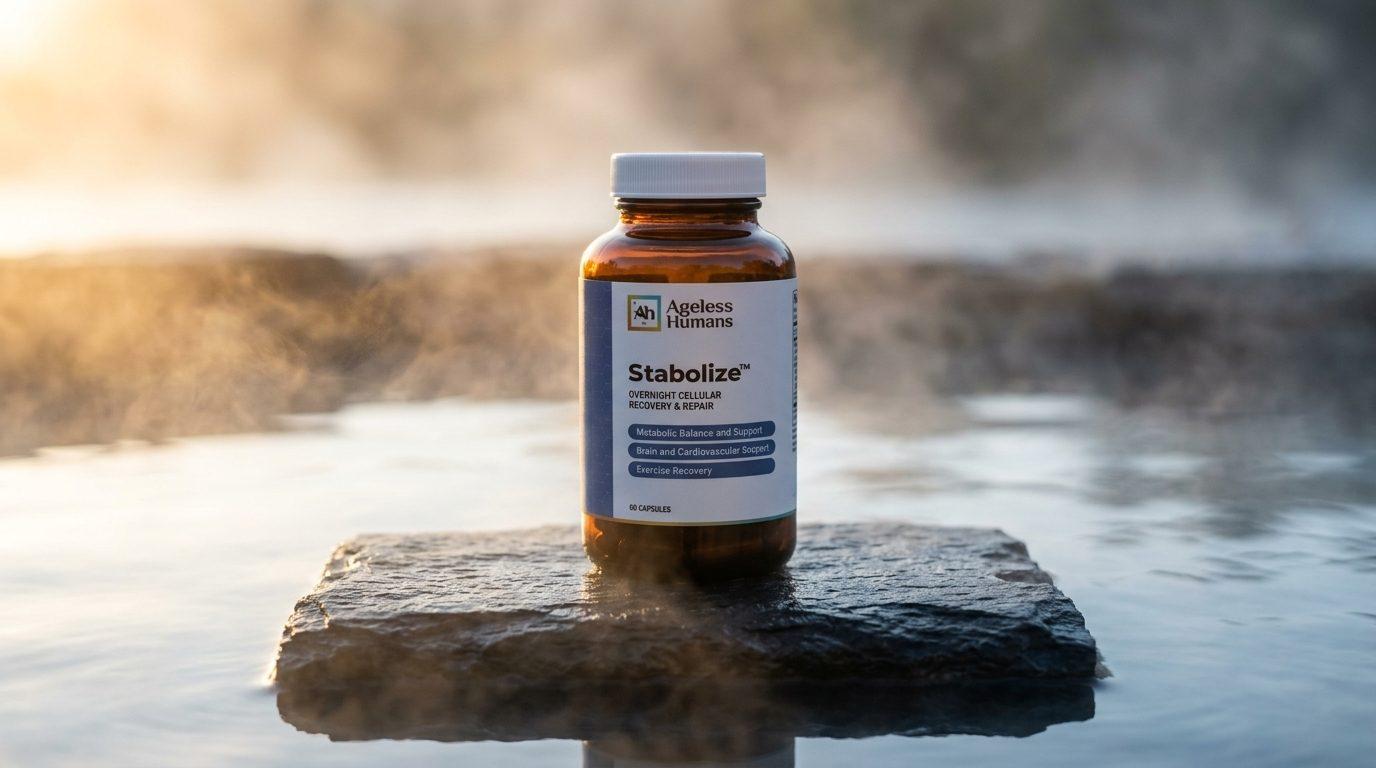
Our Overnight Metabolic Recovery & Support formula was built around this second job. It supports the body's overnight metabolic and recovery processes, and it isn't meant to knock you out. You judge it the way you'd judge any recovery tool: by how you feel and function over the following weeks. For a broader look at the category and what to check on a label, see our guide to overnight recovery supplements.
How to Tell Which Problem You Actually Have
Match the tool to the bottleneck. Most people reach for a sleep aid when their real issue is recovery, or the reverse. Ask yourself these questions honestly.
- Do you lie awake for a long time before falling asleep? That is an onset problem. Timing and wind-down support fit better.
- Is your schedule erratic, or are you crossing time zones? That is a timing problem. Light exposure and circadian signals matter most.
- Do you fall asleep fine but wake up unrefreshed? That is a recovery-quality problem. Overnight recovery support and sleep hygiene fit better.
- Do you feel slower to bounce back from training, travel, or long days? That is also a recovery problem.
- Do you wake up groggy after taking something to sleep? You may be getting sedation without the recovery you want.
Many people have a little of both. In that case, fix the basics first, then choose support for the bigger bottleneck. Layering several sedating products is rarely the answer and is worth discussing with a clinician.
What the Research Does and Doesn't Show
The science strongly supports the idea that sleep is restorative. The evidence for any single supplement is more modest and more variable. Being clear about that difference is part of making a good choice.
What's well supported: sleep has distinct stages, deep sleep is associated with physical restoration and growth hormone release, alcohol and some sedatives can disrupt normal sleep architecture, and consistent sleep timing supports circadian health.
What's still developing: much of the work on overnight brain clearance comes from animal studies. Individual nutrients like magnesium and glycine have been studied for sleep quality and relaxation, but results vary by person, by baseline status, and by study design. No supplement replaces sleep or makes up for chronically short nights.
That is why we frame recovery support as support. It works alongside good sleep habits. It is not a shortcut around them. Be skeptical of any product, ours included, that promises to transform your sleep overnight.
Build the Recovery Window First, Then Support It
The highest-impact recovery move is protecting the window itself. Supplements work best on top of a solid foundation.
- Keep a consistent wake time, even on weekends. It anchors your circadian rhythm.
- Get morning light and dim the lights in the evening.
- Finish alcohol and large meals well before bed. Both can interfere with the deep sleep you're trying to protect.
- Keep the room cool, dark, and quiet.
- Wind down on purpose. Screens off and a predictable routine help.
Once the basics are in place, targeted support can do its job. Some people prefer a broader daily approach that covers healthy aging around the clock. Our Metamorphic Anti-Aging Protocol is designed as that kind of system, with overnight recovery as one part of a larger routine. Every Ageless Humans product is made in our FDA-registered facility in Carlsbad, California. Every lot is third-party lab tested with a Certificate of Analysis, and every product is backed by a 60-day money-back guarantee. Follow label directions, and give any recovery routine a few consistent weeks before you judge it.
Frequently asked questions
Is overnight recovery support the same as a sleep aid?+
No. A sleep aid is designed to help you fall asleep or stay asleep. Overnight recovery support is designed to support the processes your body runs during sleep, such as tissue maintenance, metabolic reset, and normal hormone rhythms. The two can complement each other, but they solve different problems.
Why do I feel groggy after taking a sleep aid even though I slept all night?+
Some sedating ingredients can linger into the morning or change your sleep architecture. That means you may spend less time in deep or REM sleep even though you were unconscious for hours. Being knocked out is not the same as completing normal, restorative sleep cycles. If morning grogginess keeps happening, talk to a healthcare professional.
Does overnight recovery support make you sleepy?+
Not necessarily. Recovery-focused formulas are typically designed to support relaxation and the body's overnight repair processes, not to sedate you. Some ingredients, like magnesium or glycine, are studied for promoting relaxation and sleep quality, but the main goal is supporting recovery rather than forcing sleep.
Is melatonin a recovery supplement?+
Melatonin is best understood as a timing signal. Your body produces it to signal that night has arrived, and as a supplement it is mainly studied for supporting sleep timing, such as adjusting to a new time zone. It isn't primarily designed to support the physical recovery processes that happen during deep sleep.
Can a supplement replace getting enough sleep?+
No. No supplement can replace adequate, consistent sleep or make up for chronically short nights. Overnight recovery support is meant to work alongside good sleep habits, like a consistent wake time, a cool dark room, and avoiding alcohol close to bed. It is not a substitute for them.
How do I know if I need sleep support or recovery support?+
If you struggle to fall asleep or your schedule is out of sync, your bottleneck is sleep onset or timing. If you fall asleep fine but wake up unrefreshed or bounce back slowly from hard days, your bottleneck is more likely recovery quality. Persistent sleep trouble lasting weeks is worth discussing with a healthcare professional.