
Epitalon and NMN address different hallmarks of aging. Epitalon is a synthetic four-amino-acid peptide studied mainly for telomere biology and pineal function. NMN is a vitamin B3–derived compound that supports cellular NAD+ levels, which tie into energy metabolism and mitochondrial function. NMN has more human research and is sold as a dietary supplement. Epitalon's research is earlier-stage, comes largely from one research school, and the peptide is generally sold for research use only.
The Short Answer: Different Targets, Different Evidence
Epitalon and NMN don't compete. They act on different parts of the aging process, and they sit on very different levels of evidence.
- Epitalon (also written epithalon or epithalone) is a synthetic tetrapeptide: alanine, glutamic acid, aspartic acid, glycine. Research has focused on telomerase activity, telomere biology, and melatonin and circadian signaling.
- NMN (nicotinamide mononucleotide) is a direct precursor to NAD+, a coenzyme every cell uses for energy production and for enzymes involved in DNA maintenance and cellular stress responses.
Which one matters more depends on which question you care about. Want the most human data and a legal supplement format? NMN is the clear choice. Interested in telomere-focused science? Epitalon is the more speculative, earlier-stage option, and you should treat it that way.
Which Hallmarks of Aging Each One Addresses
Epitalon maps to telomere attrition and circadian regulation. NMN maps to mitochondrial function, nutrient sensing, and the NAD+-dependent systems tied to genomic maintenance.
Researchers often group the biology of aging into a set of 'hallmarks,' interconnected processes that shift as we age. Here is where each compound fits:
Epitalon
- Telomere attrition. Telomeres are protective caps on chromosomes that shorten with cell division. Epitalon has been studied for its effect on telomerase, the enzyme that can rebuild telomere length.
- Circadian and neuroendocrine signaling. Much of the early work explored epitalon in relation to the pineal gland and melatonin rhythms, which tend to flatten with age.
- Epigenetic signaling (hypothesized). Some researchers propose short peptides like epitalon interact with DNA and gene expression. This is a hypothesis, not a settled mechanism.
NMN
- Mitochondrial function. NAD+ is essential to the reactions mitochondria use to turn food into usable energy.
- Deregulated nutrient sensing. NAD+ fuels sirtuins, a family of enzymes involved in metabolic regulation and cellular stress responses.
- Genomic maintenance. PARP enzymes, which take part in DNA repair, consume NAD+. Research suggests NAD+ levels decline with age, which may leave less NAD+ for these jobs.
Neither compound covers every hallmark. That's a core reason serious longevity enthusiasts think in terms of systems, not single molecules.
Evidence Tiers: An Honest Scorecard
NMN has a deeper and broader evidence base, including multiple human clinical trials. Most of epitalon's evidence comes from cell and animal studies, plus a smaller body of human research that is older and harder to verify independently.
Here's a simple way to grade longevity evidence, from strongest to weakest:
1. Large, independent, randomized human trials with meaningful outcomes. Neither compound has strong evidence at this tier for lifespan or long-term healthspan. 2. Smaller randomized human trials measuring biomarkers and safety. NMN has several from different countries and research groups, mostly looking at blood NAD+ levels, tolerability, and markers of physical and metabolic function. Results vary, but the work comes from independent groups. 3. Older or less-replicated human studies. Epitalon's human data mostly sits here. Much of it came from a single Russian research school led by Vladimir Khavinson, and many of the papers are hard to access or haven't been independently reproduced. 4. Animal and cell studies. Both compounds have substantial preclinical work. Epitalon's telomerase findings come mainly from cell cultures. NMN has extensive rodent research on NAD+ and age-related metabolic changes.
Bottom line: Research suggests NMN reliably raises NAD+ in humans. Whether that leads to meaningful long-term benefits is still being studied. Epitalon's telomere story is intriguing, but it hasn't been confirmed by the kind of independent human research that would let anyone speak confidently about it.
What Epitalon Research Does and Doesn't Show
Epitalon is best described as an interesting research peptide with an unconfirmed human profile. It is not an established longevity intervention.
What the research explores:
- Telomerase activity in cultured human cells. This is the foundation of epitalon's reputation.
- Melatonin and circadian rhythm markers in older animals and in some older human studies.
- Lifespan in some animal models, reported mainly by the same research group.
What it doesn't show:
- That epitalon meaningfully changes telomere length in living people over time, confirmed by independent labs.
- That telomerase activation is reliably beneficial in humans. Telomere biology is a balance, and more activity isn't automatically better. Researchers are still mapping where that balance sits.
- Long-term safety data from modern, well-controlled trials.
There is also a practical issue. In the U.S., epitalon is generally sold as a 'research chemical' and is not a dietary supplement. That means there's no supplement-grade standard for identity, purity, or dosing. For a deeper look at the research, read our guide to epitalon benefits.
What NMN Research Does and Doesn't Show
NMN is one of the better-studied longevity compounds. Human trials consistently show it can raise NAD+ levels, and it has a generally favorable tolerability profile in published studies so far.
What the research supports:
- NMN supports NAD+ levels when taken orally, based on multiple human studies.
- NAD+ is central to cellular energy metabolism and to sirtuin and PARP activity. This is well established in basic biology.
- Short-term human trials have looked at physical performance, metabolic markers, and sleep quality. Some results are encouraging and others are neutral.
What it doesn't show (yet):
- That NMN extends human lifespan. No study has shown this, and anyone who claims it is overselling.
- Consistent, large effects across every outcome measured. Response appears to vary between people.
- Long-term outcomes beyond the duration of current trials.
NMN can be sold as a dietary supplement, so quality comes down to the manufacturer: purity, testing, and transparency. Explore the full research picture in our NMN benefits guide.
Side-by-Side: Practical Differences That Matter
For most people, the deciding factors are format, legal status, quality control, and how much uncertainty they'll accept.
- Primary focus: Epitalon targets telomere and circadian biology. NMN targets NAD+ and cellular energy.
- Strongest evidence: Epitalon relies on cell and animal studies plus limited older human work. NMN has multiple independent human trials on NAD+ levels and tolerability.
- Typical format: Epitalon usually comes as an injectable or nasal research peptide. NMN comes as an oral capsule or powder.
- U.S. status: Epitalon is a research chemical, not a supplement. NMN is sold as a dietary supplement.
- Quality assurance: For epitalon it varies widely by vendor. For NMN, look for third-party lab testing and a Certificate of Analysis (COA).
- Usage guidance: Epitalon has no supplement label standard. For NMN, follow the label directions.
If you're comparing these as an enthusiast, be honest about the gap. One is a mainstream supplement backed by growing human data. The other is an experimental compound with a compelling hypothesis and limited confirmation.
Can You Think About Them Together?
Conceptually, yes. Because they target different hallmarks, they aren't redundant. But there's no research on combining them, so any 'stack' would be untested.
The broader lesson matters more than the specific pairing. Aging is multi-system. NAD+ availability, mitochondrial health, circadian rhythm, and cellular maintenance all influence each other. That's why many in the longevity community build around well-supported foundations first: sleep, movement, nutrition, and evidence-backed nutrients. Experimental compounds come after that, if at all.
If you're weighing anything experimental, talk with a qualified healthcare professional first. This is especially important for compounds outside the dietary supplement framework, where dosing, purity, and safety haven't been standardized.
Our Take: Start With the Stronger Evidence
If you want one place to start, NMN offers the clearer path: more human data, an oral format, and a supplement framework with real quality controls.
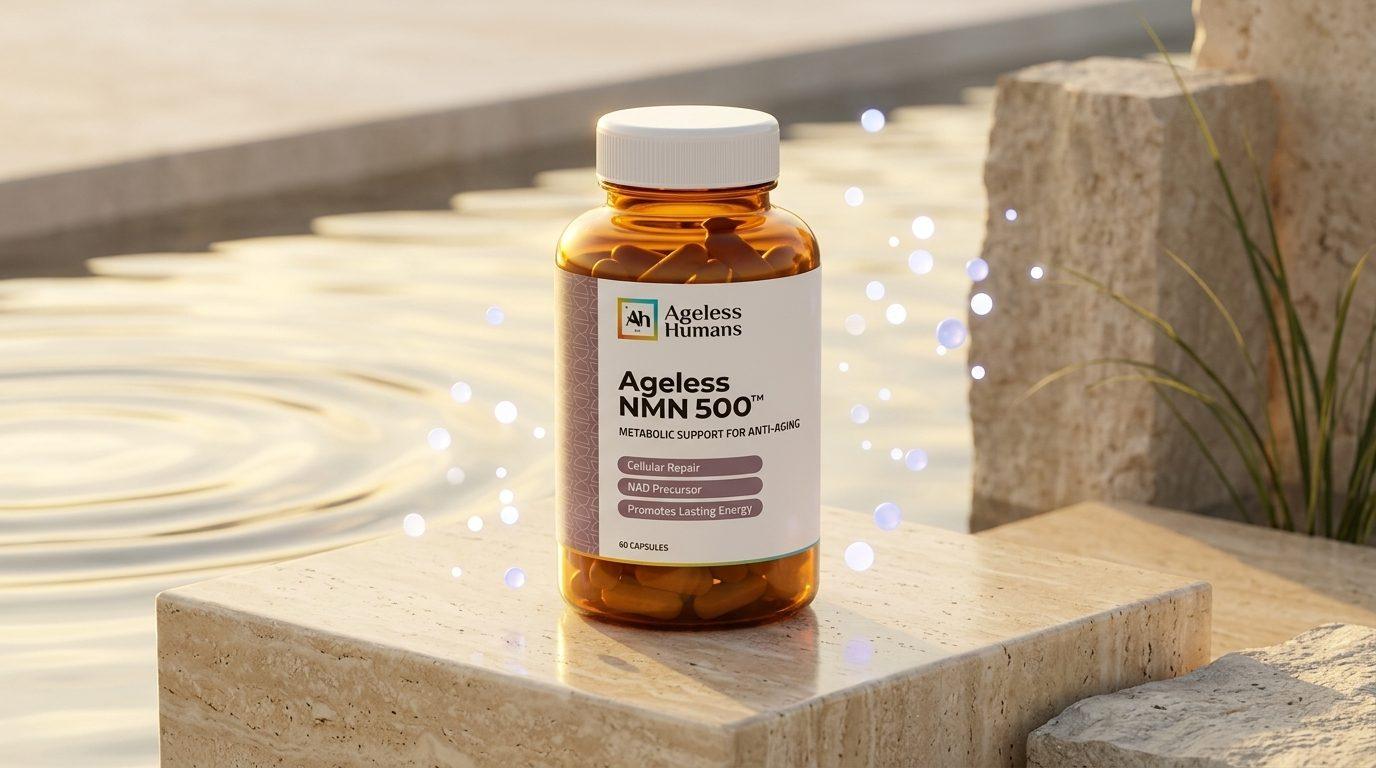
That's why we focus on NAD+ support. Our NMN 500 Capsules are made in our FDA-registered facility in Carlsbad, California. Every lot is third-party lab tested and comes with a COA, so you know what's in the bottle. If you want a broader, structured routine instead of a single nutrient, the Metamorphic Anti-Aging Protocol is built around multi-pathway support for healthy aging. Both come with a 60-day money-back guarantee.
Epitalon is worth following as research develops. Until independent human data catches up, treat it as a hypothesis and not a habit.
Frequently asked questions
What is the main difference between epitalon and NMN?+
Epitalon is a synthetic peptide studied mainly for telomere biology and melatonin and circadian signaling. NMN is a precursor to NAD+, a coenzyme central to cellular energy and to enzymes involved in cellular maintenance. They target different hallmarks of aging and have very different levels of human evidence.
Is there more research on NMN or epitalon?+
NMN has more human research, including multiple randomized trials from independent groups showing it can raise NAD+ levels. Epitalon's evidence is mostly from cell and animal studies, plus older human studies concentrated in a single research school that haven't been widely replicated. Neither has proven lifespan effects in humans.
Does epitalon lengthen telomeres in humans?+
That hasn't been established. Epitalon has been studied for telomerase activity, mainly in cultured cells. Independent, well-controlled human studies confirming meaningful telomere changes over time are lacking. Treat telomere claims about epitalon as an unconfirmed hypothesis.
Is epitalon a dietary supplement?+
In the U.S., epitalon is generally sold as a research chemical, not as a dietary supplement. That means it lacks standardized supplement labeling, dosing guidance, and quality requirements. NMN, by contrast, is sold as a dietary supplement.
Can you take epitalon and NMN together?+
No published research has studied epitalon and NMN together, so any combination is untested. They act on different biological pathways, so they aren't redundant in theory. Anyone considering experimental compounds should consult a qualified healthcare professional first.
What should I look for when buying NMN?+
Look for a manufacturer that third-party lab tests every lot and provides a Certificate of Analysis (COA) confirming identity and purity. Manufacturing transparency, such as production in an FDA-registered facility, is another useful quality signal. Always follow the label directions.