
Spermidine is a natural polyamine studied mainly for supporting autophagy, the cell's recycling process. Resveratrol is a plant polyphenol studied mainly as a sirtuin activator, though how strongly it does this in humans is debated. Both have strong lab and animal data and early, mixed human data, and because they act on the same cellular network from different directions, many people treat them as complements rather than rivals.
The Short Answer: Two Different Doors Into the Same Pathway
Spermidine and resveratrol are not interchangeable. They start in different places, but research suggests they meet at the same control point: how cells tag and untag proteins with acetyl groups, a signal that helps switch autophagy on or off.
- Spermidine is a polyamine your body makes and you eat in foods like wheat germ, aged cheese, mushrooms, soybeans, and legumes. Its best-studied role is supporting autophagy.
- Resveratrol is a polyphenol found in grape skins, red wine, peanuts, and Japanese knotweed. Its best-known role is activating sirtuins, especially SIRT1, plus related energy-sensing pathways such as AMPK.
If you want the honest one-line verdict: spermidine has the more direct link to autophagy, resveratrol has the larger but messier research library, and neither has the long-term human data that marketing often implies.
How Spermidine Works: Supporting Autophagy Through Acetylation
Spermidine supports autophagy mainly by reducing protein acetylation. In lab studies, it inhibits an enzyme called EP300, an acetyltransferase that acts like a brake on autophagy. Take some pressure off that brake and the cell's cleanup machinery runs more freely.
Autophagy is how cells break down worn-out proteins and damaged components and reuse the parts. It tends to decline with age, which is why it sits at the center of longevity research. For a full breakdown of the process and how different compounds interact with it, see our guide to autophagy supplements.
Spermidine has a second, quieter role. It is required to activate a protein called eIF5A, which supports normal protein production, including proteins used in autophagy. Researchers have also studied spermidine in relation to mitochondrial function and healthy aging in animal models.
Evidence label: Mechanism, strong in cells and animals. Lifespan extension has been reported in yeast, worms, flies, and mice. Human data, early. Our spermidine benefits page covers the full picture.
How Resveratrol Works: Sirtuins, AMPK, and an Ongoing Debate
Resveratrol is studied as a SIRT1 activator, but that mechanism has been contested. Sirtuins are enzymes that remove acetyl groups from proteins, the opposite of what EP300 does. They depend on NAD+ and are linked to how cells respond to energy scarcity.
The debate is real and worth knowing. Early lab work suggested resveratrol activated SIRT1 directly. Later research found some of that effect depended on the specific test setup. Subsequent studies suggested resveratrol can activate SIRT1 under certain conditions, and that much of its effect may run indirectly through AMPK, the cell's fuel gauge, which then raises NAD+ and sirtuin activity.
The bigger practical issue is bioavailability. Resveratrol is absorbed reasonably well, then rapidly broken down by the gut and liver. Blood levels of the intact compound stay low, and researchers still debate whether its breakdown products carry the activity.
Evidence label: Mechanism, real but complicated. Lifespan results, consistent in some simpler organisms, but not in normally fed mice. Human data, abundant but mixed.
Human Evidence Compared: What Research Does and Does Not Show
Neither compound has proven long-term human benefits, and they fall short in different ways.
Spermidine in humans:
- Observational studies link higher dietary spermidine intake with favorable aging outcomes. Association is not causation. People who eat more legumes, whole grains, and mushrooms differ in many ways.
- Small, short trials in older adults have explored cognition and found some encouraging signals. A larger, longer randomized trial did not find a meaningful effect on its main memory outcome.
- Supplements have been well tolerated in the trials run so far.
- No one has shown that a spermidine supplement measurably increases autophagy in human tissue. That is hard to measure in living people, so it remains an open question rather than a negative finding.
Resveratrol in humans:
- Dozens of small trials have measured metabolic, cardiovascular, and inflammatory markers. Results vary widely by dose, form, and population. Some show modest shifts in markers, many show none.
- A few studies suggest resveratrol may dull some training adaptations in older adults who exercise. This is not settled, but it is worth knowing if exercise is the core of your routine.
- Generally well tolerated, though digestive upset is reported at higher amounts.
Bottom line: Resveratrol has more human studies. Spermidine has a cleaner story linking mechanism to autophagy. Both sit in the "promising, not proven" category.
Where They Converge: The Acetylation Connection
Spermidine and resveratrol push the same cellular switch from opposite sides. Spermidine reduces the enzymes that add acetyl groups. Resveratrol, via sirtuins, supports the enzymes that remove them. Both outcomes lower acetylation on proteins that regulate autophagy.
Lab research has shown that the two compounds trigger an overlapping set of acetylation changes, and that the autophagy response to each depends partly on this shared network. In some experimental models, combining them produced a stronger autophagy response than either alone.
That is the scientific basis for stacking. It is a mechanistic rationale from cell and animal work, not a demonstrated human outcome. No published human trial has tested the combination for longevity endpoints.
Stack or Choose? A Practical Decision Framework
If you want one, choose based on your goal. If you want broad pathway coverage, stacking is reasonable.
Lean toward spermidine if:
- Autophagy and cellular renewal are your main focus.
- You want the compound with the most direct mechanistic link to autophagy.
- You prefer something already common in the human diet.
Lean toward resveratrol if:
- You are interested in sirtuin and NAD+ pathways and energy signaling.
- You already use NAD+ precursors and want a pathway-adjacent addition.
- You are comfortable with a compound whose human data is extensive but inconsistent.
Consider stacking if:
- You want to support autophagy from both the "add less acetyl" and "remove more acetyl" sides.
- You understand the combination is supported by mechanism, not by human longevity trials.
Whatever you choose, follow label directions, add one product at a time so you can notice how you respond, and talk with your healthcare provider if you take prescription medications or have a health condition. Supplements work alongside the basics: sleep, movement, protein-sufficient meals, and periods without constant snacking, which is itself one of the most studied ways to support natural autophagy.
What to Look For in Either Supplement
Quality and verification matter more than headline claims. Both compounds are easy to under-dose, mislabel, or source poorly.
- Spermidine: Check whether the label states actual spermidine content, not just the weight of a wheat germ extract. Extracts vary widely in concentration.
- Resveratrol: Look for trans-resveratrol, the form studied in research. Check the source and purity.
- Third-party testing: Ask for a Certificate of Analysis (COA) for the specific lot you buy. It confirms identity, potency, and screening for contaminants.
- Manufacturing transparency: Know where it is made. Ageless Humans products are manufactured in our FDA-registered facility in Carlsbad, California, and every lot is third-party lab tested with a COA.
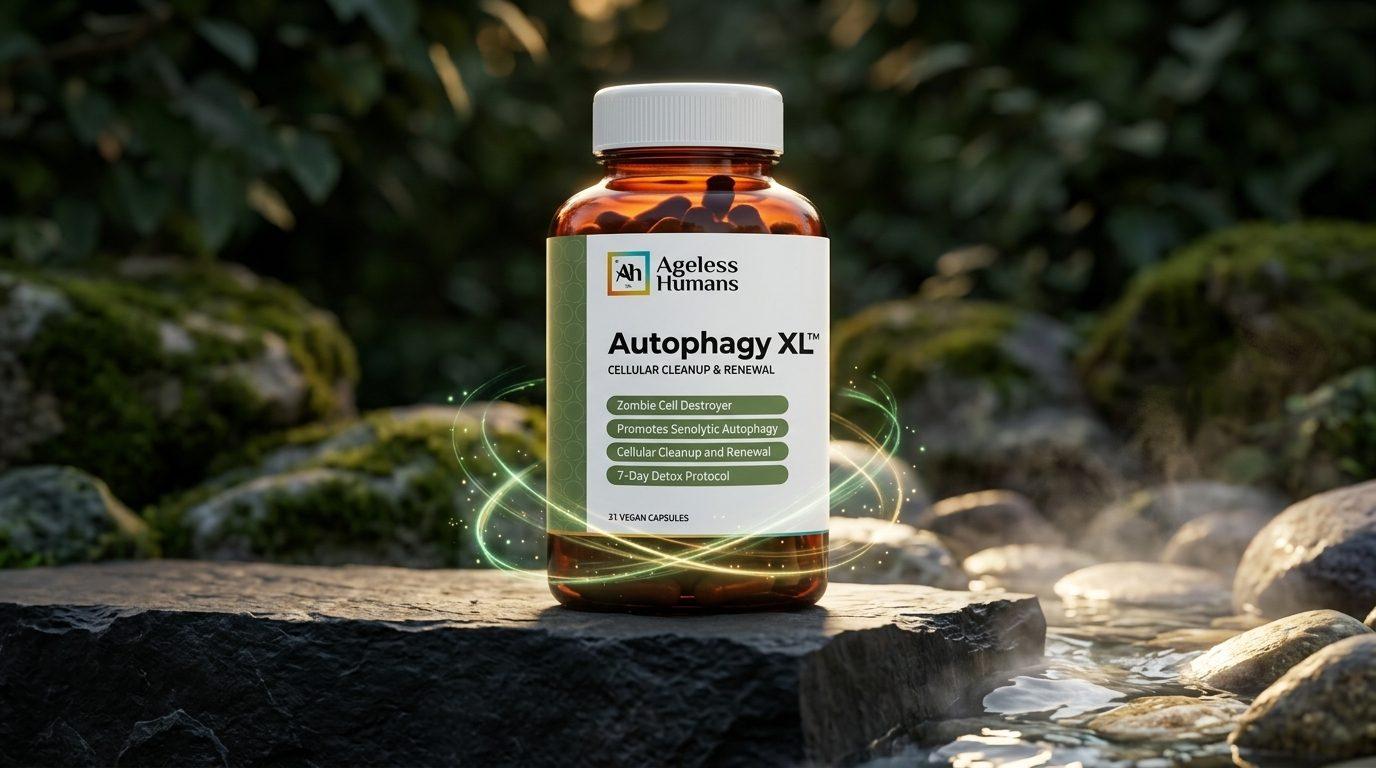
A formula built for the goal also helps. If autophagy is your priority, Autophagy XL is designed specifically to support the body's natural cellular renewal process, so you are not piecing together single ingredients by guesswork.
Frequently asked questions
What is the main difference between spermidine and resveratrol?+
Spermidine is a polyamine studied mainly for supporting autophagy, the cell's process for recycling worn-out components. Resveratrol is a polyphenol studied mainly as a sirtuin activator that also influences the energy sensor AMPK. Both affect protein acetylation, but from opposite directions.
Is spermidine or resveratrol better for autophagy?+
Spermidine has the more direct mechanistic link to autophagy, through inhibition of the acetyltransferase EP300. Resveratrol may also support autophagy, largely through sirtuins and AMPK. Neither has been shown to measurably increase autophagy in human tissue, so any comparison rests on lab and animal research.
Can you take spermidine and resveratrol together?+
Many people do, and lab research suggests the two converge on the same acetylation network that regulates autophagy, sometimes with a stronger combined effect in experimental models. No human trial has tested the combination for longevity outcomes. Follow each product's label directions and check with your healthcare provider if you take medications.
Does resveratrol actually activate sirtuins in humans?+
This is still debated. Early lab findings were questioned because of how the tests were run, and later work suggested resveratrol can activate SIRT1 under specific conditions and may act indirectly through AMPK. Resveratrol is also broken down quickly after absorption, so blood levels of the intact compound stay low.
What does human research show for spermidine?+
Observational studies associate higher dietary spermidine with favorable aging outcomes, but they cannot prove cause and effect. Small trials in older adults have shown some encouraging signals for cognition, while a larger randomized trial did not find a meaningful effect on its main memory outcome. Spermidine supplements have been well tolerated in research so far.
Can I get spermidine and resveratrol from food?+
Yes. Spermidine is found in wheat germ, aged cheese, mushrooms, soybeans, and legumes. Resveratrol is found in grape skins, peanuts, and berries, though typical food amounts are much lower than those used in most research. Supplements offer a more consistent intake.