
Spermidine and fisetin take two different approaches to cellular aging. Spermidine is a polyamine studied for supporting autophagy, the cell's ongoing recycling system, so its logic is steady, continuous support. Fisetin is a flavonoid studied as a senolytic, a compound researched for selectively targeting senescent "zombie" cells, so its logic is intermittent clearance. They do different jobs on different schedules, which is why many longevity-focused people treat them as complements rather than rivals.
The Short Answer: Two Different Jobs on Two Different Clocks
Spermidine is a maintenance strategy. Fisetin is a cleanup strategy. Spermidine is researched for helping cells keep recycling worn-out proteins and organelles every day. Fisetin is researched for helping the body deal with senescent cells, which are cells that have stopped dividing but refuse to die off.
Think of your body as a building. Autophagy is the janitorial crew that works every night: emptying bins, swapping bulbs, hauling out broken furniture. Senolytic activity is closer to a periodic demolition crew that removes rooms that have stopped working and are now leaking problems into the hallway.
That difference drives everything else in this comparison:
- Mechanism: recycling inside healthy cells (spermidine) vs. targeting cells that have entered senescence (fisetin)
- Timing logic: continuous, daily support vs. intermittent, pulsed use as studied in research models
- Research maturity: spermidine has broader observational and early human data; fisetin's senolytic data is mostly preclinical, with human trials still in progress
Neither is "better." The right question is which job you are trying to support, and whether you want both.
What Spermidine Does: Supporting Continuous Cellular Renewal
Spermidine is a naturally occurring polyamine researched for supporting autophagy, the process cells use to break down and recycle their own damaged parts. Your body makes it, gut bacteria produce it, and you eat it in foods like wheat germ, soybeans and natto, aged cheese, mushrooms, and legumes. Researchers have noted that the body's spermidine levels tend to decline with age, which is part of why it draws so much interest.
The mechanism researchers point to is fairly specific. Spermidine has been studied for inhibiting certain acetyltransferase enzymes, which shifts cellular signaling toward autophagy. In practice, this resembles some of the signaling seen during fasting, which is why spermidine is often described as a "fasting mimetic" in the literature.
Because autophagy is a housekeeping process that matters every day, spermidine's logic is continuous. You are not trying to trigger one dramatic event. You are trying to help keep the recycling system running steadily as you age. That is why spermidine is typically discussed as a daily, food-like input rather than something taken in bursts.
For a deeper look at sources, mechanisms, and what to look for on a label, see our full guide to spermidine benefits.
What Fisetin Does: The Intermittent Clearance Model
Fisetin is a plant flavonoid, found in small amounts in strawberries, apples, persimmons, and onions, that researchers have studied for senolytic activity, meaning the ability to selectively affect senescent cells. In screening studies comparing several flavonoids, fisetin stood out as one of the more potent candidates in lab and animal models.
Senescent cells matter because they do not just sit quietly. Research shows they release a mix of inflammatory signaling molecules, known as the senescence-associated secretory phenotype (SASP), which can affect neighboring healthy cells. Senescent cells naturally accumulate with age, and the immune system's ability to clear them appears to slow down.
The senolytic idea is often called "hit and run." Senescent cells build up slowly, over weeks and months, not hours. So in research settings, senolytic compounds are generally studied in short, intermittent courses with long breaks in between, rather than every day. The reasoning: if you clear a batch, it takes time for a meaningful new batch to accumulate.
This is a research logic, not a personal dosing plan. Always follow the directions on your product label, and talk with your healthcare provider before using fisetin if you take medications, since flavonoids can interact with how some drugs are processed.
Continuous vs. Intermittent: Why the Timing Logic Differs
The timing logic follows the target: autophagy is a constant process, so support is continuous; senescent cells accumulate slowly, so clearance is periodic. Getting this right is the single most useful takeaway from the spermidine vs. fisetin comparison.
Here is how the two strategies line up side by side:
- What is being supported: Spermidine supports the recycling machinery inside functioning cells. Fisetin is studied for its effect on cells that have already entered senescence.
- Why the schedule makes sense: Damaged proteins and organelles are generated every day, so daily recycling support fits. Senescent cells pile up gradually, so pulsed clearance fits.
- What "working" looks like: For autophagy, the goal is steady upkeep that helps cells stay functional. For senolytics, the goal is reducing the burden of cells that are no longer pulling their weight.
- Analogy: Spermidine is brushing your teeth. Fisetin is closer to a periodic professional cleaning.
There is also a useful overlap. Some research suggests healthy autophagy may help cells resist sliding into senescence in the first place. In other words, renewal can reduce how much clearance is needed later. That is a big reason people stack the two strategies instead of choosing one.
The Research State: An Honest Scorecard
Spermidine has the broader body of evidence today, including observational human data and some small human trials; fisetin's senolytic evidence is promising but still largely preclinical. Here is what the research does and does not show.
Spermidine: what research shows
- Supplementation has been associated with extended lifespan in yeast, worms, flies, and mice across multiple labs.
- Observational studies in humans have linked higher dietary spermidine intake with favorable markers of healthy aging.
- Small human trials have explored spermidine for memory and cognitive function, with mixed results.
- What it does not show: observational links do not prove cause and effect, and large, long-term human trials on aging outcomes have not been completed.
Fisetin: what research shows
- Lab and mouse studies suggest fisetin can reduce senescent-cell markers and support healthspan in aged animals.
- Its senolytic activity appears more selective for some cell types than others.
- Human clinical trials have been registered and are underway, but published human results on senolytic outcomes remain limited.
- What it does not show: we do not yet have strong human evidence confirming fisetin clears senescent cells in people the way it does in mice, and absorption of fisetin is known to be relatively poor.
Bottom line: both compounds are legitimately interesting and actively studied. Anyone claiming either one is "proven" to slow human aging is overstating the science.
Can You Use Both? How the Strategies Fit Together
Yes. Because spermidine and fisetin target different processes on different schedules, many people use spermidine as a steady daily foundation and fisetin as an intermittent layer, following each product's label directions. There is no research showing they compete with each other mechanically.
A logical way to think about a combined approach:
1. Foundation (every day): support autophagy and cellular renewal with spermidine and related habits such as consistent sleep, regular exercise, and time-restricted eating if it suits you. 2. Periodic layer (intermittent): add a senolytic-focused compound like fisetin on the schedule described on the label, then return to foundation-only. 3. Reassess: track how you feel, your energy, and recovery, and check in with your healthcare provider, especially if you take medications.
If you want to understand the full landscape of compounds studied for autophagy support, including spermidine, resveratrol, berberine, and others, our autophagy supplements guide breaks them down by mechanism. For people who would rather not build a stack from scratch, a structured system like the Metamorphic Anti-Aging Protocol organizes multiple longevity pathways into one coordinated routine.
What matters most is matching the strategy to the logic: continuous support for continuous processes, intermittent support for slow-accumulating ones.
How to Choose: Quality Matters More Than the Debate
Whichever strategy you pick, ingredient quality, transparent labeling, and third-party testing matter more than choosing spermidine or fisetin. Both ingredients vary widely in purity and sourcing, and a poorly made product can undercut a good strategy.
What to look for:
- A clear source: spermidine is commonly derived from wheat germ extract, so look for the actual spermidine amount, not just the extract weight.
- Fisetin purity and form: because fisetin absorption is limited, look for brands that are transparent about form and purity.
- Third-party testing with a COA: a Certificate of Analysis confirms what is in the bottle and screens for contaminants.
- Manufacturing standards: know where and how the product is made.
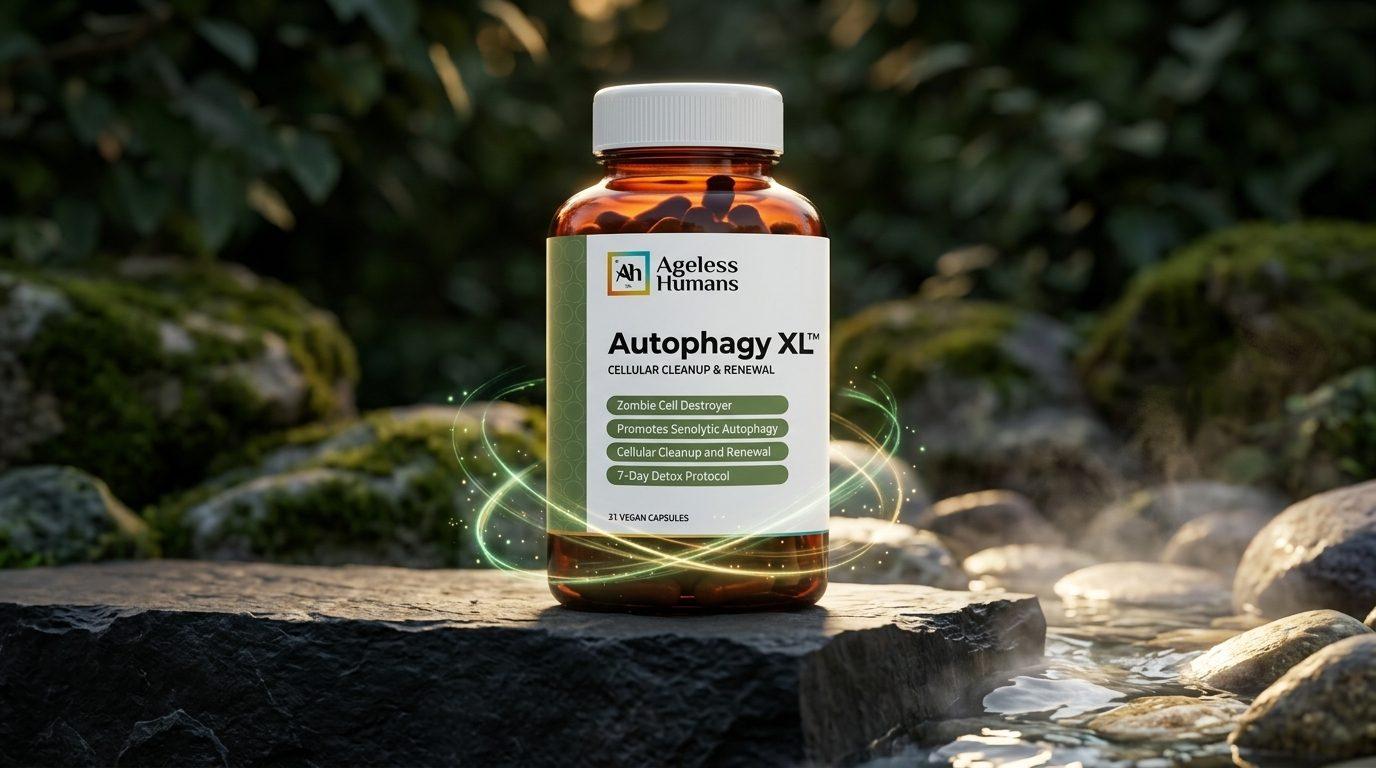
At Ageless Humans, every product is made in our FDA-registered facility in Carlsbad, California, and every lot is third-party lab tested with a COA. Products like Autophagy XL are formulated to support the body's natural cellular renewal processes, and they are backed by a 60-day money-back guarantee, so you can judge for yourself.
Frequently asked questions
What is the difference between spermidine and fisetin?+
Spermidine is a polyamine studied for supporting autophagy, the cell's continuous recycling of damaged components. Fisetin is a plant flavonoid studied as a senolytic, meaning it is researched for selectively affecting senescent cells that have stopped dividing. Spermidine follows a continuous, daily-support logic, while fisetin follows an intermittent clearance logic in research settings.
Is spermidine or fisetin better for longevity?+
Neither is objectively better because they support different processes. Spermidine has broader research, including observational human data and some small human trials, while fisetin's senolytic research is mostly in lab and animal models with human trials still underway. Many people view them as complementary: spermidine for steady cellular renewal and fisetin for periodic support of senescent-cell clearance.
Why is fisetin taken intermittently instead of daily?+
Senescent cells accumulate slowly over weeks and months, so researchers generally study senolytics in short, periodic courses with breaks in between, an approach often called "hit and run." The idea is that once a batch is cleared, it takes time for a new one to build up. Always follow the directions on your product label rather than research protocols.
Can you take spermidine and fisetin together?+
There is no research showing spermidine and fisetin interfere with each other, and they act on different cellular processes. A common approach is to use spermidine as a daily foundation and fisetin intermittently, following each product's label directions. Check with your healthcare provider first, especially if you take prescription medications.
What foods contain spermidine and fisetin?+
Spermidine is found in wheat germ, soybeans and natto, aged cheese, mushrooms, and legumes. Fisetin is found in strawberries, apples, persimmons, and onions, though in amounts far smaller than those studied in research. Diet supports baseline intake, while supplements provide more consistent amounts.
Does spermidine help with senescent cells?+
Spermidine is not considered a senolytic, because it is studied for supporting autophagy rather than for targeting senescent cells directly. However, some research suggests healthy autophagy may help cells resist entering senescence in the first place. That is one reason spermidine and senolytic compounds like fisetin are often discussed as complementary strategies.