
Epithalon amidate is a chemically modified version of epithalon (also spelled epitalon), a synthetic four-amino-acid peptide (Ala-Glu-Asp-Gly) developed in Russian bioregulator research. Most of the research is on standard epithalon in cell cultures, animals, and a small number of human studies. It has looked at telomerase activity, melatonin rhythms, and markers of cellular aging. Almost no published research exists on the amidated form specifically, so its claimed benefits are extrapolated, not proven.
What Is Epithalon Amidate?
Epithalon amidate is standard epithalon with a chemical cap on one end. The base peptide is a tetrapeptide, a chain of just four amino acids: alanine, glutamic acid, aspartic acid, and glycine (often abbreviated AEDG). In the amidated version, the carboxyl group at the end of the chain (–COOH) is replaced with an amide group (–CONH₂).
You'll often see it sold as N-acetyl epithalon amidate. That form has a second modification: an acetyl group on the starting end of the chain. Both caps are common techniques in peptide chemistry, and they serve one main purpose: helping a small peptide resist breakdown by enzymes.
The key point for anyone researching this compound is simple. The modifications change the molecule's chemistry. They do not come with their own body of clinical research. When a vendor lists "benefits" of epithalon amidate, those claims almost always borrow from studies on unmodified epithalon or its parent extract. For a compound-level overview, see our N-acetyl epithalon amidate peptide profile.
Where Epithalon Came From: Bioregulator Research
Epithalon was designed as a synthetic copy of the active idea behind a pineal gland extract. In the late 20th century, Professor Vladimir Khavinson and colleagues at the St. Petersburg Institute of Bioregulation and Gerontology studied short peptides extracted from animal organs. One extract from the pineal gland was called epithalamin. Researchers later identified and synthesized a short peptide sequence, AEDG, intended to reproduce its activity in a pure, standardized form. That synthetic peptide became epithalon.
This origin matters because epithalon belongs to a specific scientific tradition: peptide bioregulators. The bioregulator hypothesis holds that very short peptides can act as tissue-specific signals that help maintain normal gene expression and cell function, especially as regulation drifts with age. If that framework is new to you, our guide to what bioregulators are explains it in plain terms.
It also explains why the evidence looks the way it does. A large share of epithalon research comes from one research network, published over several decades, much of it originally in Russian-language journals. That doesn't make the work wrong. It does mean independent replication is thinner than you'd want for confident conclusions.
What Has Epithalon Been Studied For?
Research on epithalon falls into four main areas: telomeres, melatonin and circadian rhythm, oxidative stress, and lifespan in model organisms. Here is what each line of research has explored, without the hype.
- Telomerase and telomeres. Telomeres are protective caps on chromosomes that shorten as cells divide. Cell culture studies have reported that epithalon was associated with increased telomerase activity and telomere elongation in human cells in the lab. This is the most-cited finding and the source of most "anti-aging" marketing.
- Melatonin and circadian rhythm. Given its pineal origin, epithalon has been studied for its relationship to melatonin production. Animal research and small human studies from the originating group suggest it may help support more youthful melatonin rhythms in older subjects.
- Antioxidant activity and gene expression. Lab and animal studies have looked at epithalon's influence on antioxidant enzyme activity and on expression of genes tied to cell maintenance and stress response.
- Lifespan and aging markers in animals. Studies in rodents and fruit flies have examined whether epithalon or epithalamin affected lifespan and age-related markers. Some reported favorable results. These are model organisms, and results in animals frequently fail to carry over to humans.
A small number of human studies, mostly older and conducted in Russia, have examined epithalamin or epithalon in elderly populations. They are often cited online. They are also small, rarely replicated independently, and difficult to evaluate by modern trial standards.
How Is Epithalon Thought to Work?
The leading hypothesis is that epithalon acts as a gene-level signal rather than a hormone or nutrient. Because it is only four amino acids long, researchers in the bioregulator field propose that it can enter cells and interact with specific regions of DNA or chromatin, influencing which genes are switched on. That could theoretically explain reported effects on telomerase, which is controlled by gene expression.
A second proposed pathway runs through the pineal gland. The pineal gland produces melatonin, which helps set the body's daily rhythm. Researchers have suggested epithalon may help support pineal function and normal melatonin output in aging organisms, with downstream effects on sleep-wake timing and antioxidant defenses.
These mechanisms are best described as plausible and under study, not established. They are drawn largely from cell and animal work. No one has mapped, in humans, exactly how a dose of epithalon reaches its targets, what it binds to, or how long effects last. For background on how peptides send signals in the body generally, see what peptides are and how they work.
Why Amidate and N-Acetyl? What the Modifications Actually Do
Amidation and acetylation are designed to make the peptide last longer, not to give it new effects. Short peptides are fragile. Enzymes called exopeptidases chew them apart from either end, often within minutes. Capping the ends makes them harder for those enzymes to recognize.
- C-terminal amidation (the "amidate") removes a negative charge from the tail end and blocks carboxypeptidases. Many natural peptide hormones in the body are amidated for this reason.
- N-terminal acetylation (the "N-acetyl") blocks aminopeptidases at the front end and can change how the molecule interacts with cell membranes.
The reasoning is sound chemistry. The gap is evidence. We are not aware of published, peer-reviewed human research comparing N-acetyl epithalon amidate to standard epithalon for stability, absorption, or outcomes. Claims that the modified version is "stronger," "longer-lasting in the body," or "more effective" are reasonable hypotheses at best. Treat them as marketing until data says otherwise.
There's also a subtler point. If the bioregulator hypothesis is right and epithalon works by interacting with DNA through its exact structure, then changing that structure could change, reduce, or alter its activity. Stability gains don't automatically mean better function.
The Honest Evidence Scorecard
Bottom line: epithalon is an interesting research compound with a long but narrow evidence base, and epithalon amidate has almost none of its own. Here's how the evidence breaks down.
What research suggests (with caveats):
- Lab studies have associated epithalon with increased telomerase activity in human cells.
- Animal studies have explored favorable effects on melatonin rhythms, antioxidant markers, and some lifespan measures.
- A small number of older human studies have reported changes in aging-related markers.
What research does not show:
- No large, independent, randomized controlled human trials of epithalon.
- No published human trials of epithalon amidate or N-acetyl epithalon amidate specifically.
- No established human dose, timing, or duration from rigorous research.
- No long-term human safety data that meets modern standards.
An open question worth knowing: Telomerase activation is not purely good news. Healthy cells use it carefully, and unchecked telomerase activity is a feature researchers watch closely in abnormal cell growth. Animal studies have not flagged this as a problem for epithalon, but the long-term implications in humans simply haven't been studied enough to say.
Epithalon and its analogs are not FDA-approved for any use. They are typically sold as research chemicals, which means label accuracy, purity, and sterility depend entirely on the seller.
How to Evaluate Epithalon Claims (and What to Focus on Instead)
If you're reading about epithalon amidate, judge every claim by where the evidence came from. Ask three questions. Was this shown in humans, animals, or cells? Was it the amidated form or standard epithalon? Has anyone outside the original research group replicated it? Most online claims fail at least one.
Be skeptical of vendors promising telomere lengthening, "age reversal," or specific results in weeks. The research doesn't support those promises. Purity is a real concern too: a research-grade peptide with no third-party certificate of analysis is an unknown substance.
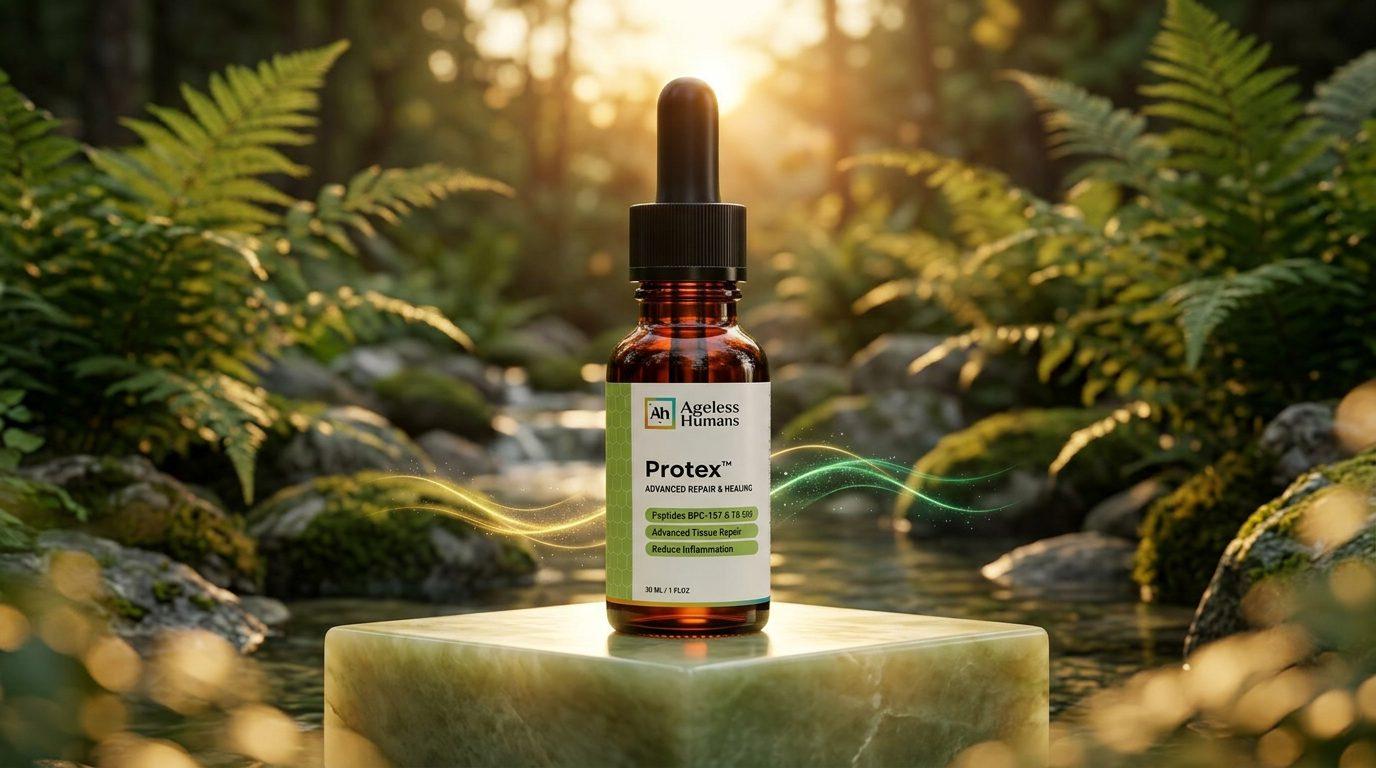
Meanwhile, the foundations epithalon research circles around remain well within your control. Consistent sleep timing supports healthy melatonin rhythms. Exercise, recovery, and nutrition support how cells handle stress. If you're interested in peptide science applied to everyday wellness, oral peptide formulas like Protex BPC-157 & TB-500 are built to support recovery and tissue resilience. If you want a structured daily routine instead of a single compound, the Metamorphic Anti-Aging Protocol organizes longevity support into one system. Neither is epithalon or a substitute for it. They're tools for a different, practical goal: supporting how your body recovers and maintains itself day to day.
Frequently asked questions
Is epithalon amidate the same as epitalon?+
Not exactly. Epitalon (also spelled epithalon) is the four-amino-acid peptide Ala-Glu-Asp-Gly. Epithalon amidate is that same sequence with an amide group capping one end, and N-acetyl epithalon amidate adds an acetyl cap on the other end. These changes are intended to improve stability, but the modified forms have little published research of their own.
Does epithalon lengthen telomeres in humans?+
That has not been established. Lab studies have associated epithalon with increased telomerase activity and telomere elongation in human cells grown in culture, but cell results do not reliably predict effects in the body. No large, independent human trials have confirmed telomere lengthening from epithalon or epithalon amidate.
Is epithalon amidate FDA-approved?+
No. Epithalon and its modified forms, including N-acetyl epithalon amidate, are not FDA-approved for any use. They are typically sold as research chemicals, which means purity, dosing accuracy, and quality depend entirely on the individual seller.
Is epithalon amidate safe?+
There isn't enough rigorous human data to say. Published research on standard epithalon comes mostly from small studies and animal work, and there are no published long-term human safety studies on the amidated form. Anyone considering an unapproved research peptide should talk with a qualified healthcare professional first.
Why is epithalon linked to melatonin and sleep?+
Epithalon was designed based on a peptide extract from the pineal gland, the small gland that produces melatonin. Animal studies and small human studies have explored whether it helps support more youthful melatonin rhythms in older subjects. These findings are preliminary and have not been confirmed in large independent trials.
Does Ageless Humans sell epithalon amidate?+
No. Ageless Humans does not sell epithalon, epithalon amidate, or N-acetyl epithalon amidate. This article is educational. Ageless Humans makes oral peptide and longevity support products in its FDA-registered facility in Carlsbad, California, with every lot third-party lab tested.