
Kisspeptin is a naturally occurring peptide made in the brain that acts as the upstream 'on switch' for the reproductive hormone cascade. It triggers the release of GnRH, which drives LH, FSH, and ultimately testosterone and estrogen. Researchers have studied it for puberty timing, reproductive hormone signaling, fertility-related protocols, and brain processing of attraction and mood. Most human data comes from small, short-term clinical studies, and kisspeptin is not an approved supplement or drug for general use.
What Is Kisspeptin?
Kisspeptin is a family of signaling peptides encoded by the KISS1 gene that tells the brain when to start and sustain reproductive hormone release. It binds a receptor called KISS1R (also known as GPR54), found mainly on GnRH neurons in the hypothalamus.
The name has an odd origin. Researchers first identified the KISS1 gene in Hershey, Pennsylvania, the home of Hershey's Kisses, and named it after the chocolate. At first the gene was studied in cancer biology. Its role in reproduction came into focus in the early 2000s, when research groups linked changes in the kisspeptin receptor to puberty that did not start normally.
Kisspeptin is not one molecule. The body cuts a larger precursor protein into several active fragments, named by how many amino acids they contain:
- Kisspeptin-54, the longest form, sometimes called metastin
- Kisspeptin-14 and kisspeptin-13, mid-length fragments
- Kisspeptin-10, the shortest active fragment, which researchers use often because it is simple to make
All of these forms activate the same receptor. They differ in how long they last in the bloodstream. For a quick reference profile, see our kisspeptin peptide overview.
How Kisspeptin Works: The Master Switch of the Reproductive Axis
Kisspeptin sits at the top of the hypothalamic-pituitary-gonadal (HPG) axis. It controls the pulse of GnRH, and that pulse drives every reproductive hormone below it. The chain works like this:
1. Kisspeptin neurons in the hypothalamus release kisspeptin. 2. GnRH neurons respond by releasing gonadotropin-releasing hormone in pulses. 3. The pituitary gland answers GnRH by releasing LH (luteinizing hormone) and FSH (follicle-stimulating hormone). 4. The testes or ovaries respond to LH and FSH by producing testosterone, estrogen, and progesterone, and by supporting sperm or egg development.
Two groups of kisspeptin neurons do different jobs. One group, in the arcuate nucleus, works alongside neurokinin B and dynorphin. Researchers call these KNDy neurons, and they are thought to act as the GnRH 'pulse generator.' A second group, in the preoptic area, is studied for its role in the mid-cycle LH surge in females.
Kisspeptin neurons also listen to the rest of the body. They respond to sex hormones through feedback loops, and research suggests they pick up signals about energy status, including the appetite hormone leptin. This helps explain why severe calorie restriction, very low body fat, or heavy training stress can quiet reproductive hormones. The brain appears to use kisspeptin to judge whether the body has enough resources for reproduction.
What Has Kisspeptin Been Studied For?
Kisspeptin research falls into five main areas: puberty, reproductive hormone signaling, fertility-clinic protocols, brain and behavior, and metabolism. Here is what each area looks at.
- Puberty and development. Much of the early human research looked at people whose puberty did not begin as expected. Changes in the kisspeptin receptor were linked to absent or delayed puberty, which helped establish kisspeptin as a gatekeeper of reproductive maturation.
- Reproductive hormone signaling. Clinical studies have given kisspeptin to healthy volunteers and to people with low reproductive hormone output, then measured LH, FSH, and sex hormones. These studies use it as a tool to probe how well the HPG axis responds.
- Fertility-clinic research. Investigators have explored kisspeptin as a possible trigger for final egg maturation in assisted reproduction protocols. The interest is that it works upstream and may produce a more natural-pattern hormone surge. This work remains investigational and happens under specialist supervision.
- Brain, attraction, and mood. Small human brain-imaging studies have looked at whether kisspeptin changes activity in regions tied to sexual and emotional processing. Researchers are exploring this as a window into libido and mood circuits, not as an established effect.
- Metabolism and energy balance. Because kisspeptin neurons respond to signals about energy stores, researchers study how the system links body weight, nutrition, and fertility. Kisspeptin receptors are also found outside the brain, including in fat tissue, the pancreas, and the liver, and their roles there are still being mapped.
The related neurokinin B pathway, part of the same KNDy neuron network, has also drawn research attention for its role in temperature regulation during menopause. That research targets a neighboring signal, not kisspeptin itself.
What the Evidence Does and Does Not Show
The evidence is strong on mechanism and weak on practical benefit. Scientists broadly agree that kisspeptin is essential for normal reproductive hormone signaling in humans. They do not agree that taking kisspeptin produces lasting, meaningful benefits outside controlled clinical settings.
What research supports well:
- Kisspeptin activates GnRH neurons, and giving it to people reliably raises LH in short-term studies.
- The kisspeptin system is required for normal puberty and reproductive function.
- Kisspeptin neurons combine hormonal and metabolic signals.
What remains limited or unproven:
- Study size and length. Most human trials are small and last hours to days, not months.
- Route. Research typically uses IV infusion or injection in clinical settings. Peptides like kisspeptin are broken down quickly in the gut, so there is no good evidence for meaningful oral activity.
- Desensitization. Some studies suggest that continuous, rather than pulsed, exposure can blunt the system's response over time. More is not simply better. Timing and pattern matter a great deal in hormone signaling.
- Libido, mood, and body composition. Claims online in these areas go far beyond the data. The brain-imaging findings are early and come from small groups.
- Longevity. No research shows that kisspeptin extends lifespan or slows aging in humans.
The honest summary: kisspeptin is an important molecule and a valuable research tool. It is not a proven wellness intervention.
Kisspeptin vs. Other Peptides: Why It Is a Different Category
Kisspeptin is a hormone-signaling peptide. It sits upstream of your sex hormones, which puts it in a different category from repair-focused or tissue-targeted peptides. That difference matters for both expectations and risk.
Peptides are short chains of amino acids, and they do very different jobs depending on their sequence. Some act as hormones, some as signals for tissue maintenance, and some as gene-regulating messengers. If you are new to the topic, start with our guide on what peptides are and how they work.
Where kisspeptin turns a major hormonal axis up or down, compounds studied for recovery work in another way. They have been researched for their roles in the body's normal tissue-maintenance processes rather than for flipping a hormonal master switch. Bioregulators are a separate group again: very short peptides studied for tissue-specific signaling. Our explainer on what bioregulators are covers that category.
Altering a hormonal axis carries ripple effects that a localized signal usually does not. That is why kisspeptin research stays inside clinical settings.
Safety, Legal Status, and Why Self-Experimenting Is a Bad Idea
Kisspeptin is not approved by the FDA as a drug or dietary supplement, and products sold online as 'research peptides' are not intended for human use. In published clinical studies it has generally been given under medical supervision with hormone monitoring, and short-term tolerability has looked acceptable in those controlled settings.
Outside those settings, the risks change:
- Unknown purity and identity. Gray-market vials are often unverified. You may not know what is actually in them or at what strength.
- Hormone disruption. Pushing the HPG axis without monitoring can disrupt your own hormone rhythm, especially given the desensitization seen with continuous exposure.
- Masking real issues. Low libido, low energy, or irregular cycles have many causes. A hormone-axis signal is not a shortcut around a proper workup.
If reproductive hormones or fertility are a concern, a qualified clinician can order labs and discuss evidence-based options, including enrollment in a clinical trial if one fits.
What This Means If You Care About Longevity
For most people, the practical lesson from kisspeptin research is to support the signals your kisspeptin system already reads: energy availability, sleep, stress, and body composition. The research shows these neurons respond to whether the body feels safe and well-resourced.
That points to fundamentals with real backing:
- Eat enough. Chronic under-eating and very low body fat are well-known suppressors of reproductive hormones.
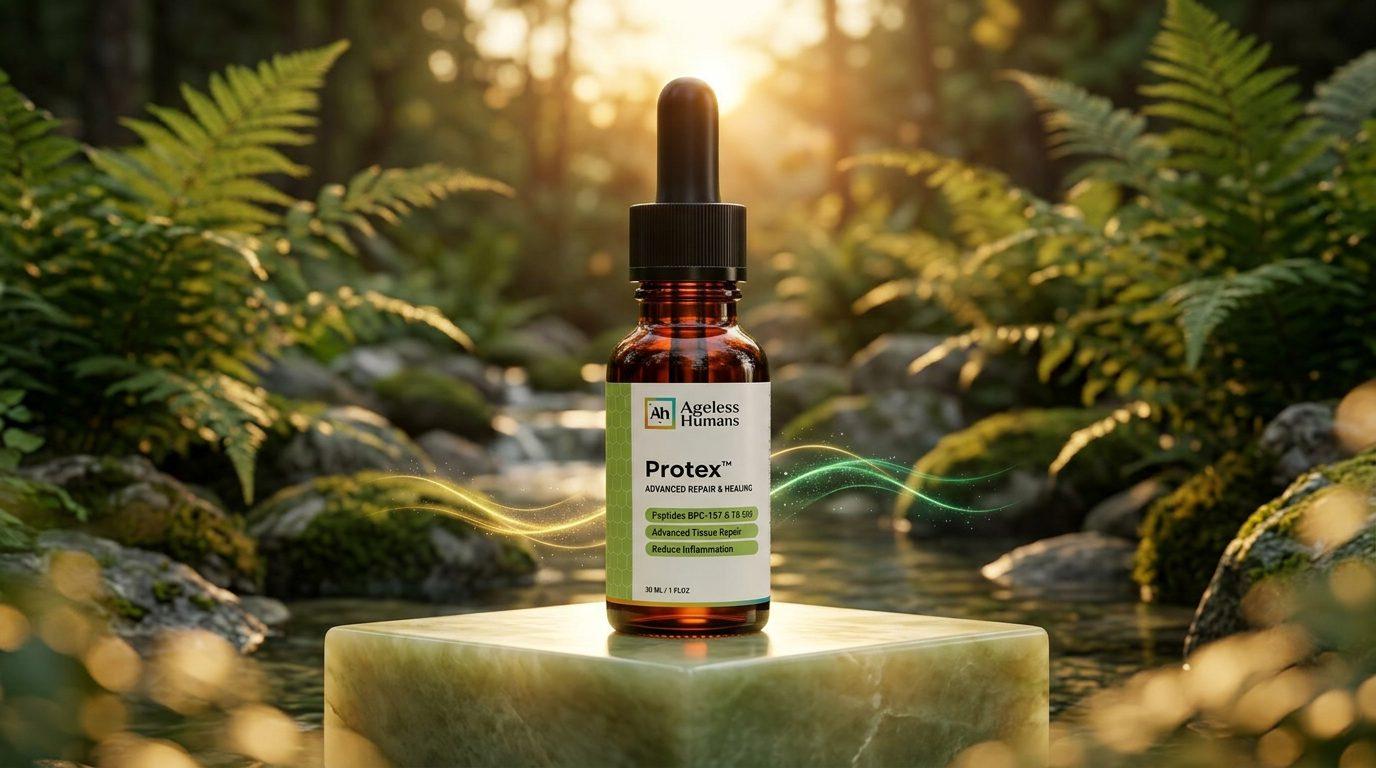
- Recover from training. Hard training without adequate recovery adds stress load. Many people use recovery-focused tools, such as our oral Protex BPC-157 & TB-500, to support their recovery routine. It works through entirely different pathways than kisspeptin and is not a hormone-axis product.
- Protect sleep. Reproductive hormone pulses are closely linked to sleep and circadian rhythm.
- Manage stress. Stress-hormone signaling interacts with the reproductive axis.
If you want a structured, whole-system approach to daily energy, recovery, and healthy aging, the Metamorphic Anti-Aging Protocol bundles our foundational support into one routine. Use it as directed on the label, alongside the basics above.
Frequently asked questions
What is kisspeptin?+
Kisspeptin is a naturally occurring peptide produced mainly in the hypothalamus. It activates the KISS1R receptor on GnRH neurons, which starts the hormone cascade that leads to LH, FSH, testosterone, and estrogen release. Scientists consider it a key gatekeeper of puberty and reproductive hormone signaling.
What are the benefits of kisspeptin?+
Kisspeptin has been studied for its role in reproductive hormone signaling, puberty timing, investigational fertility-clinic protocols, and brain processing related to attraction and mood. Short-term clinical studies show it reliably raises LH when given under supervision. Long-term benefits for libido, body composition, or aging in healthy people have not been established.
Does kisspeptin increase testosterone?+
Because kisspeptin stimulates GnRH and then LH, short-term studies have observed rises in reproductive hormones, including testosterone in men. These effects were measured in controlled clinical settings over hours to days. Research also suggests continuous exposure may blunt the response, so it is not a proven long-term way to raise testosterone.
Is kisspeptin legal or FDA approved?+
Kisspeptin is not FDA approved as a drug or as a dietary supplement. It is used in clinical research under medical supervision. Products sold online as research peptides are not intended for human consumption and often lack verified purity.
Can you take kisspeptin orally?+
There is no good evidence that kisspeptin works when swallowed, because digestive enzymes break down peptides like it quickly. Human research has used IV infusion or injection in clinical settings. Oral products marketed as kisspeptin are not backed by published evidence.
How does diet and lifestyle affect kisspeptin?+
Kisspeptin neurons respond to signals about energy status, including the hormone leptin. Research suggests chronic under-eating, very low body fat, heavy training stress, and poor sleep can quiet the reproductive axis. Adequate nutrition, recovery, sleep, and stress management support the conditions this system relies on.