
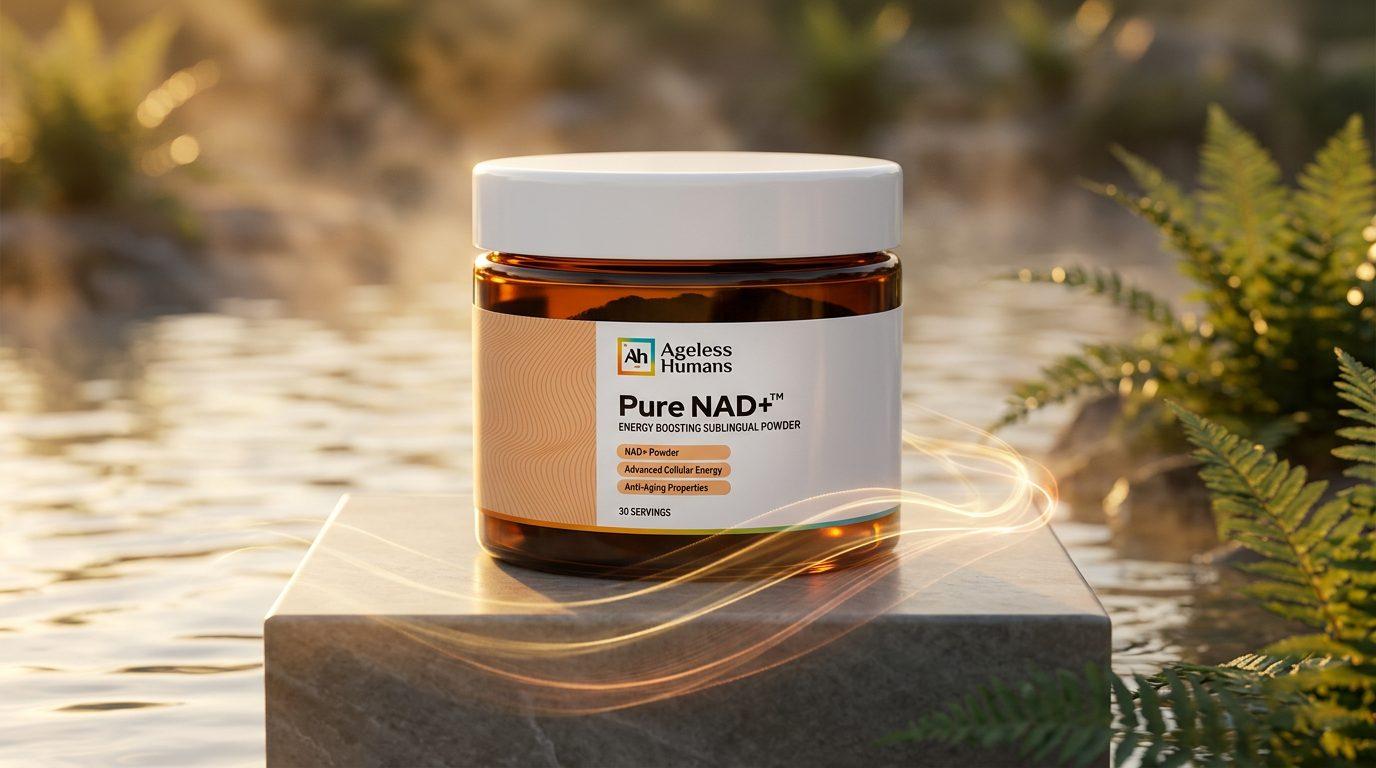
For most bulk buyers swallowing powder, raw NMN is the more efficient choice. It is a smaller precursor molecule that the body converts into NAD+, and each gram contains roughly twice as many molecules as a gram of NAD+. Raw NAD+ powder makes the most sense if you specifically want to hold the finished molecule under your tongue, are comfortable with a more moisture-sensitive powder, and accept that human research on that route is still limited.
The Short Answer: Who Should Buy Which Powder
Choose raw NMN powder if you plan to swallow your powder, mixed into water or a drink, and you want the most precursor per gram. NMN has the larger body of published research as an oral NAD+ precursor, it handles easily, and the per-gram math favors it.
Choose raw NAD+ powder if you want the finished coenzyme itself, you plan to try a sublingual routine, and you are willing to store it carefully. NAD+ is the molecule your cells actually use, which is a real draw, but it is large and more demanding to keep in good condition.
If you are still deciding whether you need the finished molecule or a precursor at all, start with our deeper explainer on NAD vs NMN. This guide focuses on the practical buyer questions: delivery route, shelf life, and what you actually get for each gram you pay for.
Direct NAD+ vs Precursor Logic: What Happens After You Swallow It
The core difference: NAD+ is the end product, while NMN is one step before it. NAD+ (nicotinamide adenine dinucleotide) is a coenzyme involved in cellular energy metabolism and DNA maintenance processes. Research suggests NAD+ levels in the body tend to decline with age, which is why both powders are studied for healthy aging.
Taking the end product seems like the obvious shortcut. The catch is size and structure. NAD+ is a large, charged molecule. Research suggests that when swallowed, much of it is broken down in the digestive tract into smaller pieces, including NMN and nicotinamide, before absorption. In other words, oral NAD+ may end up behaving partly like a precursor anyway.
NMN is about half the size of NAD+. Research suggests it can be absorbed and then converted into NAD+ inside cells, and animal research has explored a possible dedicated transport route for it in the gut. Human studies on oral NMN are growing but still relatively small and short. The honest summary:
- Oral NMN: more published research as an oral precursor, simpler pathway logic
- Oral NAD+: intuitive appeal, but likely digested into smaller precursors first
- Neither: has long-term, large-scale human data that settles which is better
For a powder you plan to swallow, precursor logic generally favors NMN.
The Sublingual Argument: Does Under-the-Tongue Change the Math?
Sublingual use is the strongest argument for raw NAD+ powder, but it is a reasoned theory more than a proven advantage. The idea is simple: tissue under the tongue is thin and rich in blood vessels, so holding powder there may let some of it bypass the digestive breakdown described above.
That logic is why many NAD+ powder buyers choose a sublingual routine. It is also applied to NMN, since some people prefer to avoid stomach acid and first-pass metabolism for any precursor. What research does not yet show is a clear, well-measured human comparison proving sublingual NAD+ or NMN raises NAD+ levels more than swallowing. Treat sublingual use as a reasonable personal preference, not a settled fact.
Practical notes if you go sublingual:
- Taste matters. Both powders have a noticeable flavor, often described as sour or bitter, and some people find NAD+ harder to hold.
- Keep the tongue dry and the powder dry. Moisture from wet scoops degrades the rest of your bag.
- Follow label directions for serving size. Raw powder makes it easy to overshoot, so measure rather than eyeball.
If your choice between powder and capsules hinges on this flexibility, our guide to NMN powder vs capsules covers the tradeoffs in detail.
Stability: Which Powder Holds Up Better in a Bulk Bag
Both powders reward careful storage, and NAD+ is generally considered the more fragile of the two. Bulk buying only saves money if the last scoop is as good as the first, so storage is not a side issue.
The main enemies are the same for both:
- Moisture. Both powders are hygroscopic, meaning they pull water from the air. Clumping is the first visible sign. NAD+ tends to be especially sensitive.
- Heat. Warm cabinets near stoves, dishwashers, or sunny windows speed degradation.
- Light and air. Every opening introduces humid air. Reseal fast and squeeze out excess air.
- Liquid. Once dissolved, either powder becomes far less stable. Mix right before use and never pre-batch a week of drinks.
A bulk-buyer storage routine that works:
1. Keep the main bag sealed and cool, refrigerated if the label recommends it. 2. Decant a small working supply into a dry, airtight container so the main bag rarely opens. 3. Use a completely dry scoop every time. 4. Add a food-safe desiccant packet if your container allows it. 5. Let refrigerated containers reach room temperature before opening, which keeps condensation out.
If you live somewhere humid or you know you will not stay disciplined about resealing, that is a real point in favor of NMN or a smaller bag size.
Cost Per Gram: Why the Sticker Price Is the Wrong Comparison
Compare cost per useful molecule, not just cost per gram. This is where most bulk buyers make the wrong call, because the two powders are not equal gram for gram.
Here is the chemistry. NMN has a molecular weight of roughly 334 grams per mole. NAD+ is roughly 663 grams per mole, about twice as heavy. That means one gram of NMN contains about twice as many molecules as one gram of NAD+. Since swallowed NAD+ is likely broken into smaller parts anyway, a gram of NMN may deliver more usable precursor than a gram of NAD+ for oral routines.
To compare bags fairly, run this quick math:
1. Price per gram: bag price divided by grams in the bag. 2. Price per serving: price per gram multiplied by the label serving size in grams. 3. Adjust for waste: if a powder clumps or degrades before you finish it, your real cost rises. A cheaper bag that spoils is not cheaper. 4. Adjust for purity: a lower-priced powder at lower verified purity gives you less of what you paid for.
The takeaway: a higher price per gram for NAD+ is not automatically a bad deal if you are committed to sublingual use, but for swallowed powder, NMN usually wins on value.
Purity and Sourcing: What to Check Before Any Bulk Purchase
The single most important bulk-buying check is a current, lot-specific certificate of analysis (COA) from a third-party lab. Raw powder has no capsule, no flavoring, and no brand story to hide behind. What is in the bag is the whole product.
Look for these on any NAD+ or NMN powder:
- Identity and purity testing that confirms the compound is what the label says
- Heavy metals and microbial testing, since you are consuming the powder directly
- A COA tied to your lot number, not a generic sample from years ago
- A clear manufacturing location and a facility with real oversight
- A return policy, because you should be able to evaluate a powder without being stuck with it
At Ageless Humans, every product is made in our FDA-registered facility in Carlsbad, California, every lot is third-party lab tested with a COA, and all purchases are backed by a 60-day money-back guarantee. Whatever brand you buy from, hold it to that standard.
A Simple Decision Framework for Bulk Buyers
Answer three questions and the choice usually makes itself.
1. How will you take it?
- Swallowed in a drink: lean NMN.
- Held under the tongue: NAD+ is a reasonable choice, and NMN works sublingually too.
2. How disciplined is your storage?
- Cool, dry, quickly resealed every time: either powder works.
- Humid climate or casual habits: lean NMN, and buy a size you will finish.
3. What matters more to you, value or the finished molecule?
- Most precursor per dollar: NMN.
- Want NAD+ itself despite the higher cost per molecule: NAD+.
Some buyers keep both, using raw NMN powder as a daily swallowed base and raw NAD+ powder for a sublingual routine. If you combine them, follow each label's directions and avoid stacking servings beyond what either label recommends. When in doubt, especially if you take medications or have a health condition, talk with your healthcare provider first.
Frequently asked questions
Is raw NAD+ powder better than raw NMN powder?+
Not across the board. NAD+ is the finished coenzyme, but research suggests much of it is broken down in the digestive tract when swallowed. NMN is a smaller precursor with more published research as an oral supplement, so it is usually the better value for swallowed powder, while NAD+ appeals mainly to people who prefer sublingual use.
Does sublingual NAD+ powder absorb better than swallowing it?+
The theory is that holding NAD+ under the tongue lets some of it bypass digestive breakdown, since that tissue is thin and rich in blood vessels. However, well-controlled human research directly comparing sublingual and swallowed NAD+ is still limited. Sublingual use is a reasonable preference, not a proven advantage.
Which is more stable, NAD+ powder or NMN powder?+
Both powders absorb moisture from the air and degrade faster with heat, light, and humidity. NAD+ is generally considered the more sensitive of the two. Store either powder sealed, cool, and dry, use a dry scoop, and only dissolve it right before use.
Why is NMN cheaper per serving than NAD+?+
Part of the reason is molecular size. NMN weighs roughly 334 grams per mole and NAD+ roughly 663, so a gram of NMN contains about twice as many molecules as a gram of NAD+. Comparing price per useful molecule, not just price per gram, gives a fairer picture of value.
Can I take NAD+ powder and NMN powder together?+
Some people use both, for example NMN swallowed and NAD+ held under the tongue. If you combine them, follow each product's label directions and do not exceed recommended servings. Check with your healthcare provider first if you take medications or have a health condition.
What should I look for when buying bulk NAD+ or NMN powder?+
Look for a lot-specific certificate of analysis from a third-party lab that confirms identity and purity and screens for heavy metals and microbes. Check where the powder is manufactured and whether the brand offers a return policy. Raw powder has nothing else in it, so verified purity is the whole product.