
The best mitochondria supplement depends on which part of cellular energy production you want to support. Creatine has the strongest human evidence overall, CoQ10 and NAD+ precursors (NMN, NR) have solid mechanisms and growing human data, and PQQ and methylene blue are mechanistically interesting but earlier-stage. Most people get the most value by building a stack in that order: proven foundation first, experimental layers last.
The Short Answer: Which Mitochondria Supplement Is Best?
For most adults, start with creatine, then add CoQ10, then consider an NAD+ precursor. That order reflects how much human research supports each ingredient, not how exciting each one sounds.
Here's the quick ranking by strength of human evidence:
1. Creatine: the most-studied, with consistent human data for supporting cellular energy buffering, strength, and power output. 2. CoQ10: an essential part of the electron transport chain. Human research is moderate and mixed by outcome. 3. NAD+ precursors (NMN, NR): reliably raise NAD+ levels in human trials. Data on functional outcomes is still early. 4. PQQ: promising cell and animal data on mitochondrial signaling, with only a small human research base. 5. Methylene blue: a unique mechanism with a long pharmacology history. Human research on energy and cognition is early, and it carries real interaction cautions.
"Best" also depends on your goal. Someone focused on training output wants something different from someone focused on cognitive energy or healthy aging. The rest of this guide maps each ingredient to its mechanism, gives it an honest evidence label, and shows how to combine them on any budget. For the broader biology, see our complete guide to cellular energy.
Mechanism Map: Where Each Supplement Acts in the Energy Chain
Each of these five ingredients works on a different step of ATP production, so they complement each other more than they compete. Your mitochondria turn food into ATP, the molecule cells use for energy, through a chain of steps. Knowing which step each supplement targets tells you why stacking can make sense.
- NAD+ precursors (NMN, NR): the fuel-carrier supply. NAD+ carries electrons from broken-down food into the electron transport chain. It is also used by enzymes involved in cellular maintenance, such as sirtuins and PARPs. NAD+ levels are reported to decline with age, and precursors give the body raw material to make more.
- CoQ10: the electron shuttle inside the chain. CoQ10 moves electrons from Complexes I and II to Complex III. It also acts as a fat-soluble antioxidant in cell membranes. The body makes its own supply, but production is reported to fall with age.
- Methylene blue: an alternative electron route. Methylene blue can accept and donate electrons, which lets it shuttle them toward cytochrome c and around bottlenecks in the chain. This redox-cycling behavior is why it gets so much attention in mitochondrial research.
- PQQ: the biogenesis signal. In preclinical research, PQQ influences signaling pathways (including PGC-1α) associated with building new mitochondria. It works on how many mitochondria you have, not on a single step of the chain.
- Creatine: the ATP buffer. Creatine doesn't make ATP in the mitochondria. It stores high-energy phosphate as phosphocreatine and quickly regenerates ATP where demand spikes, mainly in muscle and brain. It is the cell's rapid-recharge battery.
Put simply: NAD+ supplies the electrons, CoQ10 and methylene blue move them, PQQ signals for more mitochondria, and creatine stores the output for fast use.
Evidence Tiers: What Research Does and Doesn't Show
Only creatine has broad, consistent human evidence. The others range from moderate to early, and honest labels matter more than marketing. Here is how we grade each one.
Tier A: Strong, consistent human evidence - Creatine: Many human trials over decades support its role in muscle energy, strength, and training performance. Research on cognitive energy, especially under sleep loss or stress, is growing and suggestive.
Tier B: Solid mechanism, moderate or mixed human evidence
- CoQ10: Its role in the electron transport chain is textbook biochemistry. Human studies on energy, exercise, and cardiovascular function are mixed, and results vary with the person's baseline levels and the form used.
- NAD+ precursors: Human trials consistently show that NMN and NR raise blood NAD+ levels. This is a well-established biomarker effect. Results for functional outcomes such as endurance, metabolic markers, and physical function are early and mixed.
Tier C: Promising but early in humans
- PQQ: Most of the mitochondrial biogenesis data comes from cells and animals. Small human studies have looked at markers of cognition and energy, but the base is thin.
- Methylene blue: Its electron-shuttling mechanism is well characterized, and it has been studied in preclinical models of mitochondrial function and memory. Human research on everyday cognitive energy is small and early. Read our deeper breakdown of methylene blue benefits and research.
What none of them show: No supplement here has been demonstrated to extend human lifespan. Any product claiming otherwise is going beyond the evidence.
Who Each Supplement Fits Best
Match the ingredient to your goal: creatine for physical output, CoQ10 for foundational chain support, NAD+ precursors for healthy-aging biology, and PQQ or methylene blue for experimenters focused on cognition.
- You train, lift, or want to stay strong with age: Start with creatine. It has the clearest payoff for the least complexity and cost.
- You're over 40 and want baseline mitochondrial support: Add CoQ10, since your own production is reported to decline over time. The ubiquinol form is often chosen for absorption, though both forms are studied.
- You're focused on cellular aging pathways: NMN or NR target the NAD+ decline that researchers associate with aging biology. This is the most popular longevity category for good reason, but expect subtle effects, not a jolt.
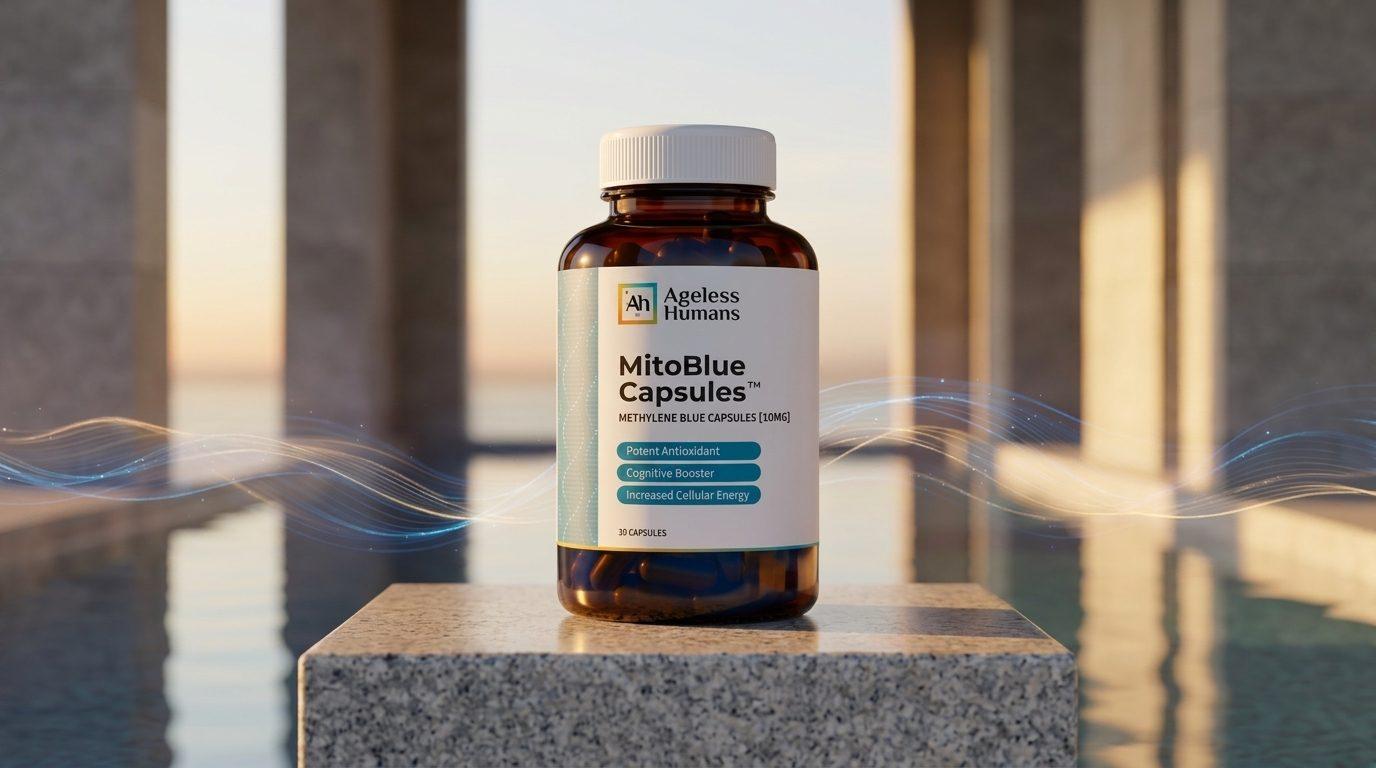
- You want sharper mental energy and you're comfortable with early-stage science: Methylene blue is the most distinctive option. Low-dose, pharmaceutical-grade products are what people in this space typically look for. Our methylene blue capsules are built for that use case.
- You want to support mitochondrial number, not just function: PQQ is the biogenesis-signaling candidate. It is often paired with CoQ10 because they act at different levels.
If you're unsure, don't start five things at once. Add one ingredient at a time for a few weeks so you can tell what is actually helping.
Budget Stacks: Starter, Core, and Advanced
Build from the cheapest, best-evidenced ingredient upward, and only add experimental layers once the foundation is in place. Follow each product's label directions for serving size.
1. Starter Stack: lowest cost, highest evidence
- Creatine monohydrate
- Why: It is inexpensive per serving and has the strongest research base. If you only buy one thing, this is it.
2. Core Stack: foundational mitochondrial support
- Creatine
- CoQ10
- Why: This covers ATP buffering and electron transport, two different steps, for a moderate monthly cost.
3. Longevity Stack: healthy-aging focus
- Creatine
- CoQ10
- An NAD+ precursor such as NMN 500 capsules
- Why: It adds the NAD+ supply layer, which has the most direct link to aging-biology research. NAD+ precursors are usually the priciest line item, so this is where your budget stretches.
4. Advanced Stack: for experienced users
- Longevity Stack, plus methylene blue and/or PQQ
- Why: These target electron routing and mitochondrial biogenesis. Add them last, one at a time, and only after reviewing the safety notes below.
Cost tip: Spend on purity before quantity. A smaller stack of tested, well-formulated ingredients beats a long list of under-dosed or unverified ones.
How to Judge Quality Before You Buy
The deciding factors are third-party testing, the right ingredient form, and a transparent manufacturer. Mitochondrial supplements vary widely in purity, and some categories are known for quality problems.
What to check:
- A Certificate of Analysis (COA) for every lot. This should confirm identity, potency, and screening for contaminants such as heavy metals. If a brand won't share COAs, move on.
- Form matters. For CoQ10, note whether it's ubiquinone or ubiquinol. For NAD+ precursors, look for clear labeling of NMN or NR content per serving. For methylene blue, look for pharmaceutical-grade (USP) material rather than industrial or aquarium-grade dye.
- Where it's made. Domestic, registered manufacturing with documented quality control reduces the guesswork.
- A real guarantee. Brands confident in their product stand behind it.
At Ageless Humans, every product is made in our FDA-registered facility in Carlsbad, California. Every lot is third-party lab tested with a COA, and every product carries a 60-day money-back guarantee. Explore our full range of NAD and NMN supplements to compare formats.
Safety Notes: Who Should Check With a Clinician First
Most of these ingredients are well tolerated at label directions, but methylene blue has specific interaction risks, and anyone on medication should get professional input first.
- Methylene blue: It has MAO-inhibiting properties and may interact with serotonergic medications, including many antidepressants. If you take any prescription medication, are pregnant or nursing, or have G6PD deficiency, talk to your healthcare provider before using it. It also turns urine blue-green, which is expected and harmless.
- CoQ10: It may interact with blood thinners. Check with your clinician if you take them.
- NAD+ precursors: These are generally well tolerated in human trials. Long-term data is still being gathered, so stick to label directions.
- Creatine: It is one of the most studied supplements for safety. It can cause mild water retention early on. People with kidney concerns should consult their provider.
- PQQ: Human safety data is limited, though available studies report good tolerability at typical label amounts.
Never exceed label directions on the theory that more is better. For mitochondrial support, consistency matters more than intensity.
Don't Skip the Free Mitochondria Boosters
Exercise, sleep, and metabolic habits are the most powerful mitochondrial levers, and supplements work best on top of them.
- Exercise: Both endurance and interval training are well-established signals for mitochondrial biogenesis. No supplement replaces this.
- Sleep: Cellular repair and energy regulation depend on consistent, quality sleep.
- Nutrition: Adequate protein, B vitamins (niacin is itself an NAD+ building block), and colorful whole foods support the raw materials your mitochondria need.
- Cold, heat, and fasting: These are researched as mild stressors that may support mitochondrial adaptation, though the evidence varies by practice.
Think of the stack as an amplifier. Lifestyle sets the volume, and supplements help fine-tune the signal.
Frequently asked questions
What is the best supplement for mitochondrial health?+
Creatine has the strongest human evidence for supporting cellular energy, especially in muscle and brain. CoQ10 and NAD+ precursors like NMN are the next most-supported options for mitochondrial function and healthy aging. PQQ and methylene blue are promising but have earlier-stage human research.
Can you take NMN, CoQ10, and methylene blue together?+
These three act on different steps of cellular energy production, which is why they are often combined. NMN supports NAD+ supply, CoQ10 moves electrons in the transport chain, and methylene blue offers an alternative electron route. Because methylene blue can interact with serotonergic medications, check with a healthcare provider before adding it, and introduce one ingredient at a time.
Is PQQ or CoQ10 better for mitochondria?+
They do different jobs. CoQ10 is a built-in part of the electron transport chain and has more human research behind it. PQQ is studied mainly in cells and animals for signaling the creation of new mitochondria. Many people pair them, but CoQ10 is the better-evidenced first choice.
Do NAD+ supplements actually work?+
Human trials consistently show that NAD+ precursors such as NMN and NR raise NAD+ levels in the blood. Research on whether that translates into noticeable changes in energy, metabolism, or physical function is still early and mixed. They are best viewed as long-term support for cellular aging pathways, not a quick energy boost.
Is creatine really a mitochondria supplement?+
Creatine doesn't produce ATP inside the mitochondria. It stores energy as phosphocreatine and rapidly regenerates ATP where cells need it most. Because it works hand in hand with mitochondrial energy output and has the strongest human evidence of any option here, it belongs in any serious mitochondrial stack.
Is methylene blue safe to take as a supplement?+
Pharmaceutical-grade methylene blue taken at label directions is used by many people. However, it has MAO-inhibiting properties and may interact with antidepressants and other serotonergic medications. People who are pregnant, nursing, on prescription drugs, or who have G6PD deficiency should consult a healthcare provider first.