
Cerebrolysin is a mixture of low-molecular-weight peptides and amino acids purified from pig brain tissue and given by injection or IV infusion. Semax is one defined, synthetic seven-amino-acid peptide given as nasal drops. Both are prescription medicines in some Eastern European countries, neither is FDA-approved in the US, and the research behind each is real but much smaller and less replicated than online forums suggest.
The Short Answer: Two Very Different Kinds of Compound
The core difference is complexity. Cerebrolysin is a biological blend with many active fragments. Semax is a single, precisely defined molecule. That one fact drives nearly every other difference: how each is made, how it is given, how it is studied, and how hard it is to know what is actually in a vial.
Here is the quick version:
- Cerebrolysin: animal-derived peptide preparation. Injected into a muscle or vein, usually in a clinical setting. Studied mostly in hospital-based research.
- Semax: synthetic heptapeptide (seven amino acids). Given as nasal drops. Studied mostly in Russian clinical and animal research.
People search them together because both are discussed online as cognitive compounds and both are associated with Russian medicine. In practice they are not interchangeable, and comparing them like two brands of the same product misses the point. For deeper single-compound overviews, see our guides to Cerebrolysin and Semax.
What Each One Actually Is
Cerebrolysin is a peptide blend, not a single ingredient. It is made by breaking down purified porcine (pig) brain proteins into small peptides and free amino acids. The manufacturer describes it as containing fragments that resemble the brain's own signaling proteins, often called neurotrophic factors. Because it is a mixture, no single molecule explains its effects. That makes it harder to study mechanistically and harder to copy.
Semax is one synthetic molecule. Its sequence is Met-Glu-His-Phe-Pro-Gly-Pro. The first four amino acids come from a fragment of ACTH, a natural hormone, and the Pro-Gly-Pro tail was added to slow its breakdown in the body. Researchers chose a fragment that does not carry ACTH's typical hormonal effects on the adrenal glands.
Why this matters to you:
- Reproducibility: A defined peptide like Semax can be checked for identity and purity against a known sequence. A biological blend depends on the original manufacturing process.
- Mechanism clarity: Semax research tends to focus on specific pathways. In animal studies it has been examined for effects on BDNF (brain-derived neurotrophic factor) signaling. Cerebrolysin research tends to look at overall outcomes rather than one pathway.
- Source: Cerebrolysin is animal-derived. Semax is lab-synthesized. That can matter for people who avoid porcine products.
Origins and Legal Status: Correcting the Russian Label
Only Semax is truly Russian in origin. It was developed in Russia in the 1980s and 1990s and is registered there as a medicine. Cerebrolysin was developed in Austria by the pharmaceutical company EVER Pharma (originally Ebewe). It is widely used in Russia and Eastern Europe, which is why it often gets grouped with Russian compounds, but its origin is Central European.
In the United States, neither is FDA-approved for any use. Neither is a dietary supplement, and neither can legally be sold as one. Products sold online as Semax are typically labeled for research use only, and Cerebrolysin sold outside regulated pharmacies is usually imported through unofficial channels.
This status matters more than any study. Approval in one country reflects that country's standards and data. It does not mean the compound has passed the larger, independently replicated trials US regulators generally expect.
Administration Realities: Needles vs Nasal Drops
Cerebrolysin requires injection, usually under clinical supervision. Semax is applied inside the nose. This is the most practical difference between them, and forums often gloss over it.
Cerebrolysin is a sterile liquid given by intramuscular injection or by slow intravenous infusion. In the countries where it is prescribed, larger IV courses are typically given in hospitals or clinics. Anything injected carries risks that oral or nasal products do not: infection, contamination, and reactions at the injection site. Sterility is non-negotiable, and you cannot verify sterility at home.
Semax is formulated as nasal drops. The nasal route is used because peptides are largely broken down in the digestive tract, while the nasal lining offers a more direct path. That is easier and less invasive than injection, but it is not risk-free, especially with products from unregulated sources.
We do not provide dosing information for either compound. Neither is a supplement, and any decision about prescription-only medicines belongs with a licensed clinician who knows your health history.
What the Research Shows, Honestly Sized
Both compounds have published research, but the evidence base is modest, uneven, and concentrated in a few countries. Neither has the large, independently replicated, multi-country evidence base that a confident claim would require.
Cerebrolysin has been studied in hospital settings, including research involving recovery after stroke and traumatic brain injury and in older adults with cognitive decline. Some trials and reviews report favorable signals. Others report results that are mixed or not clearly different from placebo. Independent reviewers have flagged small sample sizes and industry funding as limitations. The honest summary: it has been studied more in clinical settings than Semax, and the results are debated.
Semax research is mostly Russian-language clinical studies and animal work. Lab and animal studies have examined its effects on BDNF expression, gene activity in brain tissue, and attention-related behavior. Those are interesting starting points. Rodent findings, however, often fail to carry over to people, and there is little rigorous Western replication in healthy humans.
What the research does not show: there is no solid evidence that either compound meaningfully boosts focus, memory, or IQ in healthy people who want a mental edge. That use case is mostly built on anecdote.
Side-by-Side Comparison
If you only read one section, read this one.
- Composition: Cerebrolysin is a blend of peptides and amino acids from porcine brain. Semax is a single synthetic heptapeptide.
- Origin: Cerebrolysin comes from Austria. Semax comes from Russia.
- Route: Cerebrolysin is given by intramuscular injection or IV infusion. Semax is given as nasal drops.
- Typical setting: Cerebrolysin is mostly used in clinics or hospitals where it is prescribed. Semax is used at home in countries where it is prescribed.
- US status: Neither is FDA-approved, and neither is a dietary supplement.
- Research focus: Cerebrolysin has mostly been studied in hospital-based neurological recovery. Semax has mostly been studied in animals and in Russian clinical work.
- Evidence in healthy people: Limited for both.
- Verification difficulty: High for Cerebrolysin, since a biological blend can't be confirmed by sequence. Moderate for Semax, which can be sequence-tested but is often sold without testing.
The takeaway: they answer different questions. Cerebrolysin is a clinical biologic. Semax is a nasal research peptide. Neither is a shortcut to better focus on a Tuesday afternoon.
The Grey-Market Problem
The biggest real-world risk with either compound is not the molecule. It is the source. Outside regulated pharmacies, you have no reliable way to confirm identity, dose, purity, or sterility.
Common problems with unregulated peptide products include:
- Mislabeling: the vial may contain less, more, or something other than what is listed.
- Contamination: bacterial or chemical contamination is especially dangerous in anything injected.
- Degradation: peptides break down with heat and time, and shipping conditions are often unknown.
- No accountability: "research use only" labels exist specifically to avoid responsibility for human use.
If a compound interests you, the responsible move is a conversation with a licensed physician. Do not self-source from a website that cannot show you a certificate of analysis for the exact lot you would receive.
Where Everyday Cognitive Support Fits
For most people, the realistic goal is steady mental energy, and that starts with fundamentals. Sleep, movement, protein intake, hydration, and managing stress do more for daily focus than any obscure compound.
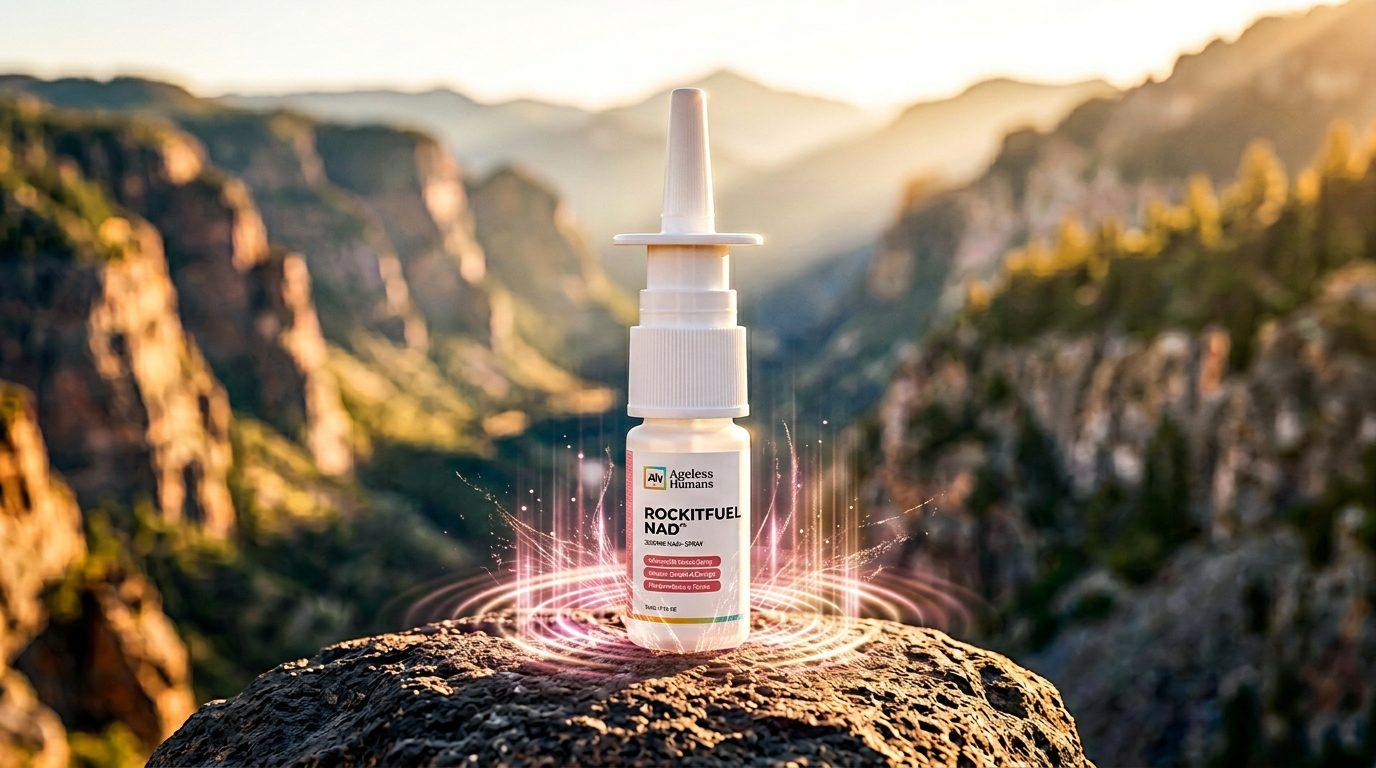
If you want to add legal, label-directed supplements, look at ingredients studied for supporting cellular energy, since the brain is one of the body's most energy-demanding organs. NAD+ is a coenzyme involved in cellular energy metabolism, and levels are known to decline with age. Some people prefer a nasal format like RockitFuel with Focus NAD+ nasal spray. Methylene blue has been studied for its role in mitochondrial electron transport, and our methylene blue capsules are formulated to support mitochondrial function.
Whatever you choose, demand transparency. Every Ageless Humans product is made in our FDA-registered facility in Carlsbad, California. Every lot is third-party lab tested with a COA, and every product is backed by a 60-day money-back guarantee. That is the opposite of the grey market.
Frequently asked questions
What is the main difference between Cerebrolysin and Semax?+
Cerebrolysin is a blend of peptides and amino acids derived from pig brain tissue and given by injection or IV infusion. Semax is a single synthetic seven-amino-acid peptide given as nasal drops. Cerebrolysin is a complex biologic, while Semax is one defined molecule. Neither is FDA-approved in the United States.
Is Cerebrolysin Russian?+
No. Cerebrolysin was developed in Austria by EVER Pharma, formerly Ebewe. It is widely prescribed in Russia and Eastern Europe, which is why it is often grouped with Russian compounds. Semax, by contrast, was developed in Russia.
Are Cerebrolysin and Semax legal in the US?+
Neither is FDA-approved for any use in the United States, and neither can legally be sold as a dietary supplement. Semax is usually sold online labeled for research use only, and Cerebrolysin typically enters the US through unofficial import channels. Anyone considering either should speak with a licensed physician.
Which has more research, Cerebrolysin or Semax?+
Cerebrolysin has more clinical research, mostly in hospital settings related to neurological recovery, though reviewers describe the results as mixed and debated. Semax research is mainly Russian clinical studies and animal work, with limited independent Western replication. Neither has strong evidence for improving cognition in healthy people.
Can you take Semax or Cerebrolysin orally?+
Neither is designed to be swallowed. Peptides are largely broken down in the digestive tract. Semax is formulated as nasal drops, and Cerebrolysin is given by intramuscular or intravenous injection. Route and use decisions for these compounds belong with a licensed clinician.
Is there a legal supplement alternative for focus and mental energy?+
No supplement replicates prescription peptides, but some legal ingredients are studied for supporting cellular energy, which the brain relies on heavily. NAD+ supports cellular energy metabolism, and methylene blue has been studied for its role in mitochondrial function. Choose products that are third-party tested and follow label directions.