
CoQ10 and PQQ do different jobs. CoQ10 is a built-in part of the electron transport chain that mitochondria use to make energy, and it has a deep body of human research. PQQ is studied for signaling the cell to build new mitochondria, but most of that evidence comes from cell and animal studies, with only small, short human trials. If you choose one, CoQ10 has the stronger evidence. If you stack them, you pair a known working part with a promising but less proven signal.
The Short Answer: Different Jobs, Different Evidence
CoQ10 helps the energy machinery you already have work. PQQ is studied for helping you make more of that machinery. They are often sold together as a "mitochondrial duo," but they are not interchangeable.
Think of a mitochondrion as a small power plant. CoQ10 is a part on the assembly line. It moves electrons from one station to the next so the plant can make ATP, the cell's energy currency. PQQ is closer to a memo to management. Research suggests it may switch on signals that tell the cell to build more power plants. This process is called mitochondrial biogenesis.
The evidence behind each one differs a lot, and most comparison articles skip that. CoQ10 has decades of human research behind it. PQQ's biogenesis story rests mostly on lab and animal work. Human data is limited. Knowing this gap is the key to deciding what belongs in your routine.
What CoQ10 Actually Does: Electron Transport and Membrane Protection
CoQ10 (coenzyme Q10) carries electrons inside the mitochondrial membrane and acts as a fat-soluble antioxidant. Your body makes it, and it is found in nearly every cell. Levels are highest in tissues with heavy energy needs, such as the heart, muscles, and liver.
In the electron transport chain, CoQ10 picks up electrons from Complex I and Complex II. It then hands them to Complex III. Without that shuttle, the chain stalls and ATP output drops. This is textbook biochemistry, not a marketing claim. CoQ10's role here is well established.
CoQ10 has a second job. In its reduced form, ubiquinol, it helps protect cell membranes and lipids from oxidative stress. The oxidized form is called ubiquinone. Your body converts back and forth between the two all the time.
Why supplement something your body already makes? Research suggests natural CoQ10 production tends to fall with age. It has also been studied in people taking certain cholesterol-lowering medications, which share a production pathway with CoQ10. Human trials have looked at CoQ10 for heart function, exercise capacity, and energy levels, with mixed but substantial results. One honest caveat: CoQ10 is a large, fat-soluble molecule, and it is not absorbed easily. Formulation matters, and many labels advise taking it with a meal.
What PQQ Does: The Mitochondrial Biogenesis Claim
PQQ (pyrroloquinoline quinone) is a small redox compound studied for activating PGC-1α, a master regulator of mitochondrial biogenesis. Small amounts of it are found in foods such as fermented soybeans, parsley, green peppers, kiwi, and green tea.
The biogenesis claim comes from a clear chain of lab findings. In cell and rodent studies, PQQ has been shown to influence signaling proteins such as PGC-1α and CREB. These proteins tell cells to make new mitochondria. Animals fed diets low in PQQ have shown changes in mitochondrial content and growth. Restoring PQQ reversed some of those changes in the animals. This is where the "builds new mitochondria" language on supplement labels comes from.
PQQ is also a strong redox cycler. It can accept and donate electrons many times without breaking down. That has made it interesting as an antioxidant in lab settings.
There is one more piece of history worth knowing. In the early 2000s, researchers proposed that PQQ might be a new vitamin. That idea was later challenged and has not been accepted. PQQ is not considered an essential nutrient. It is a bioactive compound with interesting lab biology.
What the PQQ Evidence Really Shows (and Doesn't)
The PQQ evidence is promising but early. Strong lab and animal data point to effects on mitochondrial signaling. Human studies are few, small, and short, and they have not directly shown that people grow new mitochondria from taking PQQ.
Here is an honest breakdown.
- Strongest: Cell culture and rodent studies showing PQQ affects pathways tied to mitochondrial biogenesis. These are consistent and well designed. But they used concentrations and models that don't map neatly onto a human taking a capsule.
- Moderate: Small human trials measuring blood markers of oxidative stress and inflammation, and some markers related to mitochondrial function. Results are generally favorable, but sample sizes are small.
- Early: Small human studies on memory, attention, sleep quality, and feelings of fatigue. Some report benefits. Most are short, many are industry-funded, and few have been replicated independently.
- Missing: Direct human evidence, such as muscle biopsies, showing an increase in mitochondrial number from PQQ alone, plus long-term safety and outcome data.
None of this means PQQ doesn't work. It means "supports mitochondrial biogenesis" is a reasonable, research-based hypothesis in humans, not a proven outcome. Be wary of any brand that presents it as settled. By comparison, CoQ10's role in electron transport is not a hypothesis. It is how the chain is built.
CoQ10 vs PQQ Side by Side
The fastest way to compare them is by job, evidence depth, and form.
| CoQ10 | PQQ | |
|---|---|---|
| Primary role | Electron carrier in the electron transport chain | Studied as a signal for mitochondrial biogenesis |
| Made by your body? | Yes, and output is studied for declining with age | Not in meaningful amounts; comes from diet |
| Antioxidant action | Yes, in membranes (as ubiquinol) | Yes, a strong redox cycler in lab studies |
| Human evidence | Large, decades deep, many trials | Small, short trials; mostly biomarkers |
| Solubility | Fat-soluble, harder to absorb | Water-soluble |
| Common forms | Ubiquinone, ubiquinol | PQQ disodium salt |
| Best described as | Supports energy production you already have | Studied for supporting new mitochondria |
The table shows why these two are often paired. They act at different levels: one works inside the existing chain, and the other works upstream on the signals that may build more chains. In theory, they complement each other rather than compete. Keep in mind that "in theory" is doing real work in that sentence.
Should You Stack Them or Choose One?
If you choose one, choose CoQ10 for evidence depth. Stack them if you want to cover both maintenance and biogenesis and you're comfortable with PQQ's earlier-stage evidence. No published research shows that the combination clearly beats either one alone. The case for stacking rests on how each works, not on head-to-head trials.
A simple decision guide:
- Choose CoQ10 alone if you want the best-studied option, you're over 40, or you want to support the energy capacity you already have.
- Add PQQ if you're already covering the basics, such as sleep, training, and nutrition, and you want to try a compound studied for mitochondrial renewal. Treat it as a reasonable experiment, not a sure thing.
- Choose PQQ alone only if you have a specific reason. Its human evidence base is too thin to make it the foundation of a stack.
For either one, follow the label directions. Check with your clinician first if you take blood thinners, blood pressure medication, or diabetes medication, or if you are pregnant or nursing. CoQ10 in particular has known interaction considerations with some anticoagulants. Then judge results honestly. Look for steadier daily energy and better recovery over several weeks, not a dramatic overnight change.
One more point: neither compound replaces exercise. Endurance and interval training are among the strongest known triggers of the same PGC-1α pathway that PQQ is studied for. Supplements work on top of that foundation.
Where CoQ10 and PQQ Fit in the Bigger Energy Picture
CoQ10 and PQQ are two inputs in a larger system. Cellular energy also depends on NAD+ supply and on how smoothly electrons move through the chain. If you only look at these two, you miss most of the map.
NAD+ is the molecule that delivers electrons to Complex I. It sits upstream of CoQ10. Research suggests NAD+ levels tend to decline with age, and precursors like NMN are studied for helping maintain them. Some people pair an NAD+ and NMN supplement with CoQ10 so the chain is supported at both the input and the carrier step.
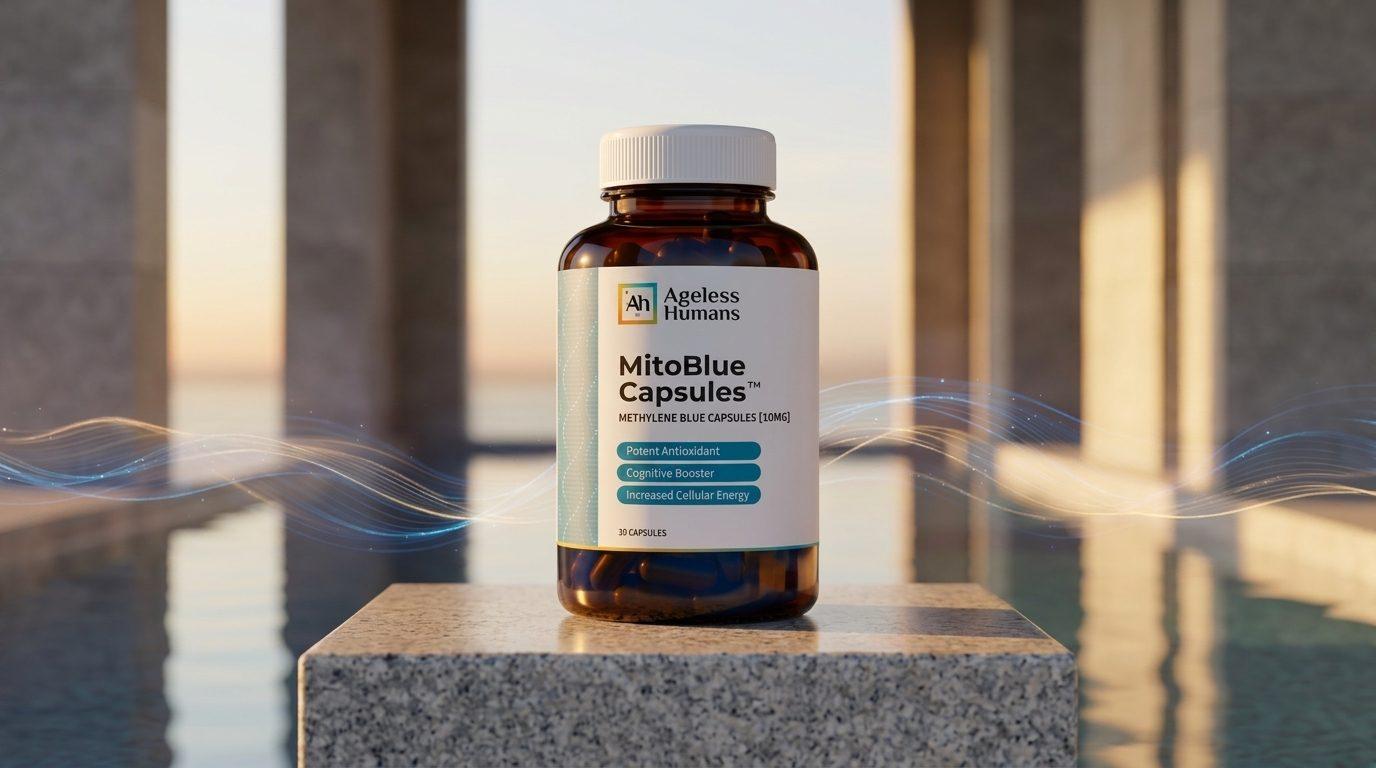
Methylene blue works at a different point. It is studied as an alternative electron carrier that can accept electrons and pass them along toward cytochrome c, which may help keep electron flow moving. Our breakdown of methylene blue benefits covers the research and the safety points. One of those points matters a lot: methylene blue can interact with serotonergic medications, including many antidepressants. Talk with your clinician before using it.
For the full system, including NAD+, the electron transport chain, mitochondrial biogenesis, and the lifestyle levers that move them, start with our complete guide to cellular energy. CoQ10 vs PQQ makes much more sense once you can see the whole chain.
How to Judge Quality Before You Buy
Quality matters more than the ingredient list, because form, purity, and real dose vary widely between brands. A label can say "CoQ10" or "PQQ" and still deliver less than it claims.
Check these before you buy:
- A Certificate of Analysis (COA) for each lot from an independent third-party lab, confirming identity, potency, and purity, including heavy metals and microbes.
- The form is clearly stated: ubiquinone or ubiquinol for CoQ10, and the salt form for PQQ.
- Where it's made. Look for a named, registered manufacturing facility, not an untraceable contract source.
- A real guarantee, so you can judge results without risking your money.
At Ageless Humans, every product is made in our own FDA-registered facility in Carlsbad, California. Every lot is third-party lab tested with a COA, and everything we sell is backed by a 60-day money-back guarantee. That's the standard to hold any mitochondrial supplement to, whichever brand you choose.
Frequently asked questions
What is the main difference between CoQ10 and PQQ?+
CoQ10 is an electron carrier inside the mitochondrial electron transport chain, which means it directly supports energy (ATP) production in the mitochondria you already have. PQQ is a redox compound studied for activating signals, such as PGC-1α, that are linked to building new mitochondria. CoQ10's role is well established in human biology, while PQQ's biogenesis effect is supported mainly by cell and animal research.
Does PQQ really create new mitochondria in humans?+
It hasn't been directly shown. Cell and animal studies show that PQQ activates pathways tied to mitochondrial biogenesis, and small human trials report favorable changes in some biomarkers. However, no strong human study has directly measured an increase in mitochondrial number from PQQ alone. It is a reasonable, research-supported hypothesis, not a proven outcome.
Can you take CoQ10 and PQQ together?+
Yes. They are commonly taken together because they act at different levels: CoQ10 supports the existing electron transport chain, and PQQ is studied for supporting mitochondrial renewal. No head-to-head trials show that the combination beats either one alone. Follow the label directions for each, and check with your clinician if you take prescription medications.
Which is better for energy, CoQ10 or PQQ?+
CoQ10 has the deeper body of human research and a direct, well-understood role in cellular energy production, so it is the stronger single choice. PQQ has been studied in small human trials for fatigue and focus, with early but limited results. Many people start with CoQ10 and add PQQ later as an optional layer.
Should I take ubiquinol or ubiquinone?+
Both are forms of CoQ10, and your body converts between them constantly. Ubiquinol is the reduced, antioxidant-active form, and some people choose it for that reason. Ubiquinone is the more widely studied form in older research. Either can support mitochondrial function, and a quality formulation with third-party testing matters more than the form alone.
Who should be careful with CoQ10 or PQQ?+
Talk with a clinician before taking either if you are on blood thinners, blood pressure medication, or diabetes medication, or if you are pregnant or nursing. CoQ10 has known interaction considerations with some anticoagulants. PQQ has limited long-term safety data in humans. Always follow the label directions.