
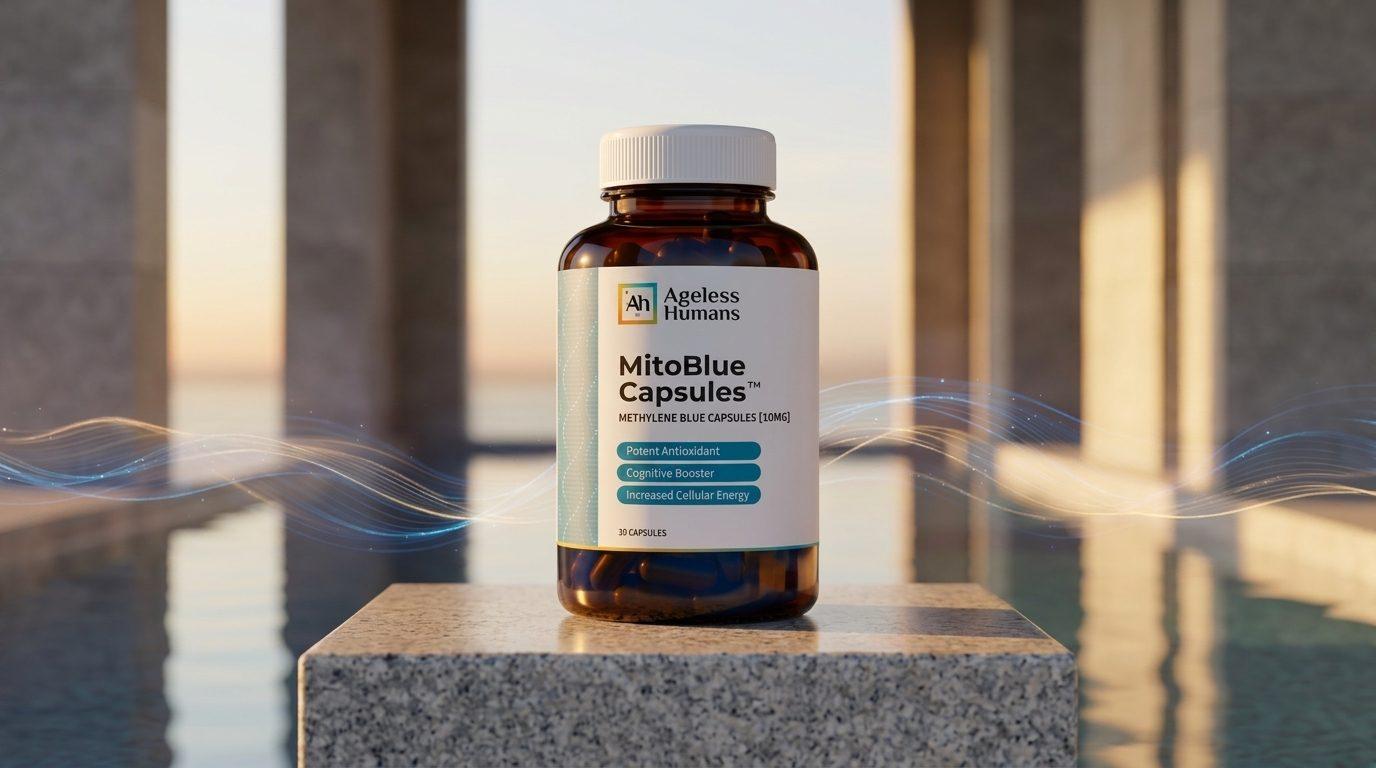
Methylene blue and lion's mane support focus through different mechanisms. Methylene blue works at the mitochondria, helping brain cells make energy, and some people notice it the same day. Lion's mane is a mushroom studied for nerve-growth signaling, and research on it runs over weeks to months. Choose methylene blue for near-term mental energy, lion's mane for slow-building support, or use both, since they don't compete for the same pathway.
The Short Answer: Different Problems, Different Tools
Methylene blue is an energy tool. Lion's mane is a maintenance and growth tool. Each one fits a different kind of focus problem.
If your focus fades because your brain feels underpowered, the problem may be energy supply. That looks like an afternoon slump, slow thinking after a bad night, or mental fatigue during long work blocks. Methylene blue acts on how neurons produce energy, so it fits this problem.
If you want to support the brain's structure and signaling over months, the question is long-term upkeep. Lion's mane fits here. Its compounds are studied for their role in the signals that help neurons grow and stay connected.
- Pick methylene blue if: you want something you may notice within a day and your main complaint is mental fatigue or low drive.
- Pick lion's mane if: you're patient, want a gentle daily habit, and care about long-term cognitive wellness.
- Consider both if: you want near-term energy support and long-term structural support. Their mechanisms complement each other.
How Methylene Blue Works: Mitochondrial Energy Support
Methylene blue supports focus by helping mitochondria pass electrons more efficiently, which supports cellular energy (ATP) production. Your brain is about 2% of body weight but uses a large share of your energy. Neurons are very sensitive to how well their mitochondria work.
Inside each mitochondrion, the electron transport chain moves electrons through a series of protein complexes to make ATP. Methylene blue can accept and donate electrons, so researchers describe it as an alternative electron carrier. It can move electrons along the chain and help keep energy production running when parts of the chain are under strain. Because it cycles between oxidized and reduced forms, it is also studied for its role in managing oxidative stress.
Methylene blue also follows a hormetic, dose-dependent curve. Low amounts appear to support mitochondrial function, while higher amounts can behave differently. This is why low-dose formulations matter and why you should never go beyond label directions.
For a deeper look at the energy side of mental fatigue, see our guide to methylene blue for brain fog.
How Lion's Mane Works: Nerve-Growth Signaling Support
*Lion's mane (Hericium erinaceus) supports cognitive wellness through compounds studied for their influence on nerve growth factor (NGF) and related signaling.* NGF is a protein that helps neurons grow, maintain themselves, and form connections.
Two groups of compounds get most of the attention:
- Hericenones, found mainly in the fruiting body (the mushroom itself).
- Erinacines, found mainly in the mycelium (the root-like network). Lion's mane products differ depending on which part they use.
In cell and animal studies, these compounds have been studied for promoting neurite outgrowth, meaning the branches neurons use to connect. Lion's mane also contains beta-glucans, which are studied for immune and gut-health support. Some researchers are exploring a possible gut-brain role.
The key point is the mechanism itself. Lion's mane works through growth and maintenance, not acute energy. Building and supporting neural connections is slow biology, so lion's mane is not a supplement you should expect to feel in an afternoon.
Timelines: When You Might Notice Each One
Methylene blue is often noticed within hours to days. Lion's mane is usually studied over weeks to months. This difference matters more than any other when you choose between them.
Methylene blue: Because it acts on energy production that is already happening, some users report clearer thinking or steadier mental energy the same day. Small human imaging studies have looked at short-term effects of low doses on brain activity, which fits its fast-acting profile. Responses vary from person to person, and some people notice little.
Lion's mane: Human trials have generally run for several weeks to a few months, and any reported benefits tended to show up over that period. If you try lion's mane, plan for at least a consistent month-plus trial before you judge it. Dropping it after a week tells you almost nothing.
A practical rule: judge methylene blue in days and lion's mane in months. Mixing up these timelines is the main reason people decide a supplement "didn't work."
The Honest Evidence: What Research Does and Doesn't Show
Both compounds have a real research base, and neither has the large, long-term human trials that would settle the question for healthy adults who want sharper focus. Here is the honest breakdown.
Methylene blue — strengths: Its chemistry and mitochondrial mechanism are well described. It has a long history of use in medical settings, and preclinical research on low doses and brain energy metabolism is substantial. Small human studies have explored its effects on memory and brain activity.
Methylene blue — gaps: Human cognitive studies are small and short. Data on daily low-dose supplement use over years is limited.
Lion's mane — strengths: It has strong cell and animal research on NGF-related signaling. A handful of small human trials, mostly in older adults, have studied it for cognitive function and mood, and some report favorable results. It has a long history as a food and in traditional use.
Lion's mane — gaps: Human trials are few and small, and they use different extracts and doses. Results do not always replicate. Many products also differ widely in which compounds they contain.
The bottom line: research suggests both are worth studying, and neither is proven for boosting focus in healthy people. Be skeptical of any brand that claims otherwise.
Safety and Who Should Be Careful
Lion's mane is generally well tolerated as a food-based mushroom. Methylene blue has specific interactions you must take seriously.
Methylene blue cautions:
- It has MAO-inhibiting activity. It should not be combined with serotonergic medications such as SSRIs, SNRIs, or MAOIs without clear guidance from your clinician.
- People with G6PD deficiency should avoid it unless a clinician says otherwise.
- It harmlessly turns urine blue-green. This is expected.
- It is not for use during pregnancy or breastfeeding without medical advice.
Lion's mane cautions:
- Avoid it if you are allergic to mushrooms.
- Some people report mild digestive upset.
- Talk to your clinician if you take medications that affect blood sugar or clotting, or if you're pregnant.
With either supplement, follow the label exactly. If you take any prescription medication, check with your healthcare provider before you start. Low-dose methylene blue is safe and useful for many people, but only when its interactions are respected.
Quality Matters More Than Most People Realize
With both supplements, purity and sourcing decide whether you get what the label says.
Methylene blue comes in several grades. Industrial and aquarium-grade versions can contain heavy-metal contaminants and are not made for people. A supplement should be made to human-use standards and verified by independent testing.
Lion's mane has a different problem. Many products are mostly mycelium grown on grain, so a large share of the product can be starch rather than the mushroom compounds you're paying for. Look for clear labeling of fruiting body versus mycelium and for extract standardization.
For any brain supplement, look for:
- Third-party lab testing with a Certificate of Analysis (COA) you can see.
- A clearly named manufacturing facility, ideally FDA-registered.
- Transparent labeling of form, grade, and amount.
- A real guarantee, which signals a brand that stands behind its product.
How to Choose (and Whether to Stack Them)
Match the supplement to your bottleneck and your patience. Use this quick decision guide:
1. Is your issue mental energy right now? Afternoon crashes, sluggish starts, and fatigue during demanding work point to methylene blue. 2. Is your goal long-term cognitive wellness? A daily habit you'll keep for months points to lion's mane. 3. Do you take serotonergic medication? Skip methylene blue unless your clinician approves it. Lion's mane is usually the simpler starting point. 4. Want both? Because they work through separate pathways (energy production versus growth signaling), people often use them together. Start one at a time so you can tell what each one does for you.
Supplements work best on a solid foundation. Sleep, light exposure, movement, hydration, and fewer distractions will shape your focus more than any capsule. Our focus and clarity guide covers those basics step by step.
Frequently asked questions
Is methylene blue or lion's mane better for focus?+
It depends on what is limiting your focus. Methylene blue supports mitochondrial energy production and some people notice it within hours to days, so it suits mental fatigue. Lion's mane supports nerve-growth signaling and is usually studied over weeks to months, so it suits long-term cognitive wellness.
Can you take methylene blue and lion's mane together?+
Many people combine them because they work through different pathways: methylene blue on cellular energy, lion's mane on neural growth signaling. Introduce them one at a time so you can judge each one's effect. Check with your clinician first if you take any prescription medications, especially antidepressants.
How long does lion's mane take to work?+
Human studies on lion's mane have generally run for several weeks to a few months, and any reported benefits appeared over that time. Plan on at least a month of consistent daily use before you judge it. It works through slow growth-related signaling, not an acute stimulant effect.
How quickly does methylene blue work?+
Some people report steadier mental energy or clarity within hours to a few days of taking low-dose methylene blue, because it acts on energy production that is already running. Responses vary, and some people notice little. Always use it at label directions, since its effects depend on dose.
Who should not take methylene blue?+
People taking serotonergic medications such as SSRIs, SNRIs, or MAOIs should not use methylene blue without clinician guidance, because it has MAO-inhibiting activity. People with G6PD deficiency, and those who are pregnant or breastfeeding, should also avoid it unless a healthcare provider approves. It harmlessly turns urine blue-green.
Is methylene blue a nootropic?+
Methylene blue is often grouped with nootropics, but it works differently from most. It does not act mainly on neurotransmitters. Instead, it supports mitochondrial energy production in brain cells by acting as an alternative electron carrier. That is why it is often called a metabolic or mitochondrial nootropic.