
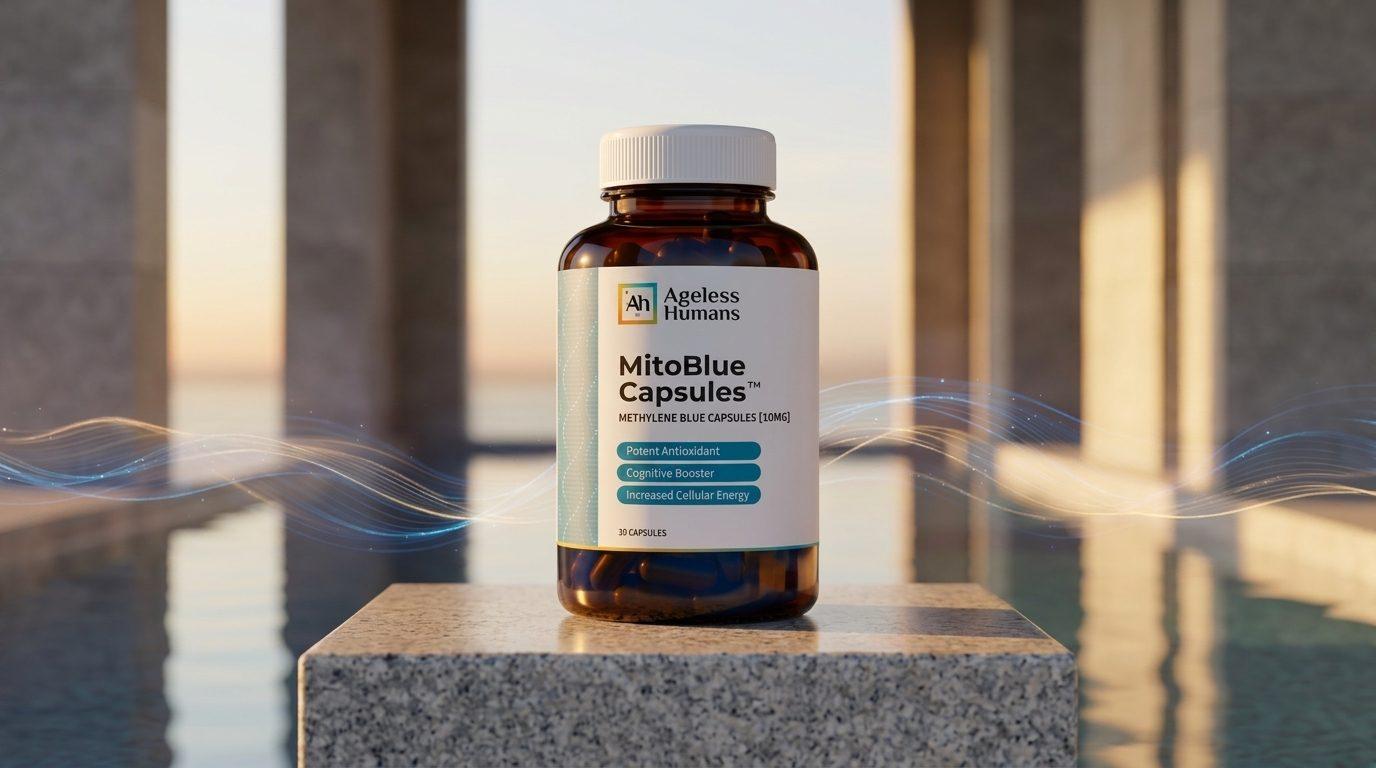
Methylene blue isn't a typical nootropic. Racetams, cholinergics, and adaptogens mostly work on brain signaling: neurotransmitters, receptors, and the stress response. Methylene blue works upstream, in the mitochondria, where research suggests it supports how cells make energy. Think of it as an energy-supply compound, not a signal-tuning one. That's why people often use it alongside other nootropics rather than in place of them.
The short answer: signal vs. supply
Most nootropics change the signal. Methylene blue supports the supply. That one distinction explains most of the differences in how these compounds feel, how they're studied, and how people combine them.
Your brain runs on two things at once. The first is signaling: neurotransmitters like acetylcholine, dopamine, and glutamate passing messages between neurons. The second is energy: ATP made by mitochondria, which pays for every one of those messages. The brain is about 2% of body weight, but it uses a large share of the body's energy, so supply matters.
Racetams, choline sources, stimulants, and adaptogens mostly work on signaling, or on how your body responds to stress. Methylene blue is studied mainly for its effects inside the mitochondria. So comparing them head-to-head is a bit like comparing a better radio to a better battery. Both matter, and they don't do the same job.
How methylene blue works: an electron shuttle in the mitochondria
Methylene blue can accept and donate electrons, which lets it act as an alternative carrier in the mitochondrial electron transport chain. That's the chain of protein complexes that turns food-derived energy into ATP.
Here's the plain version. Normally, electrons pass step by step through a series of complexes. Lab research suggests methylene blue can pick up electrons from NADH and hand them further down the chain. In effect, it creates a detour that may help keep electrons moving efficiently. Researchers are interested in this because smooth electron flow is tied to steady ATP output and to how much oxidative byproduct the mitochondria release.
Two other points are worth knowing:
- It's biphasic. Research describes a hormetic, dose-dependent profile. Low amounts behave very differently from high amounts, which is one reason label directions matter more than usual with this compound.
- It has more than one action. Methylene blue also inhibits monoamine oxidase A (MAO-A), an enzyme that breaks down certain neurotransmitters. This is the main reason for its drug-interaction cautions (more below).
For a deeper look at what methylene blue is studied for, see our methylene blue benefits guide.
Racetams: receptor modulators with a regulatory question mark
Racetams are synthetic compounds thought to influence glutamate (AMPA) receptors and acetylcholine signaling. They work on signaling, not cellular energy production. Piracetam is the original; aniracetam, oxiracetam, and others followed.
Racetams have been around since the 1960s and have a large but mixed research history. Much of the work is decades old, and results in healthy adults are inconsistent. Many users report that racetams feel subtle, and some pair them with a choline source because of the cholinergic link.
The bigger practical issue is legal status. In the U.S., the FDA has issued warning letters to companies selling piracetam as a dietary supplement, taking the position that it doesn't qualify as one. That means quality and sourcing on the open market vary widely. Bottom line: racetams sit in the signal-modulation category, and their regulatory status is murky.
Cholinergics: building blocks for acetylcholine
Cholinergic nootropics like citicoline (CDP-choline) and alpha-GPC supply choline, which the body uses to make acetylcholine, a neurotransmitter tied to attention and memory. They support signaling by supplying raw material.
Cholinergics are among the better-characterized nootropic ingredients. Citicoline has also been studied for its role in phospholipid synthesis, which supports cell membranes. Research in healthy adults suggests possible support for attention and focus, though effects are generally modest and individual.
How they compare to methylene blue:
- Cholinergics add more of a specific neurotransmitter's building block.
- Methylene blue supports the energy system that every neurotransmitter process depends on.
These mechanisms don't overlap, which is why cholinergics and mitochondrial support often appear in the same conversations about focus.
Adaptogens and stimulants: managing stress and alertness
Adaptogens such as rhodiola and ashwagandha are studied for how they help the body respond to stress. Stimulants like caffeine work by blocking adenosine, the molecule behind building sleep pressure. Neither category acts directly on mitochondrial electron transport.
Adaptogens act mostly through the stress-response system, the HPA axis. Rhodiola has been studied for mental performance during fatigue. Ashwagandha has been studied for stress and sleep quality. The effect people describe is steadiness rather than a lift.
Stimulants are the most noticeable category. Caffeine doesn't create energy. It masks the signal that you're tired. That's why it's often paired with L-theanine, an amino acid from tea that research suggests may smooth caffeine's edge.
Methylene blue is different from both. It isn't a stimulant in the caffeine sense. Many people describe its effect as cleaner or more sustained. That's anecdotal, but it fits the mechanism: supporting energy production rather than blocking fatigue signals.
Side-by-side: where methylene blue sits
Methylene blue is the only common nootropic-adjacent compound whose main proposed mechanism is direct support of mitochondrial electron transport. Here's the landscape at a glance:
- Racetams. Layer: neurotransmitter receptors. Mechanism: AMPA and cholinergic modulation. Evidence in healthy adults: mixed and dated. Main caveat: unclear U.S. supplement status.
- Cholinergics (citicoline, alpha-GPC). Layer: neurotransmitter supply. Mechanism: choline for acetylcholine and membranes. Evidence: modest and reasonably consistent. Caveat: effects are subtle.
- Adaptogens (rhodiola, ashwagandha). Layer: stress response. Mechanism: HPA-axis modulation. Evidence: promising for stress and fatigue contexts. Caveat: slow and gradual.
- Stimulants (caffeine + L-theanine). Layer: alertness signaling. Mechanism: adenosine blockade. Evidence: strong for short-term alertness. Caveat: tolerance and sleep disruption.
- Methylene blue. Layer: cellular energy production. Mechanism: alternative electron carrier, plus MAO-A inhibition. Evidence: strong mechanistic and lab data, with a growing but limited body of human cognition research. Caveat: real drug interactions and a biphasic dose response.
To be clear about the evidence: methylene blue has a long history in medicine and solid mechanistic research. Studies on cognitive performance in healthy people are early and small. Anyone who says it is "proven" to boost cognition is overselling it. Anyone who calls it "just a dye" is ignoring real mitochondrial science.
Safety and quality: what's different about methylene blue
Methylene blue needs more care than most nootropics, for two reasons: drug interactions and purity.
Interactions. Because methylene blue inhibits MAO-A, it can interact dangerously with serotonergic medications, including SSRIs, SNRIs, and some other antidepressants. If you take any prescription medication, talk to your healthcare provider first. People with G6PD deficiency, and people who are pregnant or nursing, should also check with a clinician before use. Follow label directions. More isn't better with a biphasic compound.
Purity. Methylene blue is made in industrial, lab, and pharmaceutical grades. Industrial versions can contain heavy-metal contaminants. Look for a product that states its grade and is lot-tested by a third party.
One harmless surprise: methylene blue can turn urine blue or green. That's expected and comes from the compound itself.
How people combine methylene blue with other nootropics
People most often use methylene blue as a foundation layer, the energy side, alongside a signaling or stress-support ingredient. A typical approach covers more than one layer instead of stacking several compounds that all do the same thing.
Common pairings people discuss:
- Methylene blue + NAD+ support. This is a logical pairing. NAD+ is the cofactor that carries electrons into the mitochondrial chain, and methylene blue is studied for helping cycle NADH back to NAD+. Both sit on the energy side.
- Methylene blue + a cholinergic. Energy supply plus neurotransmitter building blocks.
- Methylene blue + an adaptogen. Energy support plus stress-response support for demanding stretches.
Avoid combining methylene blue with anything serotonergic, including some herbal products, without professional guidance. Start with one new ingredient at a time so you can tell what's actually working. For a full framework on building a focus routine, including sleep, light, and nutrition, see our focus and clarity guide.
Frequently asked questions
Is methylene blue a nootropic?+
Methylene blue is often grouped with nootropics, but it works differently from most of them. Racetams, cholinergics, and adaptogens mainly affect brain signaling or the stress response. Methylene blue is studied mainly for supporting mitochondrial energy production. It's more accurate to call it a mitochondrial compound that people use for mental energy and focus support.
Is methylene blue better than racetams?+
They aren't direct substitutes. Racetams are thought to modulate neurotransmitter receptors. Methylene blue is studied for supporting cellular energy production. Methylene blue also has a clearer place in the U.S. supplement market, while the FDA has issued warning letters to companies selling piracetam as a dietary supplement. Which suits you depends on your goals and your health situation.
Can you take methylene blue with other nootropics?+
Many people pair methylene blue with non-overlapping ingredients, such as NAD+ support, a choline source, or an adaptogen. The key exception is anything serotonergic. Methylene blue inhibits MAO-A and can interact dangerously with SSRIs, SNRIs, and similar medications or supplements. Check with a healthcare provider before combining, and add one new ingredient at a time.
Does methylene blue feel like caffeine?+
Not usually. Caffeine blocks adenosine, the molecule that signals tiredness, so it masks fatigue and can feel sharp or jittery. Methylene blue is studied for supporting how mitochondria produce energy, and many users describe its effect as steadier and less stimulating. Individual experiences vary, and these reports are anecdotal.
What does the research actually show about methylene blue and cognition?+
Methylene blue has strong mechanistic and laboratory research behind its role in mitochondrial electron transport, plus a long history of medical use. Human studies on cognitive performance in healthy adults are early and small. Research suggests potential support for memory and attention, but it's honest to call the evidence promising rather than proven.
Why does methylene blue turn urine blue?+
Methylene blue is a deeply colored compound, and some of it leaves the body through urine. That can turn urine blue or green, which is a normal and harmless effect. It usually fades once the compound clears your system.