
Methylene blue and red light therapy both act on cytochrome c oxidase (Complex IV), the last step of the mitochondrial energy chain. Red light is absorbed by that enzyme from the outside, and methylene blue shuttles electrons to it from the inside. Each has been studied on its own for its role in supporting cellular energy. Combining them is mostly unexplored in humans, and because methylene blue absorbs red light strongly, pairing them is not automatically additive.
The Short Answer: One Target, Two Mechanisms
Red light therapy and methylene blue meet at the same mitochondrial enzyme, but they reach it in different ways. Red and near-infrared light act as an outside energy input that the enzyme absorbs. Methylene blue is a molecule you take in. Inside the cell, it moves electrons through the energy chain.
That shared target is why the two are so often compared, and why people ask about stacking them. Both are studied for how they may support ATP production, the energy currency your cells run on. That overlap shows up in research on cognition, recovery, and skin.
But a shared target does not mean they are interchangeable, and it does not guarantee they add up. The rest of this guide covers how each one works, where they differ, what the research actually shows, and the photochemistry catch most articles skip. If you want the broader foundation first, start with our complete guide to cellular energy.
How Red Light Therapy Works on Mitochondria
Red light therapy (photobiomodulation) uses specific wavelengths, roughly 600–700 nm for red and 800–900 nm for near-infrared, that are absorbed by cytochrome c oxidase in the mitochondria. The leading explanation is that this absorption helps the enzyme work more efficiently. One proposed reason is that light releases nitric oxide, which can sit on the enzyme and slow it down. With the enzyme freed up, electron flow and oxygen use can increase, which supports ATP output.
A few practical points shape how it works in real life:
- It is local. Light only affects the tissue it reaches. Red penetrates millimeters. Near-infrared goes deeper, but it still fades with depth.
- Dose follows a curve. Research consistently describes a biphasic response. A modest dose appears supportive, while more light is not better and can blunt the effect.
- Parameters matter. Wavelength, power density, distance, and session time all change what tissue receives. Device quality varies widely.
Red light has been studied for skin appearance, muscle recovery, and general cellular energy support. The evidence base includes many cell and animal studies and a growing number of small human trials. Quality and consistency vary from study to study.
How Methylene Blue Works on Mitochondria
Methylene blue is a redox molecule. It can accept electrons and hand them off, which lets it act as an alternate electron carrier in the mitochondrial chain. It picks up electrons from NADH and passes them toward cytochrome c and Complex IV. In effect, it can route around the earlier complexes. That is the main reason researchers study it for supporting mitochondrial efficiency when the usual electron flow is under strain.
Three features set it apart:
- It is systemic. Taken orally, it circulates through the body and is known to cross the blood-brain barrier. That is a big reason it shows up in cognition-focused research.
- It is hormetic. Like red light, methylene blue shows a dose-dependent, biphasic profile in research. Low amounts behave very differently from high amounts, so following label directions matters.
- It is visible. It is a deep blue dye, and it commonly turns urine blue or green. That is expected and harmless.
Research on low-dose methylene blue includes cell and animal work and a small number of human studies looking at memory, attention, and brain energy metabolism. These findings are promising but early. For a full breakdown, see our guide to methylene blue benefits.
Side-by-Side: Methylene Blue vs. Red Light Therapy
The core difference: red light is a local, external energy input, and methylene blue is a systemic, internal electron carrier. Here is how they compare on the factors people actually care about.
- Shared target: Both act on cytochrome c oxidase (Complex IV).
- Mechanism: Red light is absorbed by the enzyme as photons. Methylene blue donates electrons that feed into the chain.
- Reach: Red light acts only where light penetrates. Methylene blue circulates body-wide, including the brain.
- How you use it: Red light means sessions with a panel, pad, or wand. Methylene blue comes as an oral capsule or liquid drops taken per label.
- Dose response: Both are biphasic, so more is not better for either one.
- Precision: Red light can target one area, such as the face or a sore muscle. Methylene blue cannot target a single area.
- Considerations: Red light involves eye exposure and device quality. Methylene blue has medication interactions, visible staining, and label limits.
- Research depth: Red light has a larger body of human trials, but the quality is mixed. Methylene blue has fewer human trials and many preclinical studies.
Neither is better in general. They answer different questions. Red light fits if your goal is location-specific, like skin or a training area. Methylene blue is the one studied for whole-body and brain energy support.
Solo vs. Combined: The Photosensitizer Catch
Methylene blue absorbs red light most strongly at around 660–670 nm, the same range many red light panels emit. When excited by light, it can act as a photosensitizer. This is the most important and least-discussed fact in the pairing conversation.
Photosensitizers take in light energy and can transfer it to oxygen, which generates reactive oxygen species. In fact, methylene blue plus red light is the basic setup used in photodynamic research, where the goal is to stress or damage targeted cells on purpose. Those settings typically use concentrations and light doses very different from oral supplementation at label amounts. Still, the chemistry is real.
What this means in practice:
- Stacking is not simple addition. Combining two Complex IV supporters does not guarantee double the support. It may change the effect in ways that depend on dose, timing, wavelength, and tissue concentration.
- The proposed synergy is theoretical. Some researchers suggest that low amounts of methylene blue plus gentle light could complement each other. A handful of preclinical studies have explored the idea, but well-controlled human data on the combination is minimal.
- Wavelength choice matters. Near-infrared (around 800–850 nm) sits farther from methylene blue's absorption peak than 660 nm red light does. Some people consider this, but no human research has established a preferred protocol.
The honest takeaway: using each one alone is the better-understood path. If you want to combine them, treat it as uncharted territory and talk with a qualified healthcare provider first.
What the Research Does and Does Not Show
Research supports each tool individually as a subject of serious mitochondrial study. It does not yet support confident claims about combining them. Here is where things stand.
What research suggests:
- Red and near-infrared light are absorbed by cytochrome c oxidase and have been studied for supporting cellular energy, skin appearance, and exercise recovery.
- Low-dose methylene blue can act as an alternate electron carrier and has been studied for supporting mitochondrial function and cognitive performance.
- Both show biphasic, dose-dependent responses.
What research does not show:
- That combining them works better than either one alone in healthy people.
- A validated protocol for timing, wavelength, or amount when pairing them.
- That results from cell cultures and animals translate directly to people.
Be skeptical of any source that presents the stack as proven, quotes precise synergy percentages, or prescribes combined protocols. The mechanistic logic is interesting. The human evidence is not there yet.
How to Choose, and How to Use Either One Responsibly
Choose based on your goal: red light for targeted, surface-level areas, and methylene blue for systemic and cognitive energy support. Many people do well with just one.
If you use methylene blue:
- Follow the label directions exactly. Its effects depend strongly on dose.
- Talk to your healthcare provider before using it, especially if you take antidepressants or other serotonergic medications. Methylene blue can interact with them. People with G6PD deficiency, and anyone pregnant or nursing, should also get medical guidance first.
- Expect blue or green urine, and know that liquid forms can stain teeth and surfaces.
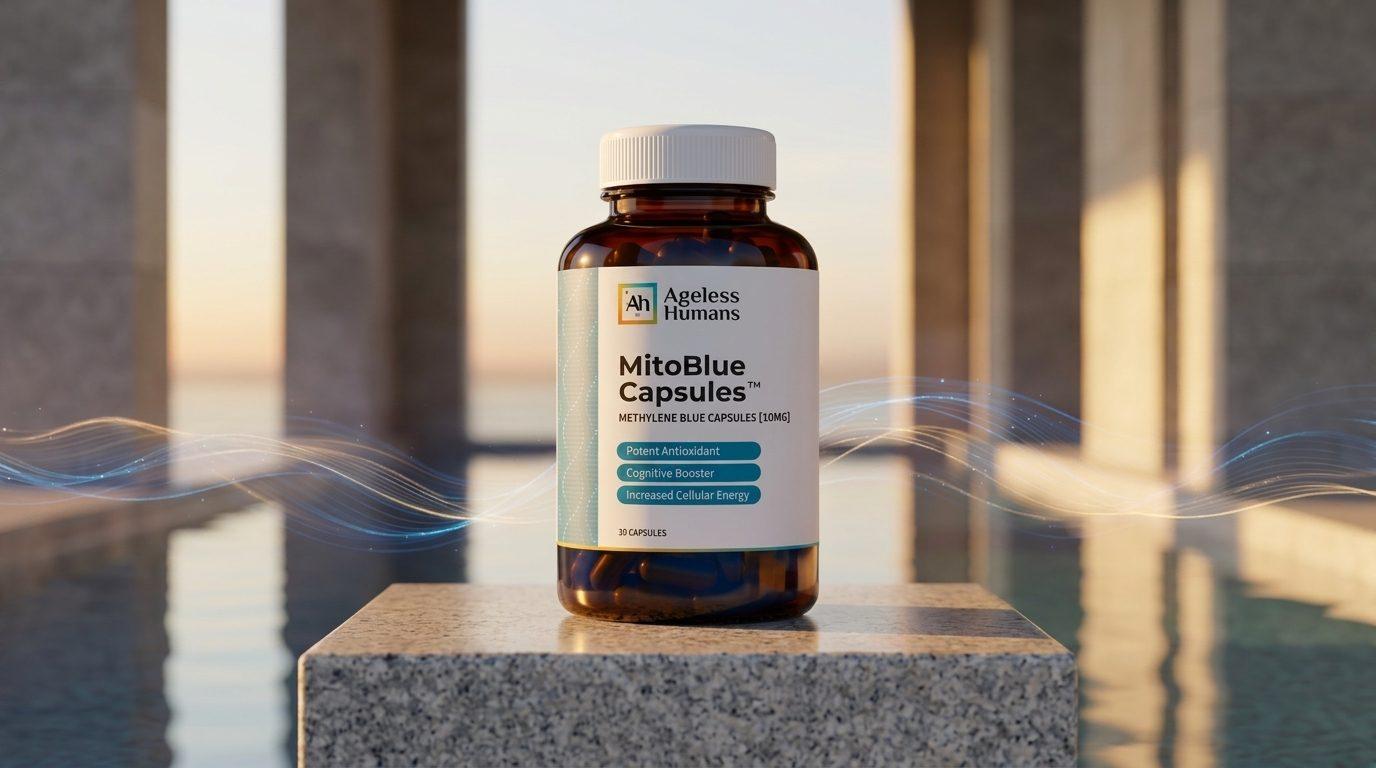
- Pick a form that fits your routine. Some people prefer pre-measured methylene blue capsules for consistency and no taste or staining.
If you use red light:
- Follow your device manufacturer's guidance on distance and session length.
- Protect your eyes, and do not stare into high-intensity LEDs. Near-infrared is invisible, so you cannot judge its intensity by brightness.
- Remember that more time is not more benefit.
If you are considering both, get professional guidance first, avoid using them at the same time, and keep in mind that the combination has not been well studied. Quality matters too. Choose methylene blue that is pharmaceutical grade and lot-tested, not industrial or aquarium-grade dye.
Frequently asked questions
Do methylene blue and red light therapy do the same thing?+
They share a target but not a mechanism. Both act on cytochrome c oxidase (Complex IV) in the mitochondria. Red light is absorbed by that enzyme from the outside, while methylene blue acts as an internal electron carrier that feeds electrons into the chain. Red light is local to the tissue it reaches, and methylene blue circulates throughout the body.
Can you combine methylene blue with red light therapy?+
Combining them is mostly unstudied in humans, so it should be approached with caution and professional guidance. Methylene blue strongly absorbs red light around 660 nm and can act as a photosensitizer, the same chemistry used in photodynamic research. That means the effects of pairing them are not simply additive and may depend on dose, timing, and wavelength.
Which is better for energy, methylene blue or red light?+
Neither is better across the board, because they suit different goals. Red light is best suited to supporting specific areas like skin or a training muscle group. Methylene blue is studied for whole-body and cognitive energy support because it circulates systemically and crosses the blood-brain barrier.
Is methylene blue safe to take?+
Pharmaceutical-grade methylene blue used according to label directions is generally well tolerated by healthy adults, but it is not right for everyone. It can interact with antidepressants and other serotonergic medications, and people with G6PD deficiency or who are pregnant or nursing should avoid it unless a doctor approves. It commonly turns urine blue or green, which is harmless.
Why does red light therapy work on mitochondria?+
Red and near-infrared wavelengths are absorbed by cytochrome c oxidase, the final enzyme in the mitochondrial energy chain. The leading theory is that this absorption helps the enzyme run more efficiently, possibly by releasing nitric oxide that slows it down. Research describes a biphasic response, so moderate doses appear supportive while excessive exposure is not.
Should I take methylene blue right before a red light session?+
There is no established human protocol for timing methylene blue around red light. Because methylene blue absorbs red wavelengths and can act as a photosensitizer, many cautious users separate the two. Talk with a qualified healthcare provider before pairing them.