
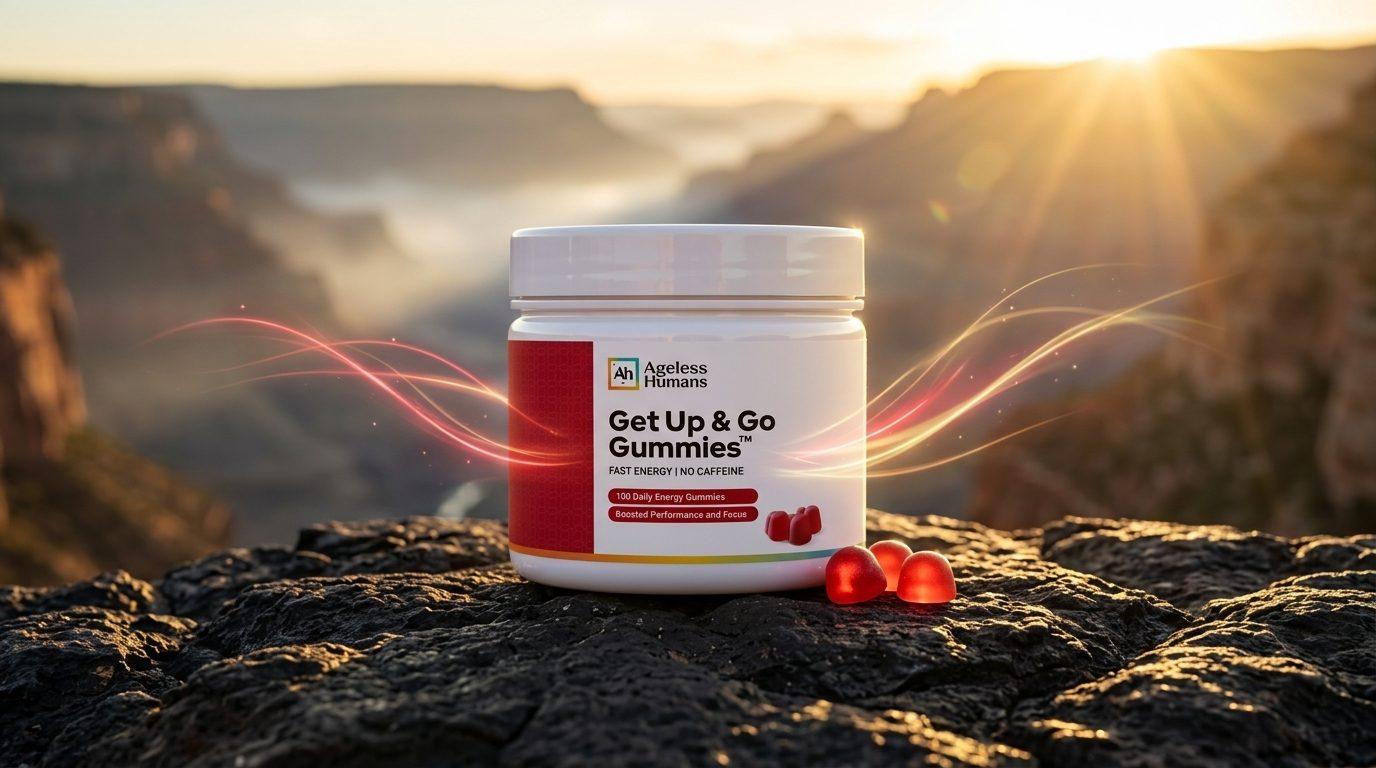
For most people, the right NAD format is the one you will actually take every day. A capsule you skip helps less than a gummy you never miss. Capsules usually fit more active ingredient per serving with no sugar, while gummies trade some potency and add sweetener for a habit that is easier to keep. Below is how to compare them side by side, including the per-serving math most brands don't show you.
The Short Answer: Consistency Usually Beats Potency
Pick the format you'll take daily without thinking about it. NAD+ support is a daily-habit category. Researchers study NAD+ precursors like NMN and NR as part of a steady routine, not as an occasional boost. A higher-milligram capsule only matters if it actually ends up in your body on most days.
This is the compliance-beats-potency argument. If you hate swallowing pills, forget them on busy mornings, or leave the bottle in a cabinet you never open, a lower-dose gummy you enjoy can be the better real-world choice. If you take pills without any friction and want the most active ingredient per serving, capsules usually win.
The rest of this guide shows you how to make that call with real numbers from your own labels, not marketing language.
What Each Format Actually Is
Capsules are a powder in a shell. Gummies are an active ingredient mixed into a chewable base. That difference drives almost every trade-off between them.
- Capsules: The active ingredient (often NMN, NR, or a blend) fills most of the capsule. You get very little besides the ingredient, the shell, and sometimes a flow agent. That means more room for the ingredient you are paying for.
- Gummies: The active ingredient shares space with pectin or gelatin, sweeteners, flavors, colors, and coating. A large part of every gummy's weight is the base, not the active ingredient.
Neither format is better in the abstract. Capsules are built for density. Gummies are built for taste and ease. The question is which one solves your actual problem.
Dose-Per-Serving Math: How to Compare Labels Fairly
Compare milligrams of active ingredient per serving and per day, never per gummy or per capsule. Front-of-bottle numbers can mislead because a "serving" might be one capsule, two capsules, or three gummies.
Use this three-step check on any two products:
1. Find the active ingredient line in the Supplement Facts panel (for example, "NMN" or "Nicotinamide Riboside") and note the milligrams listed. 2. Note the serving size. If the panel says "Serving size: 2 gummies," the milligram figure covers both gummies together. 3. Calculate cost per serving. Divide the bottle's price by the number of servings listed. Then compare products at the amount each label tells you to take.
Example with made-up numbers, for the math only: Product A lists 250 mg per 1 capsule, 60 servings. Product B lists 250 mg per 2 gummies, 30 servings. Both deliver the same amount per serving, but Product B's bottle lasts half as long, so a matching price doesn't mean matching value. Run your own labels through the same steps. Always follow the directions on the label you buy rather than stacking extra servings to hit a number.
The Sugar Trade-Off in Gummies
Most gummies add sugar or a sugar substitute. Check the label and decide if it fits your day. A gummy needs sweetness and structure to taste like a treat, and that comes from somewhere.
Here is what to look for on the Supplement Facts panel and ingredient list:
- Total and added sugars: Usually listed in grams per serving. Small on its own, but it counts toward your daily total if you track it.
- Sugar alcohols (like maltitol or erythritol): Lower in sugar but can cause stomach upset in some people, especially in larger amounts.
- Other sweeteners (like stevia or monk fruit): Low or no sugar, with a taste some people love and others don't.
- Calories: Gummies have some. Capsules have essentially none.
If you follow a low-sugar or ketogenic eating pattern, or you are watching carbohydrates for any reason, capsules remove this variable completely. If a gram or two of sugar is what turns a supplement into a habit you keep, that can be a worthwhile trade. Talk with your healthcare provider if you manage blood sugar.
Stability and Freshness: What Research Does and Doesn't Show
NAD+ precursors are studied as sensitive to heat and moisture, so storage and manufacturing quality matter in both formats. This is where we want to be precise about what is known and what isn't.
What research suggests: compounds like NMN and NR can break down when exposed to heat, humidity, and time. Gummy production involves a warm, moist base, and gummies hold more water than a dry capsule, so formulators have to account for that. Capsules keep the powder dry, which is one reason they're the traditional choice for this category.
What it doesn't show: there is no public, product-neutral body of research proving that one format always delivers more of its labeled amount than the other. Results depend on the specific formula, the manufacturer, and how the product is stored. That is why the most useful thing you can check is not the format, but the testing. Look for a Certificate of Analysis (COA) from a third-party lab confirming what is in the lot you're buying. Every Ageless Humans lot is third-party lab tested with a COA, and our products are made in our own FDA-registered facility in Carlsbad, California.
At home, store either format somewhere cool and dry, keep the lid tight, and skip the steamy bathroom cabinet.
Absorption: Does Chewing Change Anything?
There isn't strong evidence that gummies or capsules are absorbed meaningfully better than each other for NAD+ precursors. You'll see claims in both directions online, but they usually aren't backed by head-to-head research on finished products.
Both formats end up in your digestive system. Chewing breaks a gummy down sooner, and a capsule shell dissolves after you swallow it. Some brands make specific absorption claims for sublingual, liposomal, or delayed-release versions, and those are separate formats worth judging on their own evidence.
The practical takeaway: don't choose a gummy or a capsule based on absorption promises alone. Choose based on dose per serving, sugar, testing, and whether you'll take it every day.
Who Each Format Fits
Choose capsules if you want maximum active ingredient per serving and zero sugar. Choose gummies if ease and enjoyment are what keep you consistent.
Capsules tend to fit people who:
- Already take other pills without any trouble
- Want the most active ingredient in the fewest servings
- Avoid sugar, track carbs, or follow a ketogenic eating pattern
- Want the simplest ingredient list
- Travel often and want a compact, heat-tolerant option
Gummies tend to fit people who:
- Find pills hard to swallow or simply dislike them
- Have quit capsule routines before because they forgot
- Want a supplement that feels like a small reward, which helps lock in the habit
- Are fine with a little sugar or a sugar substitute
Many people use both: capsules at home for the daily routine, gummies at the office or in a bag for days that get away from them. If you go that route, stay within the combined label directions and don't double up. For a deeper look at the gummy side of this category, read our guide to NMN gummies.
A 30-Second Decision Checklist
Answer these four questions and the right format usually picks itself.
1. Have you skipped pill-based supplements in the past? If yes, lean gummy. 2. Do you limit sugar or carbs? If yes, lean capsule. 3. Is getting the most active ingredient per serving your top priority? If yes, lean capsule. 4. Does the product show a third-party COA for its lot? If no, keep looking, whatever the format.
Whichever you choose, give it a fair, consistent trial and judge it against how you feel and how reliably you take it. A 60-day money-back guarantee, like the one on every Ageless Humans product, gives you room to test a format without being locked in.
Frequently asked questions
Are NAD gummies as effective as NAD capsules?+
There is no strong head-to-head research showing that gummies or capsules are absorbed meaningfully better for NAD+ precursors. Capsules usually fit more active ingredient per serving, while gummies are easier for many people to take consistently. Compare milligrams of active ingredient per serving on the label and choose the format you'll take every day.
How much sugar is in NAD gummies?+
It varies by brand, so check the Supplement Facts panel for total sugars, added sugars, and sugar alcohols per serving. Some gummies use regular sugar, while others use sugar alcohols or low-calorie sweeteners like stevia or monk fruit. If you avoid sugar entirely, capsules contain essentially none.
Why do capsules usually have a higher dose than gummies?+
A capsule is mostly active ingredient inside a shell, so there's more room for the ingredient itself. A gummy shares its weight with pectin or gelatin, sweeteners, and flavors, which limits how much active ingredient fits in each piece. That's why gummy servings often require more than one piece.
Do NMN and NAD gummies lose potency over time?+
Research suggests NAD+ precursors like NMN and NR can break down with heat, moisture, and time, which applies to any format. Gummies hold more moisture than dry capsules, so manufacturing and storage quality matter. Look for a third-party Certificate of Analysis and store the product somewhere cool and dry with the lid tightly closed.
Can I take NAD gummies and capsules together?+
Some people keep capsules at home and gummies on the go, but the combined amount should stay within the label directions. Don't add servings from two products to reach a higher total. If you're unsure, ask your healthcare provider before combining supplements.
How do I compare the value of NAD gummies and capsules?+
Compare the milligrams of active ingredient per serving, then divide the bottle price by the number of servings to get cost per serving. Check the serving size carefully, since one serving might be two or three gummies. This shows you real value instead of front-label marketing numbers.