
Retatrutide is an investigational injectable peptide that activates three hormone receptors at once: GLP-1, GIP, and glucagon. Clinical research has studied it mainly for body weight, blood sugar regulation, and liver fat in adults with metabolic conditions, and early-phase results have drawn wide attention. It is not FDA-approved, large Phase 3 trials are still underway, and its long-term safety is not yet established.
What Is Retatrutide?
Retatrutide is an experimental drug, not a supplement. It is a synthetic peptide developed by Eli Lilly, known in research as LY3437943. It is designed to mimic several natural gut and pancreatic hormones that help regulate appetite, blood sugar, and how the body uses stored energy.
What makes it different is its target list. Most drugs in this class activate one or two receptors. Retatrutide activates three, so researchers call it a triple agonist or "triple G" (GLP-1, GIP, glucagon).
In clinical trials, retatrutide is given as a once-weekly injection under the skin, under medical supervision. It is a prescription-track pharmaceutical candidate, and it is only legally available through regulated clinical research. For a quick reference summary, see our retatrutide peptide overview. If you're new to the category, start with what peptides are and how they work.
How Retatrutide Works: The Three-Receptor Mechanism
Retatrutide works by signaling three metabolic hormone pathways at the same time, each with a different job. Here is what each receptor does in the body:
- GLP-1 receptor: GLP-1 is a gut hormone released after meals. Activating its receptor is associated with greater fullness, slower stomach emptying, reduced appetite signaling in the brain, and glucose-dependent insulin release.
- GIP receptor: GIP is another post-meal gut hormone. It supports insulin release when blood sugar rises and appears to influence how fat tissue stores and handles energy. Researchers are still working out its full role.
- Glucagon receptor: Glucagon normally raises blood sugar between meals. It also influences energy expenditure and how the liver processes fat. The theory behind including it is that glucagon signaling may raise energy use and support liver fat metabolism, while the GLP-1 and GIP activity helps offset its blood-sugar-raising effect.
Put simply, the GLP-1 and GIP arms mainly act on the "energy in" side (appetite and meal response). The glucagon arm is thought to add an "energy out" lever. That combination is the core reason retatrutide has attracted so much research interest.
One honest caveat: the precise contribution of each receptor in humans is still being studied. The mechanism is well reasoned, but not fully mapped.
What Has Retatrutide Been Studied For?
Retatrutide has been studied mainly in adults with metabolic challenges, with body weight as the headline research focus. Here are the main research areas, all investigational:
- Body weight in adults with obesity or overweight. This is where the most attention has gone. A Phase 2 trial published in 2023 reported substantial, dose-related reductions in body weight over the study period, and many observers described the results as among the largest seen in this drug class at that stage.
- Blood sugar regulation in adults with type 2 diabetes. Separate Phase 2 research looked at glycemic markers and body weight in this population.
- Liver fat. Because of the glucagon component, researchers have examined retatrutide's effect on fat stored in the liver, a marker linked to metabolic health.
- Broader outcomes. The Phase 3 program, called TRIUMPH, is studying retatrutide across several groups. Reported areas include weight-related joint discomfort and cardiometabolic markers.
The fair summary is that early research is promising and actively expanding, but "studied for" is not the same as "proven for." Every area above is still under investigation.
Retatrutide vs. Semaglutide vs. Tirzepatide
The main difference is the number of receptors each compound targets. Semaglutide activates one (GLP-1). Tirzepatide activates two (GLP-1 and GIP). Retatrutide activates three (GLP-1, GIP, and glucagon).
| Compound | Receptors targeted | Regulatory status |
|---|---|---|
| Semaglutide | GLP-1 | FDA-approved for specific uses |
| Tirzepatide | GLP-1 + GIP | FDA-approved for specific uses |
| Retatrutide | GLP-1 + GIP + glucagon | Investigational (not approved) |
Early data has fueled speculation that adding glucagon could produce larger effects. Keep two things in mind, though.
First, no completed large head-to-head trial has compared retatrutide directly against these drugs, so comparisons across separate studies are rough at best. Different trials use different populations, durations, and endpoints.
Second, approved drugs have years of real-world safety data behind them. Retatrutide does not yet. More receptors can mean more effect, but also more variables to understand.
Side Effects and Safety: What Research Has Reported
The most commonly reported side effects in retatrutide trials have been digestive, which matches the broader GLP-1 drug class. These include nausea, vomiting, diarrhea, and constipation. They were generally reported as more common at higher doses and during dose increases.
Researchers have also flagged other signals to watch, including increases in resting heart rate, which has been seen with other drugs in this class. The long-term meaning of this is still being evaluated.
Open questions remain, and they matter:
- Lean mass. When people lose significant body weight, some of that loss can be muscle. How much lean tissue is lost with retatrutide, and how to preserve it, is an active research question.
- Long-term safety. Phase 2 trials are relatively short. Multi-year data will come from Phase 3 and beyond.
- What happens after stopping. Research on related drugs suggests weight can return after discontinuation. Whether that applies to retatrutide is not yet fully characterized.
Anyone curious about retatrutide should talk with a licensed physician and look into legitimate clinical trials. They should not experiment on their own.
The Honest Evidence State and the Gray-Market Problem
Retatrutide's evidence is early-stage. It is promising in controlled trials and unproven in the real world. Here is how the evidence breaks down:
- What research shows: Controlled Phase 2 trials reported meaningful changes in body weight and metabolic markers, with a side-effect profile broadly similar to related drugs.
- What it doesn't show yet: Long-term safety, durability of results, outcomes in diverse populations, and how it compares head-to-head with approved options.
- What it definitely doesn't show: Anything about products sold online as "research peptides."
That last point is critical. Because retatrutide is not approved, any product sold to consumers under that name comes from an unregulated source. There's no assurance of identity, purity, sterility, or dose. Injecting an unverified compound is a different risk category from anything studied in a trial. The trial data does not transfer to a vial of unknown origin.
If retatrutide earns approval, it will arrive through pharmacies with a prescription, labeling, and medical oversight. That is the only route that reflects the research.
Where Oral Peptides and Daily Longevity Support Fit In
Retatrutide and dietary supplements are fundamentally different categories, and neither substitutes for the other. Retatrutide is an investigational injectable drug acting on metabolic hormone receptors. Supplements are taken by mouth to support normal structure and function in healthy adults.
What the two share is a broader scientific curiosity: how small signaling molecules like peptides influence the body. Pharmaceutical peptides like retatrutide sit at one end of that field. Oral peptide supplements and bioregulators, short peptides studied for tissue-specific support, sit at another.
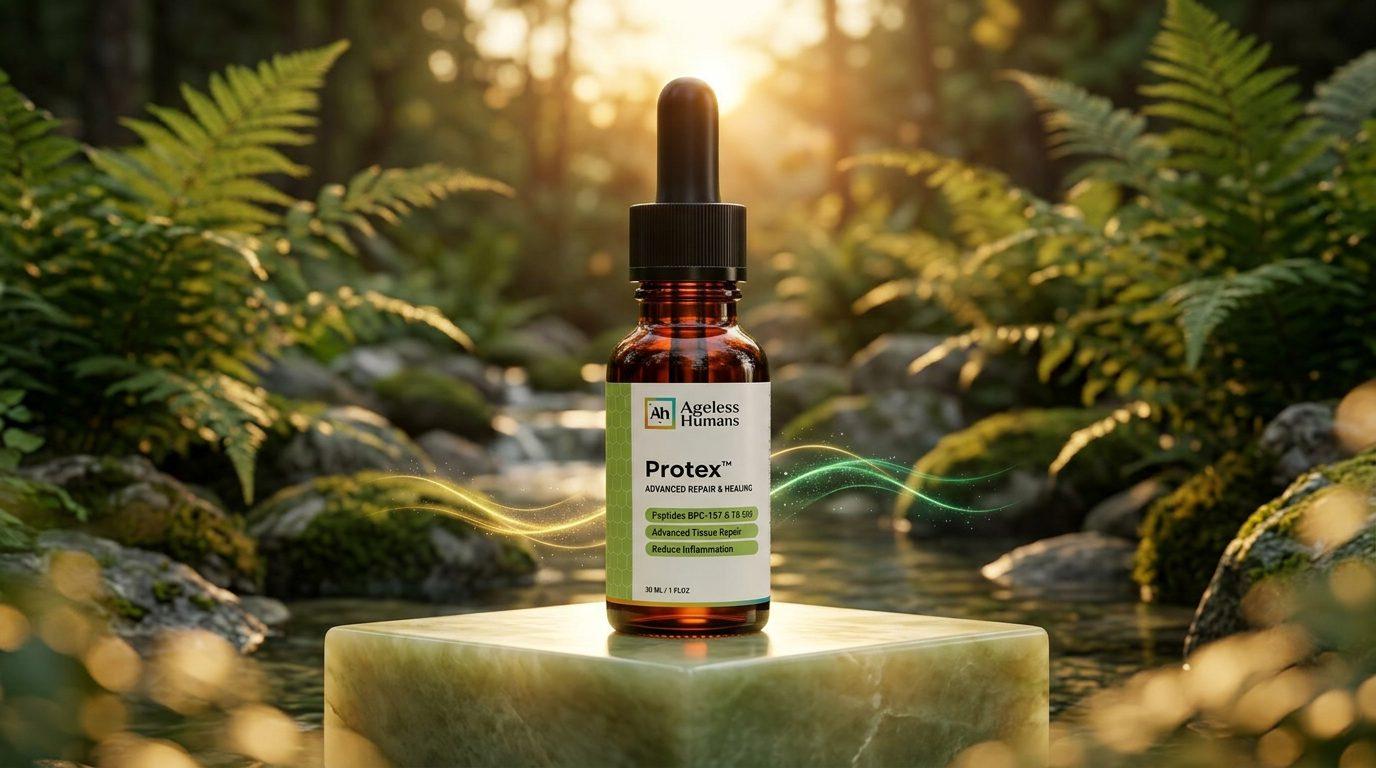
On the recovery side, compounds like BPC-157 and TB-500 have been studied for their role in supporting the body's natural tissue recovery processes. Our ProTex BPC-157 and TB-500 oral peptide formula brings that interest into an oral supplement format. For people who want a structured daily routine, the Metamorphic Anti-Aging Protocol is designed to support healthy aging habits as a system.
Every Ageless Humans product is made in our FDA-registered facility in Carlsbad, California. Every lot is third-party lab tested with a COA, and each product is backed by a 60-day money-back guarantee. These are fundamentals that matter in any peptide-adjacent space.
Frequently asked questions
What is retatrutide?+
Retatrutide is an investigational injectable peptide developed by Eli Lilly that activates three hormone receptors: GLP-1, GIP, and glucagon. That makes it a "triple agonist." It is being studied for body weight, blood sugar regulation, and liver fat in adults with metabolic conditions. It is not FDA-approved and is only legitimately available through clinical trials.
Is retatrutide FDA-approved?+
No. Retatrutide is still investigational and is being evaluated in Phase 3 clinical trials known as the TRIUMPH program. Until regulators approve it, any product sold to consumers as retatrutide comes from an unregulated source, with no guarantee of identity, purity, or safety.
How is retatrutide different from semaglutide and tirzepatide?+
The key difference is receptor targets. Semaglutide activates the GLP-1 receptor, and tirzepatide activates GLP-1 and GIP receptors. Retatrutide adds a third target, the glucagon receptor, which researchers think may influence energy expenditure and liver fat metabolism. No completed large head-to-head trial has directly compared them yet.
What are the side effects of retatrutide?+
In clinical trials, the most commonly reported side effects were digestive, including nausea, vomiting, diarrhea, and constipation. These were generally more frequent at higher doses. Researchers have also noted increases in resting heart rate. Long-term safety is still being studied in Phase 3 trials.
Can you buy retatrutide legally?+
Not as an approved medication. Retatrutide is only legitimately accessible through regulated clinical trials. Products sold online as "research peptides" are unregulated and may not contain what the label claims. Anyone interested should speak with a licensed physician or look into enrolling in an official trial.
Does Ageless Humans sell retatrutide?+
No. Ageless Humans does not sell retatrutide or any prescription or investigational drug. We publish this article for education only. Our catalog includes oral peptide and longevity supplements designed to support normal structure and function. They are not substitutes for retatrutide or any medication.