
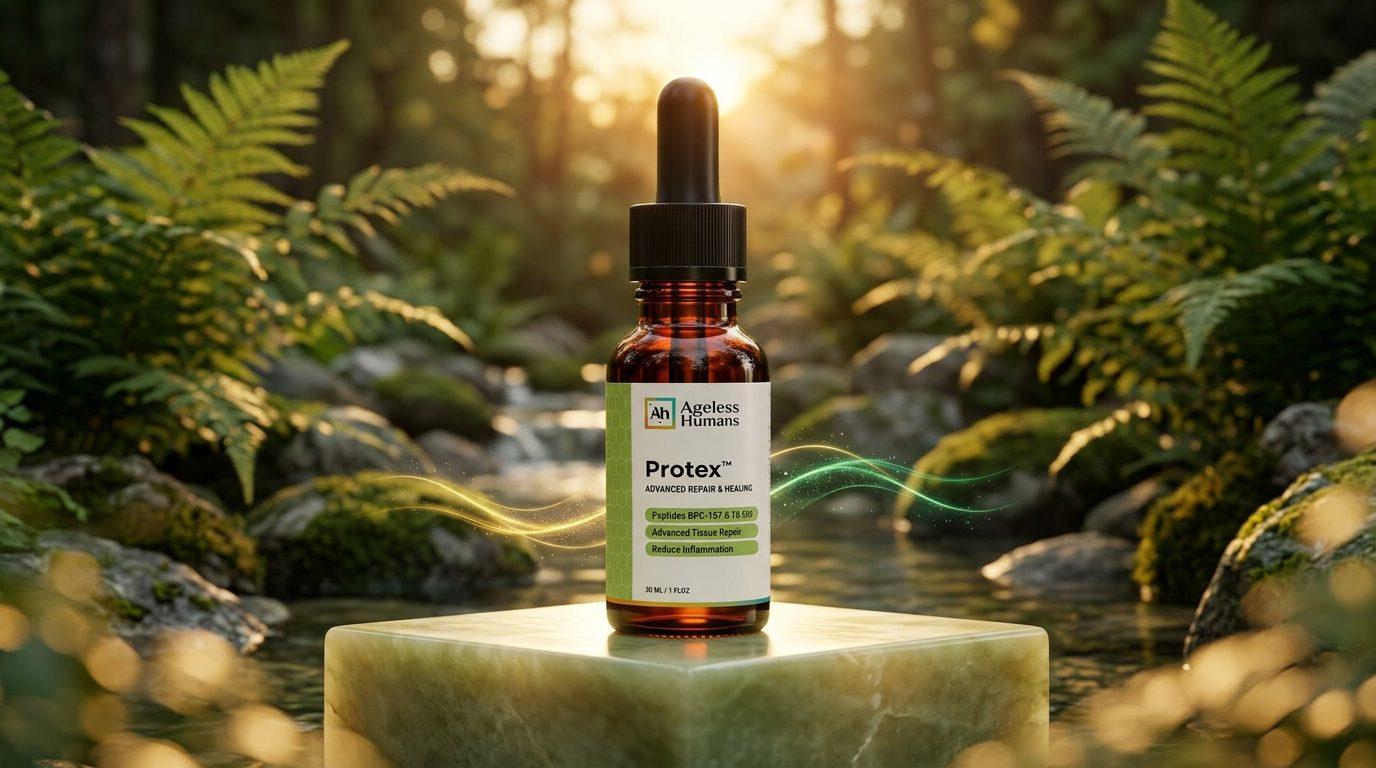
Glucosamine is the established option, with decades of human research on cartilage and joint comfort, though results have been mixed. BPC-157 is an emerging peptide studied mostly in animal and cell models for tendon, ligament, and connective-tissue support, with very little human data so far. Choose glucosamine if you want the longest research track record for everyday joint maintenance. Consider BPC-157 if you want to explore newer research aimed at soft tissue and recovery and you accept that the evidence is still early.
The Short Answer: Two Compounds, Two Evidence Tiers, Two Jobs
These are not interchangeable products. They target different tissues and sit at very different levels of evidence. Glucosamine is a building block of cartilage, the cushioning tissue inside joints. BPC-157 is a short peptide studied for its role in the body's broader tissue-repair signaling, with most research focused on tendons, ligaments, and muscle.
The honest comparison comes down to three questions:
- What tissue are you focused on? Cartilage and general joint comfort point toward glucosamine. Tendons, ligaments, and recovery from training point toward BPC-157.
- How much evidence do you need? Glucosamine has many human trials behind it. BPC-157 has a growing body of preclinical research and very few published human studies.
- What is your risk tolerance for newer ingredients? Glucosamine has a long safety history. BPC-157's long-term human safety profile has not been established.
Neither one is a better product in every case. They fit different people at different points.
Glucosamine: What Decades of Research Actually Show
Glucosamine is one of the most-studied joint supplements in the world, and the research is real but mixed. Your body makes glucosamine naturally and uses it to build glycosaminoglycans. These molecules help cartilage hold water and resist compression. Supplemental glucosamine usually comes from shellfish shells or is produced through fermentation.
Researchers have studied it for decades, often in adults with age-related joint wear. Some trials have reported support for joint comfort and mobility. Others found results similar to placebo. Outcomes seem to depend on the form used (glucosamine sulfate vs. glucosamine hydrochloride), the study length, the population, and whether it was paired with chondroitin. Many experts sum it up as a modest, gradual effect for some people rather than a dramatic effect for most.
What glucosamine has that newer ingredients lack is a long track record of human use. It is generally well tolerated in research settings. Practical notes:
- Shellfish-derived glucosamine may not suit people with shellfish allergies. Look for a vegetarian or fermentation-derived source.
- Blood thinners: talk with your clinician first if you take anticoagulant medication.
- Patience is part of the deal: studies typically run for weeks to months, so a few days of use tells you very little.
BPC-157 (and TB-500): What the Emerging Research Shows
BPC-157 is a 15-amino-acid peptide with an intriguing preclinical research profile and very limited human data. The name stands for "Body Protection Compound." It was originally derived from a sequence found in a protein in human gastric juice. Its natural origin in the digestive tract is one reason researchers have looked at whether it stays stable in oral form.
Most BPC-157 research comes from rodent and cell-culture studies. In those models, it has been studied for its role in supporting tendon-to-bone and ligament healing processes, blood-vessel formation (angiogenesis), and growth-factor signaling involved in tissue repair. Those findings explain the interest among athletes and active adults. Still, results in animals often do not carry over to people, and the body of controlled human trials remains very small.
BPC-157 is often paired with TB-500, a synthetic fragment of thymosin beta-4. Thymosin beta-4 is a protein your body uses in cell migration and tissue remodeling. TB-500 is also early-stage and mostly preclinical. People pair the two because they are studied through different pathways that may complement each other. For a deeper look at the soft-tissue research, see our guide to BPC-157 for joint and tendon support.
Evidence Tiers, Side by Side
Glucosamine sits at the "human trials, mixed results" tier. BPC-157 sits at the "promising preclinical, minimal human data" tier. Here is how they compare on the factors that matter most:
- Years of research: Glucosamine has decades. BPC-157 has a smaller, newer literature that is growing.
- Type of evidence: Glucosamine has many randomized human trials and reviews. BPC-157 relies mostly on animal and cell studies.
- Consistency of findings: Glucosamine results are mixed across trials. BPC-157 results are consistently encouraging in preclinical models but largely untested in people.
- Primary tissue focus: Glucosamine targets cartilage and the joint space. BPC-157 targets tendons, ligaments, muscle, and connective tissue broadly.
- Long-term human safety data: Glucosamine has extensive data. BPC-157's has not been established.
- Regulatory picture: Glucosamine is a widely sold, settled dietary ingredient. BPC-157 is an evolving area, and anti-doping bodies list it as prohibited for tested athletes.
How to read this: "Early evidence" does not mean "no effect," and "decades of research" does not mean "guaranteed effect." It means you know more about what to expect from glucosamine, both its likely ceiling and its safety. BPC-157 carries more upside interest and more unknowns.
Who Typically Considers Which
Glucosamine fits people who want steady, long-haul joint maintenance. BPC-157 fits people focused on soft-tissue recovery who are comfortable with emerging research.
People who often lean toward glucosamine:
- Adults over 40 who want to maintain joint comfort and cartilage as they age
- People who prefer ingredients with long human-use histories
- Anyone who wants a simple daily habit with low complexity
People who often lean toward BPC-157 (often with TB-500):
- Active adults and lifters focused on tendon, ligament, and training recovery
- People who follow peptide research and accept that human evidence is limited
- Those whose main concern is connective tissue around the joint rather than cartilage inside it
Who should hold off or talk to a clinician first: anyone who is pregnant or nursing, anyone managing a medical condition or taking prescription medication, anyone under 18, and competitive athletes subject to drug testing. BPC-157 appears on the World Anti-Doping Agency's Prohibited List.
Can You Use BPC-157 and Glucosamine Together?
Many people do, because the two focus on different tissues, but no research has studied the combination directly. The reasoning is simple. Glucosamine supplies raw material for cartilage. BPC-157 is studied for repair signaling in tendons and ligaments. They are different jobs, not duplicates.
If you combine them, keep it disciplined:
- Start one at a time. Add the second only after a few weeks, so you can tell what each one is doing for you and how you tolerate it.
- Follow each label's directions exactly. More is not better, especially with an ingredient whose human data is limited.
- Track something concrete. Note morning stiffness, training volume, range of motion, or how a nagging area feels after workouts. Subjective memory is unreliable.
- Loop in your clinician, especially if you take other medications.
Also remember the basics that support connective tissue regardless of what you take: adequate protein, vitamin C, progressive loading, sleep, and enough recovery time between hard sessions.
How to Choose a Product You Can Trust
For either ingredient, quality and transparency matter as much as the compound itself, and this is especially true for peptides. Because BPC-157 is newer and less standardized, product quality varies widely across the market.
Use this checklist:
- Certificate of Analysis (COA) for every lot. Independent third-party testing should verify identity, purity, and potency. Ask for it, and be wary of brands that won't share one.
- Known manufacturing. Look for brands that tell you where and how the product is made, not just where it's distributed from.
- Clear form and source. For glucosamine, check the form (sulfate vs. HCl) and the source (shellfish vs. fermentation). For peptides, check whether the product is designed for oral use.
- Honest claims. Be skeptical of any product promising to "heal," "cure," or "regrow" anything. Responsible brands use structure/function language because that is what the evidence supports.
At Ageless Humans, every product is made in our FDA-registered facility in Carlsbad, California. Every lot is third-party lab tested with a COA, and we back it with a 60-day money-back guarantee.
Frequently asked questions
Is BPC-157 better than glucosamine for joints?+
Not across the board. They target different tissues and have different levels of evidence. Glucosamine has decades of human research on cartilage and joint comfort, with mixed results. BPC-157 is studied mainly in animal and cell models for tendon, ligament, and connective-tissue support, and it has very little human data so far.
What is the difference between BPC-157 and glucosamine?+
Glucosamine is a natural building block of cartilage and is used to support the cushioning tissue inside joints. BPC-157 is a 15-amino-acid peptide studied for its role in tissue-repair signaling, mostly in tendons, ligaments, and muscle. Glucosamine has a long record of human use, while BPC-157 research is still largely preclinical.
Can I take BPC-157 and glucosamine at the same time?+
Many people use both because they focus on different tissues, but no studies have examined the combination directly. If you combine them, start one at a time, follow each label's directions, and track how you feel. Check with your clinician first if you take medications or have a health condition.
How long does glucosamine take to work?+
Glucosamine is a slow, cumulative ingredient. Research has generally evaluated it over weeks to months rather than days. Consistent daily use as directed on the label is the fairest way to judge whether it supports your joint comfort.
Is there human research on BPC-157?+
Human research on BPC-157 is very limited. Most published studies are in rodents or cell cultures, where it has been studied for tendon, ligament, and blood-vessel support. Promising animal findings don't always translate to people, so its effects and long-term safety in humans have not been established.
Can athletes use BPC-157?+
Competitive athletes subject to drug testing should not use BPC-157. It appears on the World Anti-Doping Agency's Prohibited List. Athletes in tested sports should check their governing body's rules before taking any peptide product.