
Collagen supplements are peptides, but most peptides are not collagen. Collagen peptides are structural: broken-down collagen protein that supplies building blocks for skin, joints, and connective tissue. Signaling peptides like GHK-Cu, BPC-157, and TB-500 are messengers: short, specific sequences studied for how they influence the body's own repair and renewal activity. The right choice depends on whether your goal is supplying raw material, sending a signal, or both.
The Short Answer: Collagen Is One Kind of Peptide
A peptide is any short chain of amino acids. A protein is a long chain, or several chains folded together. Collagen is a large protein. Most collagen supplements are hydrolyzed, meaning the protein is cut into smaller fragments called collagen peptides. So nearly every collagen powder on a shelf is a peptide product.
The reverse is not true. When people in the longevity space say 'peptides,' they usually mean signaling peptides. These are short, specific amino acid sequences that act more like messages than materials. GHK-Cu, BPC-157, and TB-500 are common examples. None of them is collagen, and none works by supplying bulk protein.
That gives you a simple way to think about it:
- Collagen peptides = bricks. They supply amino acids and small fragments your body can use to maintain connective tissue.
- Signaling peptides = foremen. They are studied for how they direct cellular activity, such as the body's own collagen production or tissue recovery processes.
Most confusion in 'peptides vs collagen' comes from these two meanings of one word.
What Collagen Peptides Actually Are
Collagen peptides are hydrolyzed collagen protein, usually from bovine hide, fish skin, or chicken cartilage, broken into small fragments so they dissolve and digest easily. Collagen is the most abundant protein in the body. It forms the scaffolding of skin, tendons, ligaments, cartilage, and bone.
Collagen is unusually rich in three amino acids: glycine, proline, and hydroxyproline. That profile is the main reason people take it. Most dietary protein doesn't deliver those amino acids in the same proportions.
There's a more interesting layer, too. Research suggests some small collagen fragments, such as the dipeptide prolyl-hydroxyproline, may survive digestion and reach the bloodstream intact. Researchers are studying whether these fragments do more than provide raw material, possibly signaling skin and joint cells to support their own matrix maintenance. That work is promising but still developing, so treat it as a 'maybe,' not a settled fact.
A few practical points:
- Types matter loosely. Types I and III dominate skin, tendons, and bone. Type II is the main collagen in cartilage.
- Hydrolyzed vs undenatured. Hydrolyzed collagen is about supplying peptides. Undenatured type II collagen is studied through a different mechanism involving the immune system in the gut. It is a separate product category.
- Cofactors count. Vitamin C contributes to normal collagen formation, so collagen intake works alongside overall nutrition, not in place of it.
What Signaling Peptides Are (and the Ones Worth Knowing)
Signaling peptides are short amino acid sequences studied for their ability to influence specific cellular processes, not for their nutritional value. They are used in tiny amounts compared with a scoop of collagen, because the goal is a message, not material.
The ones you'll hear about most:
- GHK-Cu (copper peptide): A naturally occurring tripeptide bound to copper. Levels in the body appear to decline with age. It has been studied extensively in skin research for its role in supporting collagen and elastin production and skin renewal. It's most often used topically. Our deep dive on GHK-Cu benefits covers the research in detail.
- BPC-157: A 15-amino-acid sequence derived from a protein found in gastric juice. It has been studied mostly in animal models for its potential role in supporting tissue recovery in tendons, ligaments, muscle, and the gut lining. Human data remain limited.
- TB-500: A synthetic fragment based on thymosin beta-4, a naturally occurring protein involved in cell movement and tissue maintenance. Like BPC-157, the research is largely preclinical.
- Cosmetic signal peptides: Ingredients such as palmitoyl pentapeptide-4 appear in skincare and are studied for supporting the look of firmer, smoother skin.
What research shows and doesn't: Collagen peptides have a larger body of human research behind them. Signaling peptides like BPC-157 and TB-500 have intriguing mechanistic and animal research, but fewer controlled human studies. Anyone who tells you otherwise is overselling.
Structural vs Signaling: Side-by-Side
The core difference is job description: collagen peptides supply material, signaling peptides are studied for directing activity. Everything else follows from that.
- What it is: Collagen peptides are fragments of one protein. Signaling peptides are specific sequences, each with its own profile.
- Primary role: Collagen supplies building blocks such as glycine, proline, and hydroxyproline. Signaling peptides are studied for influencing cellular processes.
- Amount used: Collagen is taken in food-like amounts. Signaling peptides are used in very small amounts.
- Common forms: Collagen comes as powders, capsules, and drinks. Signaling peptides come as topical creams and serums or oral formulas.
- Depth of human research: Collagen has more human studies on skin and joint outcomes. Signaling peptides vary widely. GHK-Cu has decades of skin research, while BPC-157 and TB-500 are mostly preclinical.
- Best mental model: Collagen is the bricks. Signaling peptides are the foremen.
They aren't competitors. A body with plenty of building material still benefits from good signals, and good signals do little without material to work with. That's why many people use both.
Choosing by Goal: Skin
For skin, collagen peptides support it from the inside with raw material, while topical signaling peptides like GHK-Cu work at the surface where you want results. Using both covers both angles.
Oral collagen peptides are among the most studied supplements for skin. Research suggests consistent daily use may support skin hydration and elasticity. This is a slow, cumulative approach, and most studies run for weeks to months rather than days.
Topical peptides work differently. Applied directly to skin, GHK-Cu is studied for supporting the skin's own collagen and elastin production and the appearance of firmness and tone. NAD+ is another topical ingredient of interest because it plays a central role in cellular energy. Ageless Humans' Radium NAD + GHK-Cu cream pairs these two in one formula for people who want a signaling-peptide step in their nightly routine.
A simple skin stack: collagen peptides daily for material, a GHK-Cu topical for the signal, and the basics that matter most: daily sunscreen, sleep, and enough protein.
Choosing by Goal: Joints and Connective Tissue
For joints, collagen is the more established starting point. Hydrolyzed types I and III support tendons and ligaments, and type II relates to cartilage. If joint comfort and mobility are your priority, start with collagen.
Research on collagen peptides for joint comfort, especially in active adults, is encouraging. Some studies pair collagen with vitamin C before training, on the idea that the timing supplies tendons and ligaments with material while they're under load. That approach is reasonable but still being refined.
Signaling peptides enter the picture when the goal shifts from maintenance to recovery from heavy training or strain. BPC-157 and TB-500 are the two most discussed here, based on research into their role in tendon and ligament tissue. Just keep the evidence gap in mind: collagen has more human data, and these peptides have more animal data.
Bottom line: For everyday joint support, choose collagen. For training-heavy lifestyles, consider adding signaling peptides as a complement.
Choosing by Goal: Recovery
For recovery, signaling peptides are the more targeted tool, and collagen plays a supporting role by supplying connective tissue material. If your question is 'how do I bounce back faster from hard training,' you're asking a signaling question.
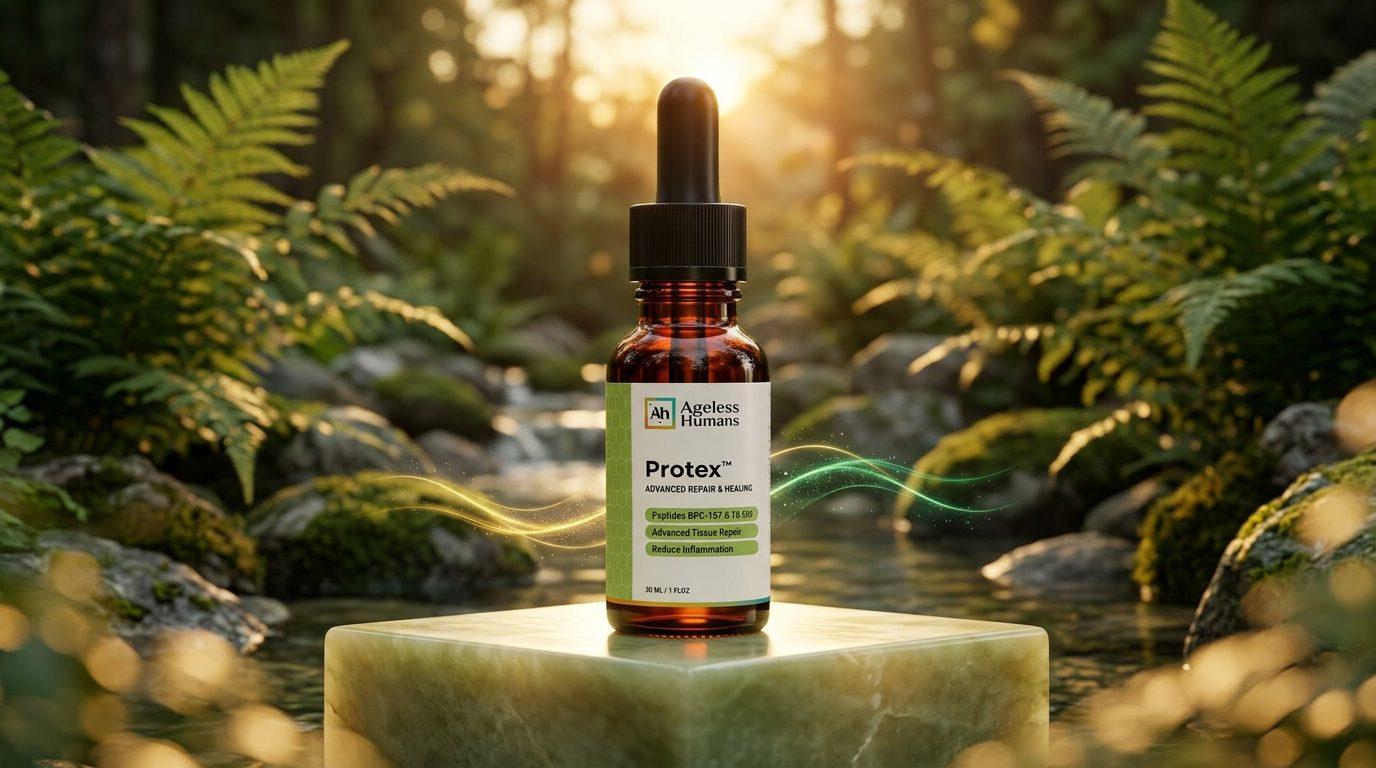
BPC-157 and TB-500 are often paired because they're studied for complementary roles. BPC-157 has been researched for supporting localized tissue recovery and gut lining integrity. TB-500 is researched for its role in cell migration and broader tissue maintenance. Ageless Humans' Protex oral BPC-157 and TB-500 formula combines both in a capsule for people who prefer oral use. Research suggests BPC-157 is notably stable in gastric conditions, which is part of why oral forms are studied.
Collagen still earns a place. Hard training stresses tendons and ligaments, and those tissues are mostly collagen. For a full breakdown of options, see our guide to the best peptides for recovery.
Whatever you choose, sleep, total protein intake, and sensible training load will do more for recovery than any single supplement.
How to Judge Any Peptide or Collagen Product
Quality varies widely in both categories, so verify sourcing, testing, and label honesty before you buy. Peptides especially attract low-quality sellers.
Use this checklist:
- Third-party testing with a COA. You want proof that what's on the label is in the product, at the stated amount, without contaminants.
- Where and how it's made. Look for a registered manufacturing facility, not an anonymous import.
- Honest claims. Be wary of labels that promise to 'heal' or 'cure' anything. Legitimate supplements support normal function.
- The right form for the goal. Topical for skin signaling, oral for systemic support, and collagen powders for volume.
- Label directions. Follow them, and talk with your healthcare provider if you're pregnant, nursing, taking medication, or managing a health condition.
Every Ageless Humans product is made in our FDA-registered facility in Carlsbad, California, and every lot is third-party lab tested with a COA. Each one is backed by a 60-day money-back guarantee.
Frequently asked questions
Is collagen a peptide?+
Collagen itself is a large protein, but most collagen supplements are hydrolyzed into smaller fragments called collagen peptides. So nearly all collagen supplements are peptide products. However, most peptides discussed in longevity circles, such as GHK-Cu, BPC-157, and TB-500, are not collagen at all.
What is the difference between collagen peptides and signaling peptides?+
Collagen peptides are structural. They supply amino acids like glycine, proline, and hydroxyproline that the body uses to maintain skin, joints, and connective tissue. Signaling peptides are short, specific sequences studied for influencing cellular activity, such as the body's own collagen production or tissue recovery. Think of collagen as building material and signaling peptides as instructions.
Are peptides better than collagen for skin?+
Neither is strictly better, because they work differently. Oral collagen peptides have a solid body of human research for supporting skin hydration and elasticity. Topical signaling peptides like GHK-Cu are studied for supporting the skin's own collagen and elastin production at the surface. Many people use both: collagen orally and a peptide cream topically.
Can you take collagen and peptides together?+
Yes. Collagen and signaling peptides play complementary roles, one supplying material and the other studied for directing activity, so they are commonly used together. Follow each product's label directions. Check with your healthcare provider if you take medication or have a health condition.
Which is better for joints, collagen or peptides like BPC-157?+
For everyday joint support, collagen has more human research and is the usual starting point. BPC-157 and TB-500 are studied mainly in animal models for their role in tendon, ligament, and tissue recovery, and they're often chosen by people who train hard. Some active adults combine collagen for material with signaling peptides for recovery support.
Is GHK-Cu a type of collagen?+
No. GHK-Cu is a naturally occurring three-amino-acid peptide bound to copper. It is not a fragment of collagen. It's studied for supporting the skin's own collagen and elastin production, which is why it's often mentioned alongside collagen. It is most commonly used in topical skincare.