
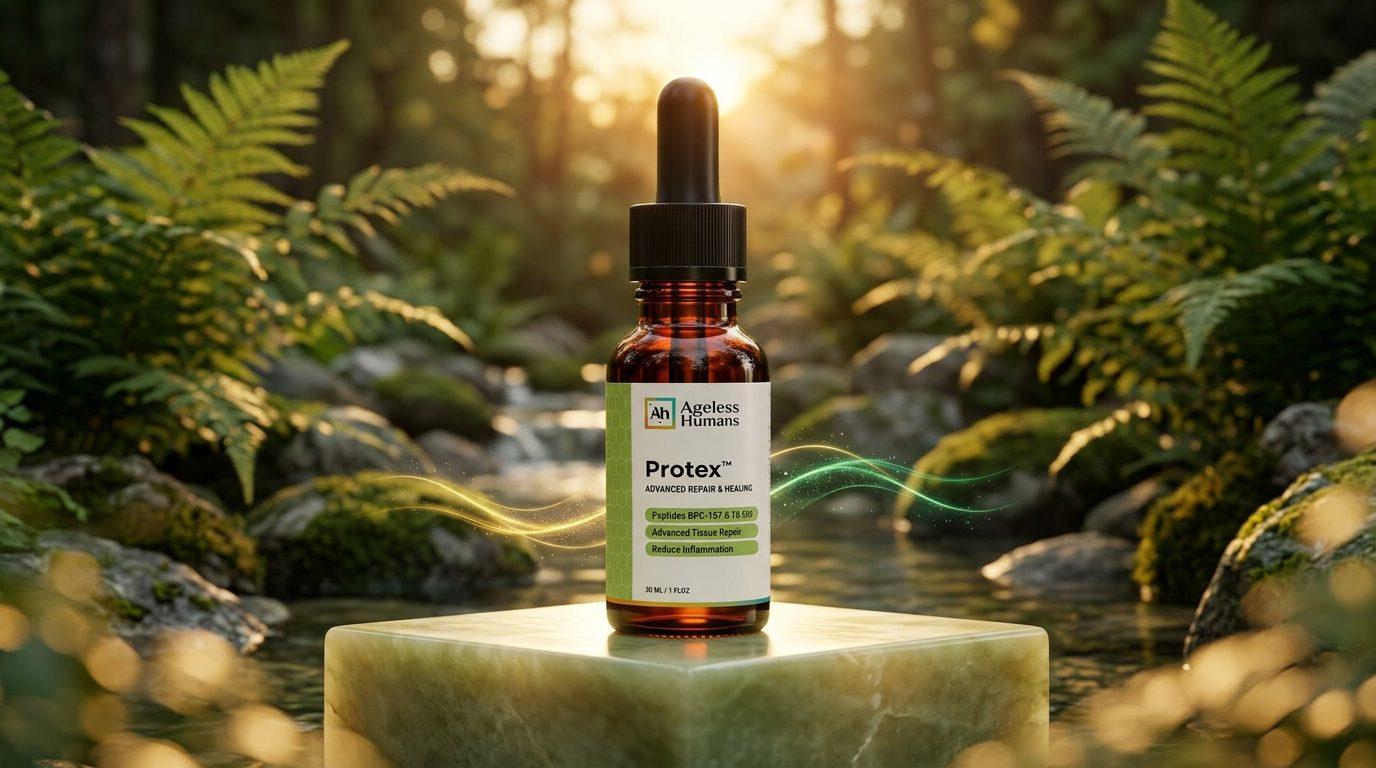
Most peptides are broken down by stomach acid and digestive enzymes before they can be absorbed intact, which is why many are studied as injections. BPC-157 is the notable exception: it comes from a protein found in gastric juice, and researchers describe it as unusually stable in the gut. The format choice comes down to which peptide you mean, how strong the absorption evidence is, and the real trade-offs in convenience, comfort, and legality.
The Short Answer: Format Depends on the Peptide
There is no single answer to "oral or injectable?" because peptides are not one thing. A peptide is a short chain of amino acids, and how it behaves in your body depends on its length, its sequence, and how easily enzymes can cut it.
Here is the practical breakdown:
- Most peptides: Digestion breaks them down. Injection, or another route that skips the gut, is how researchers usually study them.
- Very small peptides (two or three amino acids): These can be absorbed through the gut. Collagen peptide fragments are the familiar example.
- BPC-157: This is the special case. Its origin in gastric juice and its reported stability make oral use a credible option and an active area of study.
- TB-500 and most others: Oral evidence is thin. Stay skeptical of bold claims either way.
The rest of this guide explains why, so you can judge any peptide product on its own merits.
Why Most Peptides Don't Survive Digestion
Your digestive system is built to dismantle protein, and peptides are protein fragments. That is its job. A steak and a peptide capsule face the same gauntlet.
A swallowed peptide has to get past several barriers:
1. Stomach acid. It can unfold and destabilize many peptide structures. 2. Pepsin. This stomach enzyme cuts protein chains at specific points. 3. Pancreatic enzymes. Trypsin, chymotrypsin, and others keep chopping in the small intestine. 4. Brush-border peptidases. Enzymes on the intestinal lining break peptides down further, often to single amino acids. 5. The intestinal wall. Larger intact peptides have trouble crossing it at all.
This is why the pharmaceutical industry treats oral peptide delivery as one of its hardest problems. Even well-funded drug programs often need special absorption enhancers or coatings to get a meaningful share of an oral peptide into the bloodstream.
Size and structure matter most. Very short peptides have dedicated transporters in the gut, which is why some collagen-derived fragments can be detected in blood after eating. Longer peptides usually have more spots for enzymes to cut, so they are more likely to be broken down before absorption. That is the default. BPC-157 is interesting because it appears to break it.
BPC-157: The Special Case for Oral Use
BPC-157 has a stronger case for oral use than almost any other popular peptide. The reason lies in where it comes from. BPC stands for "Body Protection Compound." It is a 15-amino-acid sequence derived from a protein found naturally in human gastric juice. It came from the stomach, so it is, in a sense, native to the environment that destroys most peptides.
The research group that first characterized BPC-157 has described it as stable in gastric juice for extended periods, unlike typical peptides that degrade quickly. In their animal studies, BPC-157 has been given orally, often in drinking water, as well as by injection, and they have reported effects with both routes. That is unusual. Most peptides are only studied by injection because oral use is assumed not to work.
There is an honest caveat. Most BPC-157 research has been done in animals, mainly rodents, and much of it comes from a single research group. Well-controlled human studies are limited. So the fair summary is this:
- The case for oral stability is plausible and supported by early research.
- How much intact BPC-157 reaches the bloodstream in humans after an oral dose has not been firmly established.
- Oral use may be especially relevant to gut-lining support, since that is where an oral dose goes first.
Some manufacturers use stabilized salt forms of BPC-157 intended to improve shelf and gut stability. If you want a deeper comparison of the two routes for this peptide, see our full breakdown of oral BPC-157 vs. injection.
TB-500 and Other Peptides Taken Orally
For most peptides other than BPC-157, the oral evidence is weak or missing. You should know that before buying anything.
TB-500 is a synthetic fragment based on thymosin beta-4, a protein involved in cell movement and tissue repair processes. It has been studied for its role in supporting recovery, mostly through injection in animal research. Direct evidence on how well it survives oral delivery is sparse. When TB-500 is paired with BPC-157 in an oral formula, BPC-157 is usually the better-supported half for that route. Some formulators argue the two may complement each other. That idea is reasonable but has not been proven in human trials.
Other peptides follow the general pattern:
- Collagen peptides are well established as oral supplements, partly because their small fragments are absorbable.
- GHK-Cu (copper peptide) is mostly used topically for skin, not orally.
- Larger signaling peptides are almost always studied by injection, because oral delivery is not considered reliable.
The rule of thumb is simple. If a brand claims oral works just as well as injection for a peptide with no stability research behind it, treat that as a red flag.
The Real Trade-Offs: Convenience, Comfort, Consistency
Absorption is only part of the decision. Here is how the two formats compare on what actually shapes daily use.
Oral peptides
- Convenience: You take a capsule with water. There is nothing to mix, refrigerate, or dispose of.
- Comfort: No needles, no injection-site irritation, no learning curve.
- Consistency: They are easy to fit into a routine, which matters more than people expect.
- Limitation: Less of the peptide may reach circulation, and for most peptides oral absorption is unproven.
Injectable peptides
- Absorption: Injection skips the digestive tract entirely, which is why researchers favor it.
- Burden: It involves needles, reconstitution, cold storage, and sterile technique.
- Risk: Contamination, infection, and dosing errors are real concerns, especially with unregulated sources.
- Access: It usually requires a prescriber, and availability has narrowed (see the next section).
For many people, the best format is the one they will use correctly and consistently. A needle-free routine you can stick to may serve your goals better than one that is theoretically more potent but harder to follow.
Legality and Regulation: What You Need to Know
Oral peptide supplements and injectable peptides live in very different regulatory worlds. Injectable products are not dietary supplements. In the U.S., injectables generally fall under drug rules, which means a prescription and a licensed pharmacy.
A few points matter here:
- Compounding has tightened. In recent years the FDA has raised safety concerns about several peptides, including BPC-157, for use in compounded drugs. That has limited legal access to injectable versions through compounding pharmacies.
- "Research chemical" vials are a gray market. Products labeled "for research use only, not for human consumption" are not made or tested for people. Purity, sterility, and identity are often unverified.
- Supplement status is evolving. Peptide regulation is an active area. Buy from manufacturers who are transparent about how and where products are made.
- Competitive athletes, take note. BPC-157 appears on the World Anti-Doping Agency's prohibited list. If you compete in a tested sport, check current rules before using any peptide, in any format.
None of this is legal advice. The practical takeaway is that a transparently made oral product avoids many sourcing and sterility problems that come with self-injecting gray-market vials.
How to Judge Any Oral Peptide Product
Since oral absorption varies so much, product quality is the variable you control. Use this checklist:
1. Is there a Certificate of Analysis (COA) for each lot? Third-party testing should confirm identity and purity, not just say "lab tested" in vague terms. 2. Where is it made? Look for a named, registered facility rather than an anonymous import. 3. Does the brand stay honest about evidence? Hedged, specific language is a good sign. Miracle claims are not. 4. Are the label directions clear? Follow them. Don't improvise. 5. Is there a guarantee? A brand that stands behind its product takes on some of the risk.
At Ageless Humans, every product is made in our FDA-registered facility in Carlsbad, California. Every lot is third-party lab tested with a COA, and every order is backed by a 60-day money-back guarantee. Whatever brand you choose, hold it to that standard. And talk with your healthcare provider before starting any peptide, especially if you take medications or have a health condition.
Choosing the Right Format for Your Goals
If you want needle-free support and you're interested in BPC-157, oral is a reasonable, evidence-informed choice. It is also the format with the strongest stability story. If you're considering peptides without oral research behind them, injection is how they are studied. That route belongs with a licensed prescriber, not a gray-market vial.
A simple way to decide:
- You want convenience and comfort, and you're focused on gut and recovery support: Consider oral BPC-157, ideally in a lot-tested formula.
- You're exploring a peptide with no oral data: Work with a clinician and expect a prescription route.
- You're comparing peptides for recovery in general: Start with our guide to the best peptides for recovery to see which compounds have the most research behind them.
The same logic applies to pets. Active and aging dogs can't tolerate daily injections at home, so needle-free formats designed for dogs are the practical route. Check with your veterinarian first.
Frequently asked questions
Do peptides work if you take them orally?+
Most peptides do not survive digestion well, because stomach acid and digestive enzymes break them into amino acids before they can be absorbed intact. Very small peptides, like some collagen fragments, are an exception, and BPC-157 is notable for its reported stability in gastric juice. Whether an oral peptide works depends on the specific peptide and the research behind it.
Why is BPC-157 different from other peptides taken by mouth?+
BPC-157 is derived from a protein found naturally in human gastric juice, and researchers have described it as unusually stable in the stomach. In animal studies it has been given orally as well as by injection, which is rare for peptides. Human research is still limited, so how much reaches the bloodstream in people after an oral dose is not firmly established.
Is oral BPC-157 as effective as injectable BPC-157?+
There is no solid human research directly comparing the two, so no one can honestly say they are equal. Injection skips digestion, while oral BPC-157 may be especially relevant for gut-lining support because that is where an oral dose goes first. Many people choose oral for convenience, comfort, and to avoid the sourcing risks of injectable vials.
Can TB-500 be taken orally?+
TB-500 has been studied mostly by injection, and direct evidence on how well it survives oral delivery is sparse. It is sometimes paired with BPC-157 in oral formulas, where BPC-157 is the better-supported ingredient for that route. Be cautious of any brand claiming oral TB-500 matches injection.
Are injectable peptides legal to buy?+
Injectable peptides are not dietary supplements. In the U.S., they generally require a prescription and a licensed pharmacy. The FDA has raised safety concerns about compounding several peptides, including BPC-157, which has narrowed legal access. Vials sold as "research chemicals, not for human consumption" are not made or tested for human use.
What should I look for in an oral peptide supplement?+
Look for a third-party Certificate of Analysis for each lot that confirms identity and purity, a named and registered manufacturing facility, honest hedged claims, and clear label directions. A money-back guarantee is a good sign that the brand stands behind its product. Talk with your healthcare provider before starting any peptide.