
Use a comfort cream when one specific spot feels achy or stiff and you want focused, massaged-in soothing. Use a muscle roll-on when you want fast, mess-free coverage of large muscle groups as part of your post-training routine. They are built for different jobs, so many active people keep both.
The Short Answer: Two Different Jobs
A comfort cream is a spot tool. A muscle roll-on is a coverage tool. The cream is designed to be worked into one area, like a stiff neck, a cranky knee, or a lower back after yard work, so you feel it right where you need it. The roll-on is designed to glide over big areas, like quads, calves, shoulders, and lats, quickly and without getting product all over your hands.
The formats also tend to carry different ingredient philosophies. Comfort creams usually lean on sensory ingredients that create a cooling or warming feeling. Post-training roll-ons increasingly lean on tissue-support ingredients, such as peptides and cellular-energy compounds, that are studied for how they support skin and the surrounding tissue over time.
Here's a quick chooser:
- One spot, everyday stiffness, want to feel it now → comfort cream
- Several muscle groups, right after a workout, want it fast and clean → roll-on
- Both a specific nagging area and general post-training soreness → use each where it fits (see the layering section below)
How the Formats Differ: Cream vs Roll-On
The vehicle, meaning the base that carries the ingredients, changes how a topical behaves on your skin. A cream is thicker and usually richer in emollients. That makes it good for massage. You spend 30 to 60 seconds working it in, and the rubbing itself is part of the comfort. Creams also tend to sit on the skin a little longer, which suits slow, deliberate use on a single area.
A roll-on is typically a lighter liquid or gel delivered through a rollerball. It dries fast, spreads thin, and covers a lot of surface area per use. You don't touch the product, so you can apply it in a locker room and put your shirt back on a minute later. The rollerball also gives a light massage on its own, which many people find useful on large muscles.
Practical differences that matter in real life:
- Mess: Creams need hand-washing afterward. Roll-ons mostly don't.
- Precision: Creams let you target a small spot. Roll-ons are better for broad strokes.
- Portability: Roll-ons are leak-resistant and gym-bag friendly. Creams usually live at home.
- Ritual: Creams invite a slow self-massage. Roll-ons fit a quick routine.
Ingredient Logic: What Comfort Creams Usually Rely On
Most comfort creams work on sensation. They change how an area feels rather than rebuilding anything. That is not a knock. Sensation is exactly what you want when a spot is nagging you. The common categories are:
- Cooling agents like menthol: Menthol activates cold-sensing receptors in the skin, which produces that familiar icy-then-tingly feeling.
- Warming agents like camphor or capsaicin: These create a heat or tingle sensation. Some people prefer warmth for stiffness, and others prefer cool.
- Botanicals like arnica: Arnica has a long history of traditional topical use for muscle comfort. The research on it is mixed and still developing.
- Emollients and carrier oils: These help the cream spread, support the skin barrier, and make massage easier.
Be honest about what this category does. Sensory ingredients are well understood for producing cooling or warming feelings that many people find soothing. They are not designed to repair muscle or connective tissue. Look at a comfort cream as a way to support everyday comfort in a specific spot. It is not a recovery protocol by itself.
Ingredient Logic: What Tissue-Support Roll-Ons Rely On
Newer post-training roll-ons focus on ingredients studied for supporting skin and tissue, not just sensation. Two you'll see more often:
- GHK peptide (often as GHK-Cu, a copper peptide): GHK occurs naturally in the body. It has been studied, mostly in lab and skin research, for its role in supporting collagen and the skin's structural matrix. Levels are reported to decline with age, which is part of why it shows up in longevity-minded skincare.
- NAD+: NAD+ is a coenzyme central to cellular energy production, and research suggests levels decline as we age. That's why it is widely studied in longevity science. Research on applying NAD+ to the skin is earlier-stage than research on oral precursors, so treat it as a promising supporting ingredient, not a proven shortcut.
What the research does not show yet: there's limited direct evidence on how much of these larger molecules reaches deeper muscle tissue through intact skin. The most defensible framing is that they support the skin and the tissue right beneath it, as part of a broader recovery routine.
The Advanced Muscle Roll-On with NAD+ and GHK is built on this tissue-support logic and paired with a rollerball format designed for fast, large-area use after training.
When Each One Applies: Real Scenarios
Match the product to the area size and the timing. Here's how that plays out:
- Stiff neck after a long day at a desk: Comfort cream. It's a small area, and a slow massage with a cooling or warming feel is exactly the point.
- Knee or ankle that feels achy after a hike: Comfort cream on the specific joint area.
- Legs after heavy squats or a long run: Roll-on. You're covering quads, hamstrings, and calves, so speed and coverage win.
- Upper back and shoulders after a swim or row session: Roll-on. It's easier to reach and covers more ground.
- Lower back after gardening or moving furniture: Comfort cream, ideally massaged in by someone else.
- Daily training block with recurring soreness: Roll-on as a post-session habit, plus a cream on any single spot that stays noticeably cranky.
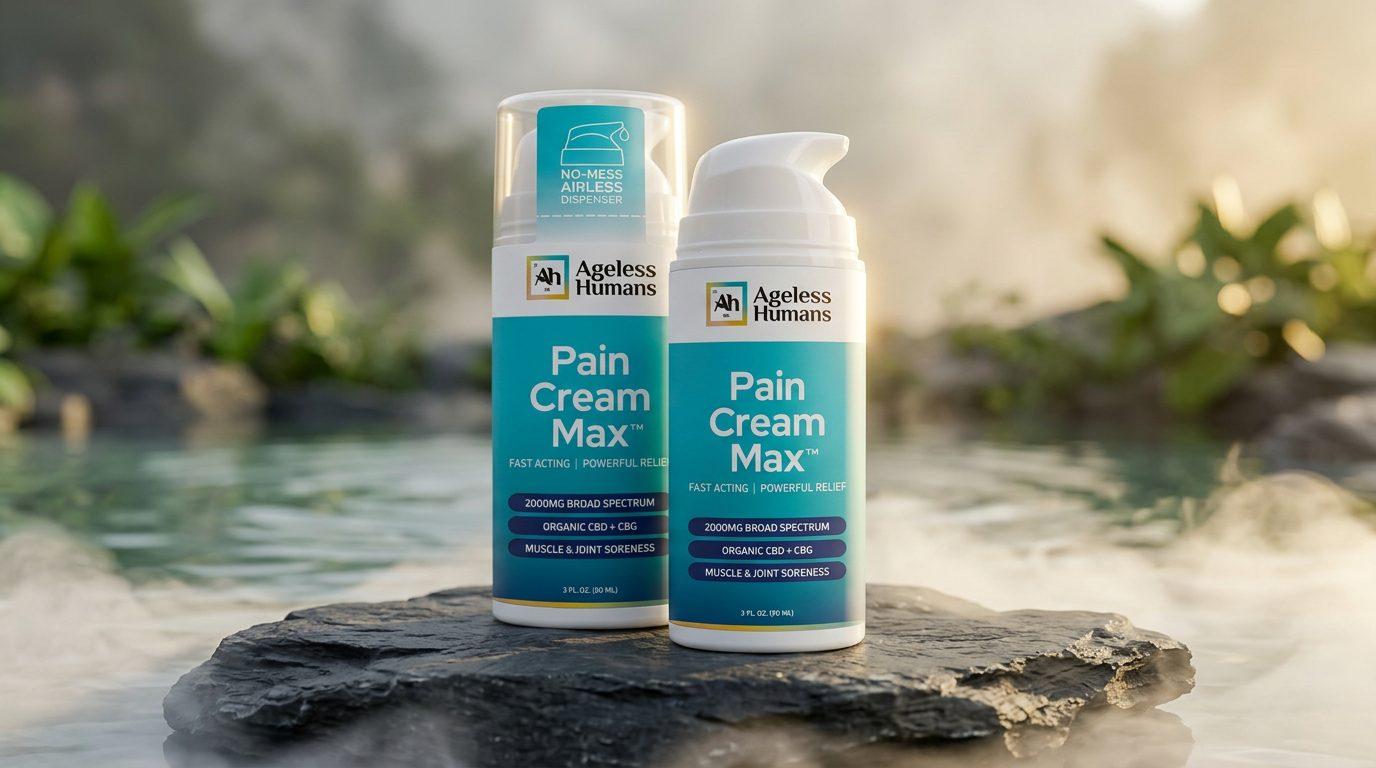
If your goal is focused comfort in one place, a formula like Pain Cream Max is the more natural fit. If something feels sharp, swollen, or keeps getting worse instead of easing over a few days, skip the topical aisle and talk to a qualified clinician.
Using Both: Layering, Timing, and Safety
You can use both, just not stacked on the same spot at the same time. Put the roll-on over the broad muscle groups you trained. Then use the cream only on the one area that needs extra attention. Layering two products on identical skin makes it hard to know what's helping, and it raises the odds of irritation.
Timing guidelines that keep things simple:
- Roll-on: Apply after training once you've cooled down and showered, on clean, dry skin.
- Cream: Apply whenever the spot bothers you, following the label for how often.
- Patch test first: Try a small amount on your inner forearm before using any new topical widely.
Safety basics apply to every topical. Use on intact skin only. Keep it away from your eyes and mucous membranes. Wash your hands after using a cream. Don't combine cooling or warming products with heating pads or tight wraps unless the label says it's fine. Always follow label directions for amount and frequency.
What Topicals Can't Do (and Where Oral Support Fits)
Topicals work at the surface and just beneath it. Recovery mostly happens from the inside out. Sleep, total protein, hydration, smart training load, and rest days do the heavy lifting. A cream or roll-on supports how you feel and supports your skin and nearby tissue. It doesn't replace any of those fundamentals.
That's why the most effective routines combine layers. Use topicals for targeted, on-the-spot support, and use oral nutrition for whole-body support. If you're deciding how to split your effort, our breakdown of topical vs oral recovery walks through what each route can realistically reach.
For the full picture, including sleep, protein timing, and the ingredients worth knowing, see our complete guide to recovery supplements.
How to Judge Any Topical Before You Buy
Look for ingredient transparency, testing, and accountability, not intensity claims. A good label tells you what's in the product and why. Be wary of anything that promises to fix, heal, or erase a problem. Topicals aren't allowed to make those claims, and honest brands don't.
A quick checklist:
- Full ingredient list with the active or featured ingredients clearly named
- Third-party testing with a Certificate of Analysis (COA) you can actually request or view
- Known manufacturing source. Ask where and how it's made.
- A real guarantee so you can see whether the format and feel work for you
For reference, every Ageless Humans product is made in our FDA-registered facility in Carlsbad, California. Every lot is third-party lab tested with a COA, and every product is backed by a 60-day money-back guarantee.
Frequently asked questions
What is the difference between a pain cream and a muscle roll-on?+
A comfort (pain) cream is a thicker formula you massage into one specific area. It usually relies on sensory ingredients like menthol or camphor to create a soothing cooling or warming feel. A muscle roll-on is a lighter, fast-drying formula applied with a rollerball over large muscle groups, often after training. Newer roll-ons may also include tissue-support ingredients such as GHK peptide or NAD+.
Should I use a cream or a roll-on after a workout?+
For general post-workout use across several muscle groups, a roll-on is usually the better fit because it covers large areas quickly and without mess. A cream makes more sense if one specific spot still feels stiff or achy and you want focused, massaged-in comfort. Many active people use the roll-on broadly and the cream on a single problem area.
Can I use a pain cream and a muscle roll-on together?+
Yes, but apply them to different areas rather than stacking them on the same patch of skin. Use the roll-on over the broad muscles you trained and the cream only on the specific spot that needs extra attention. Patch test each product first and follow label directions for both.
Does menthol actually do anything in a muscle cream?+
Menthol activates cold-sensing receptors in the skin, which creates the cooling, tingling sensation many people find soothing. It changes how an area feels. It does not repair muscle or tissue. Think of it as a comfort ingredient, not a recovery ingredient.
Can NAD+ and GHK peptides be absorbed through the skin?+
GHK peptide has been studied, mostly in lab and skin research, for supporting collagen and the skin's structural matrix. Research on topical NAD+ is still early. There is limited direct evidence on how much of either reaches deeper muscle through intact skin, so the most accurate framing is that they support the skin and nearby tissue as part of a broader recovery routine.
Are topical recovery products better than oral supplements?+
Neither is better overall because they do different jobs. Topicals offer targeted, on-the-spot support where you apply them, while oral nutrition supports recovery throughout the whole body. Sleep, protein, hydration, and sensible training load remain the foundation, and topicals and supplements build on top of those.