
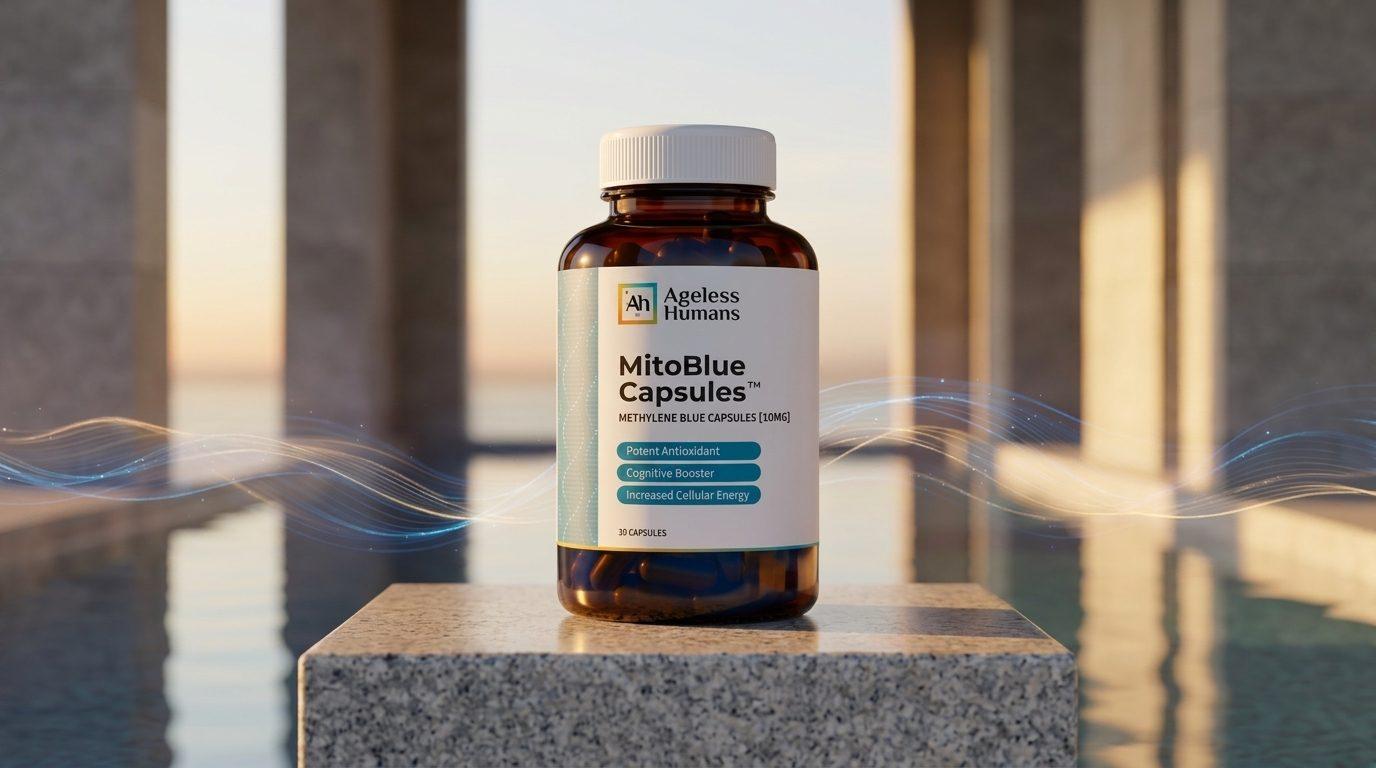
Methylene blue and NMN both support mitochondrial energy, but they work at different steps. Methylene blue is a redox compound that accepts and donates electrons, helping electrons keep moving through the mitochondrial electron transport chain. NMN is a precursor your cells convert into NAD+, the coenzyme that carries those electrons in the first place. One helps the current flow. The other helps refill the supply. That difference is why some people choose one and others consider using both.
The Short Answer: Same Pathway, Different Jobs
NMN supports the amount of NAD+ available to your cells. Methylene blue supports how efficiently electrons move once they reach the mitochondria. Both connect to the same energy-making system, but they act at different points in it.
Think of mitochondrial energy production as a power line. Food is broken down, and its energy is captured as electrons. NAD+ picks those electrons up and becomes NADH. NADH then delivers them to the electron transport chain, which uses that flow to make ATP, your cells' usable energy. NMN works upstream by supplying the raw material for NAD+. Methylene blue works at the line itself by helping shuttle electrons along.
So the question is not really which one is better. The real question is which part of the system you want to support. If you want a deeper look at the coenzyme side, see our guide on methylene blue vs NAD+.
How Methylene Blue Works: A Mitochondrial Electron Shuttle
Methylene blue is a redox cycler. It switches back and forth between an oxidized form and a reduced form, picking up electrons and handing them off. In mitochondria, research suggests it can accept electrons from NADH and pass them further down the electron transport chain to cytochrome c. This creates a possible alternate route for electron flow.
That alternate route is why methylene blue draws so much interest. Lab and animal research has studied it for its role in supporting mitochondrial respiration and oxygen use, especially in brain cells. Some small human studies have looked at memory and attention. The evidence is still early and comes mostly from preclinical models.
Two details matter in practice:
- The amount matters a lot. Research describes a dose response where low amounts behave very differently from high amounts. More is not better. Follow the label directions exactly.
- It is a real pharmacological compound. Methylene blue has a long history in medicine, and it acts on enzymes outside the mitochondria. This includes monoamine oxidase, an enzyme involved in breaking down serotonin. That is why interaction screening matters. The safety section below covers this.
One harmless but surprising effect: methylene blue can tint urine blue or green. That is expected and simply reflects the compound leaving your body.
How NMN Works: Refilling the NAD+ Pool
NMN (nicotinamide mononucleotide) is a direct precursor to NAD+. Cells convert it to NAD+ in a single enzymatic step. NAD+ is one of the most-used molecules in the body. It is required for turning food into energy, and it also fuels enzymes such as sirtuins and PARPs, which play roles in cellular maintenance and DNA repair processes.
Research suggests NAD+ levels tend to decline with age. That observation is the main reason NMN attracted attention in longevity science. Human studies have shown that NMN supplementation can raise NAD+ levels measured in the blood. Findings on downstream outcomes, such as energy, metabolic markers, or physical performance, are more mixed and still being worked out.
NMN does not push electrons through the mitochondria itself. It supports the supply of the coenzyme that carries them. If NAD+ availability is your limiting factor, NMN addresses that directly. For a fuller breakdown of what the research covers, read our article on NMN benefits.
Methylene Blue vs NMN: Side-by-Side
The clearest way to separate them is by what each one does, where it acts, and how much evidence stands behind it.
- What it is: Methylene blue is a synthetic redox compound. NMN is a naturally occurring nucleotide that your body also makes.
- Primary role: Methylene blue supports electron transfer in the mitochondrial electron transport chain. NMN supports cellular NAD+ levels.
- Where it acts: Methylene blue acts at the electron transport chain, between NADH and cytochrome c. NMN acts upstream, in the NAD+ synthesis (salvage) pathway.
- Effect on NAD+: By oxidizing NADH, methylene blue may shift the NAD+/NADH ratio. NMN raises the total NAD+ pool.
- Research base: Methylene blue research is mostly cell and animal studies, with limited small human studies. NMN has a growing set of human trials showing it raises blood NAD+, with mixed functional outcomes.
- Interaction profile: Methylene blue has meaningful medication interactions, especially with serotonergic drugs. NMN is generally considered well tolerated in studies to date.
- Noticeable quirk: Methylene blue can cause blue-green urine. NMN has no comparable effect.
The ratio-versus-pool point is the most useful distinction. NAD+ works in a cycle: it gets used to carry electrons and then must be regenerated. NMN adds more molecules to the cycle. Methylene blue may help the cycle turn by freeing NAD+ back up from NADH.
When Each One Fits
Choose based on the goal, your health context, and how much complexity you want to take on. Neither one fits everyone.
Methylene blue may fit if you:
- Want to support mitochondrial respiration and electron flow directly
- Are mainly interested in cognitive energy and mental focus, the area where most of its research interest sits
- Do not take serotonergic medications, and have screened for contraindications with a clinician
- Are comfortable following a precise low-amount label protocol
NMN may fit if you:
- Want to support NAD+ levels as part of a long-term healthy-aging routine
- Prefer an ingredient with more human data on its primary effect, raising NAD+
- Want something with a simpler interaction profile
- Are interested in the broader NAD+ roles, such as sirtuin activity and cellular maintenance, not only energy output
For many people, NMN is the more straightforward starting point because it is better studied in humans and easier to fit into a routine. Methylene blue is more targeted and potent, and it rewards careful, informed use.
Can You Stack Methylene Blue and NMN?
There is a reasonable mechanistic rationale for using them together, but no human studies have tested the combination directly. Be honest with yourself about that gap before stacking.
The theory goes like this. NMN increases the total NAD+ available. Methylene blue may help regenerate NAD+ from NADH and keep electrons moving through the chain. Together, they address supply and flow, two sides of the same system. That is why the pairing comes up often in longevity circles.
If you and your healthcare provider decide stacking makes sense, a sensible approach looks like this:
1. Start one at a time. Use one product for a couple of weeks before adding the other. That way you know how each one affects you. 2. Follow each label exactly. Do not raise amounts because you are combining them. 3. Take them earlier in the day. Both relate to energy metabolism, and many people prefer morning use. 4. Screen medications first. The interaction concerns with methylene blue do not go away when you add NMN.
Stacking is optional, not necessary. Plenty of people get what they want from a single product.
Safety and Quality: What to Check First
Methylene blue needs more caution than NMN, and product quality matters for both.
For methylene blue, the key safety points are:
- Serotonergic medications. Methylene blue inhibits monoamine oxidase. Combining it with SSRIs, SNRIs, MAOIs, certain pain medications, or other serotonergic drugs can cause a serious reaction. Talk to a clinician before use if you take any prescription medication.
- G6PD deficiency. People with this enzyme deficiency should not use methylene blue.
- Pregnancy and nursing. Avoid it unless a physician approves.
For NMN, studies to date suggest it is generally well tolerated. Check with your provider anyway if you are pregnant, nursing, or managing a health condition.
Quality is where many products fall short. Methylene blue comes in different grades, and only pharmaceutical-grade material belongs in a supplement. NMN purity varies across the market. Look for brands that publish third-party certificates of analysis (COAs) for every lot. Ageless Humans makes its products in its FDA-registered facility in Carlsbad, California, and every lot is third-party lab tested with a COA.
What the Research Does and Doesn't Show
Both compounds have a credible scientific rationale, but neither has the long-term human evidence some marketing suggests.
What research does support:
- NMN converts to NAD+, and human studies show supplementation can raise blood NAD+ levels.
- Methylene blue acts as an electron carrier in mitochondria, and preclinical research has studied it for supporting cellular respiration.
- NAD+ is central to energy metabolism, and research suggests its levels tend to fall with age.
What research does not yet show:
- That either compound extends human lifespan.
- That raising blood NAD+ reliably produces noticeable changes in how people feel or perform.
- How methylene blue and NMN behave when taken together in people.
The honest view: these are tools for supporting cellular energy systems, studied for good reasons, with real open questions. Choose with clear expectations and follow label directions.
Frequently asked questions
What is the main difference between methylene blue and NMN?+
Methylene blue is a redox compound that helps shuttle electrons through the mitochondrial electron transport chain. NMN is a precursor that cells convert into NAD+, the coenzyme that carries electrons to that chain. Methylene blue supports electron flow, while NMN supports the supply of NAD+.
Is methylene blue or NMN better for energy?+
They support energy in different ways, so neither is universally better. NMN has more human research showing it raises NAD+ levels and is simpler to use. Methylene blue acts more directly on mitochondrial electron transfer but has less human data and more medication interactions.
Can you take methylene blue and NMN together?+
There is a mechanistic rationale for combining them, because NMN supports the NAD+ pool and methylene blue may help regenerate NAD+ from NADH. However, no human studies have tested the combination directly. If you stack them, add one at a time, follow each label exactly, and check with a healthcare provider first.
Does methylene blue increase NAD+?+
Methylene blue does not add new NAD+ molecules the way NMN does. By accepting electrons from NADH, it may convert NADH back to NAD+, which can shift the NAD+/NADH ratio. NMN, by contrast, raises the total amount of NAD+ available to cells.
Who should not take methylene blue?+
People taking serotonergic medications, such as SSRIs, SNRIs, or MAOIs, should not use methylene blue without medical guidance, because of a serious interaction risk. People with G6PD deficiency should avoid it, and people who are pregnant or nursing should only use it with physician approval. Anyone on prescription medication should consult a clinician first.
Why does methylene blue turn urine blue?+
Methylene blue is a dye, and some of it leaves the body through urine, which can tint it blue or green. This is an expected and harmless effect. It usually fades after you stop taking it.