
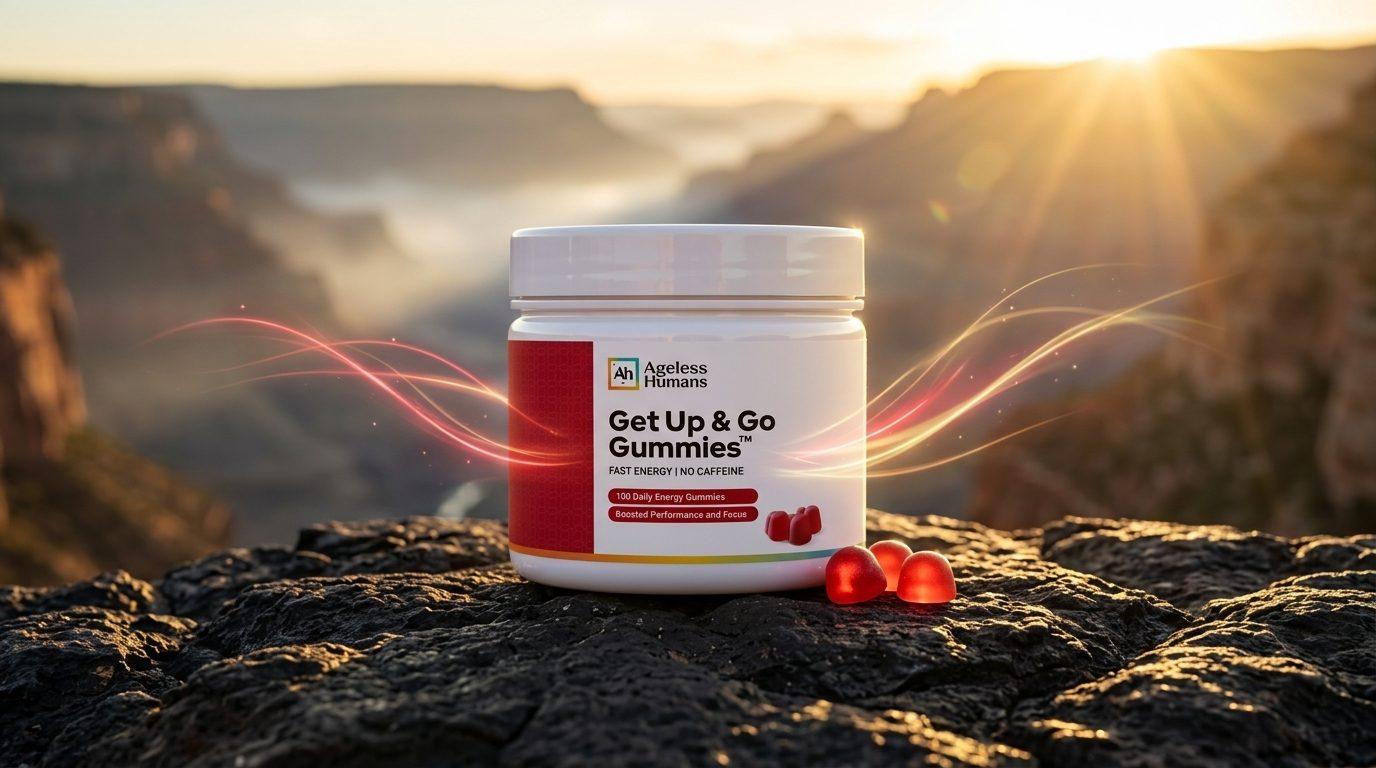
Energy drinks and NAD+ gummies do different jobs. An energy drink uses caffeine, and often sugar, to mask tiredness for a few hours, which is fast but frequently followed by another dip. A NAD+ gummy is caffeine-free and is designed to support the cellular machinery that makes energy, so it works as a daily routine rather than an instant jolt.
The Short Answer: Fast Fix vs. Daily Foundation
If you need to feel alert in the next 20 minutes, an energy drink will do that. A NAD+ gummy won't. If you want to stop living from can to can, a NAD+ gummy targets something an energy drink never touches: the way your cells produce energy in the first place.
That's the honest framing most comparisons skip. These aren't two versions of the same product. One is a stimulant that changes how tired you feel. The other is nutritional support for a molecule your cells use to turn food into usable energy.
So the real question isn't "which one is stronger?" It's "what problem am I actually trying to solve?" A one-off deadline and a daily afternoon slump are different problems. They call for different tools.
Why the 3pm Crash Happens in the First Place
The afternoon slump usually comes from several things stacking up: your body clock, your sleep, your lunch, and your morning caffeine wearing off. Fix only one and the crash often comes back.
Here's what's typically going on:
- Your circadian rhythm dips. Most people have a natural drop in alertness in the early-to-mid afternoon, even on a good night's sleep.
- Sleep pressure builds. A compound called adenosine accumulates the longer you're awake. The more of it you carry, the sleepier you feel.
- Lunch shifts your energy. A big, refined-carb-heavy meal can leave you feeling sluggish an hour or two later.
- Morning caffeine fades. Caffeine blocks adenosine from doing its job. When it wears off, the built-up sleepiness signal hits all at once.
That last point matters most for energy-drink habits. The coffee or can you had at 9am can be part of why 3pm feels so rough. Then a second can at 3pm restarts the cycle.
What Energy Drinks Actually Do (and Don't Do)
Energy drinks work mainly by blocking adenosine with caffeine, so you feel less tired without being any less tired. Many also add sugar for a quick hit of fuel. That combination is effective in the short term, which is why it's so popular.
What they're genuinely good at:
- Fast, noticeable alertness, often within 15–45 minutes
- Short-term focus and reaction time for a specific task
- Convenience, since you can buy one anywhere
Where they fall short:
- They borrow energy, they don't make it. The sleepiness signal is still there when the caffeine wears off.
- The sugar spiral. A large dose of sugar can lift you quickly, then leave you feeling flat as it clears. Sugar-free versions avoid this but still carry the caffeine rebound.
- Sleep disruption. Caffeine stays active for several hours. An afternoon can may still be affecting you at bedtime, and poorer sleep makes tomorrow's 3pm worse.
- Tolerance. Regular users often find they need more to feel the same lift.
None of this makes energy drinks evil. It makes them a short-term tool being used as a daily strategy, and that's where the spiral starts.
What NAD+ Gummies Actually Do (and Don't Do)
NAD+ gummies provide nutrients that support your body's own NAD+, a coenzyme your cells use to convert food into energy. They don't contain caffeine, and they aren't designed to make you feel wired.
NAD+ (nicotinamide adenine dinucleotide) is found in every cell. It plays a central role in mitochondrial function, the process that turns the food you eat into ATP, the energy currency your cells run on. Research suggests NAD+ levels decline with age, which is a big reason it's become a focus of longevity research. Many NAD+ gummies use precursors like NMN (nicotinamide mononucleotide), which your body can use to make NAD+. If you want the deeper breakdown on that ingredient, see our guide to NMN gummies.
What the research does and doesn't show:
- Studies show NAD+ precursors can raise NAD+ levels in the body.
- Researchers are actively studying how that translates to energy, metabolism, and healthy aging. Early human research is promising but still developing.
- There is no good evidence that NAD+ gummies produce an immediate, caffeine-style lift. Anyone promising that is overselling.
The honest pitch is this: NAD+ support is a daily foundation habit, like eating protein or getting sunlight in the morning. You're supporting the system, not flipping a switch.
Side-by-Side: NAD+ Gummies vs. Energy Drinks
Energy drinks win on speed. NAD+ gummies win on sustainability and fit for a daily routine. Here's how they compare point by point:
- How it works: Energy drink, caffeine blocks the tiredness signal. NAD+ gummy, supports a coenzyme involved in cellular energy production.
- How fast you notice it: Energy drink, minutes. NAD+ gummy, not an instant feeling. Think in terms of consistent daily use.
- Crash risk: Energy drink, common, especially with sugar. NAD+ gummy, no stimulant, so no caffeine rebound.
- Effect on sleep: Energy drink, afternoon caffeine can interfere with sleep. NAD+ gummy, caffeine-free.
- Tolerance: Energy drink, often builds over time. NAD+ gummy, not a stimulant, so tolerance in that sense doesn't apply.
- Best for: Energy drink, a one-off push. NAD+ gummy, people focused on long-term energy and healthy aging.
- What it can't do: Energy drink, can't create real energy or replace sleep. NAD+ gummy, can't wake you up on demand or replace sleep either.
Notice the last row. Neither one replaces sleep. That's the most honest line in this whole comparison.
Which One Should You Choose?
Choose based on the problem: occasional emergencies call for caffeine, chronic afternoon slumps call for a better daily foundation. Many people land somewhere in between.
An energy drink may make sense if:
- You need alertness for a specific, rare situation, like a late drive or a deadline
- You tolerate caffeine well and it doesn't affect your sleep
- You choose low- or no-sugar options
A NAD+ gummy makes more sense if:
- You crash every afternoon and you're tired of the can-to-can cycle
- You're sensitive to caffeine or want to cut back
- You're interested in cellular health and healthy aging, not just today's energy
Can you use both? Generally, yes. They work through different mechanisms. A common approach is keeping caffeine to the morning, skipping the afternoon can, and making NAD+ support part of your daily routine. If you take medications, are pregnant or nursing, or have a health condition, check with your healthcare provider before adding any supplement. For more caffeine-free options, read our guide to caffeine-free energy supplements.
A Better 3pm Plan (No Can Required)
The most reliable fix for the afternoon crash is a few small habit changes, with supplements supporting them rather than replacing them. These are free and they compound:
1. Move your caffeine earlier. Keep coffee or tea to the morning so it's mostly cleared by bedtime. 2. Build a steadier lunch. Pair carbs with protein, fiber, and healthy fat to avoid a heavy, sluggish afternoon. 3. Get light and movement. A 10-minute walk outside around 2–3pm is one of the fastest non-caffeine resets there is. 4. Hydrate. Mild dehydration can feel a lot like fatigue. 5. Protect your sleep. A consistent bedtime does more for 3pm than anything you can drink. 6. Add daily cellular support. A NAD+ supplement fits here, as a consistent habit, not a rescue.
Stack these for two or three weeks before judging results. The goal isn't a bigger spike. It's a flatter, steadier day.
How to Choose a NAD+ Gummy Worth Taking
Look for a transparent label, third-party testing, low added sugar, and a brand that makes realistic claims. The NAD+ category is crowded, and quality varies a lot.
- Clear ingredients and amounts. You should be able to see exactly what's in each serving, such as NMN or other precursors.
- Third-party testing with a COA. A Certificate of Analysis confirms the product contains what it says. At Ageless Humans, every lot is third-party lab tested with a COA.
- Where it's made. Our products are made in our own FDA-registered facility in Carlsbad, California.
- Sugar per serving. If you're leaving energy drinks to escape the sugar spiral, check the gummy's sugar content too.
- Honest marketing. Skip any brand promising instant energy or dramatic anti-aging results. That isn't what the research supports.
- A real guarantee. We offer a 60-day money-back guarantee, enough time to judge a daily habit fairly.
Always follow the label directions. More isn't better, and consistency matters more than quantity.
Frequently asked questions
Do NAD gummies give you energy like an energy drink?+
No. NAD+ gummies don't contain caffeine and won't produce the fast, noticeable lift an energy drink does. They're designed to support NAD+, a coenzyme your cells use to produce energy, so they work best as a consistent daily habit rather than an on-demand boost.
Why do I crash after drinking an energy drink?+
Caffeine blocks adenosine, the compound that makes you feel sleepy, but adenosine keeps building in the background. When the caffeine wears off, that built-up sleepiness hits at once. If the drink also contains a lot of sugar, the drop in energy after a quick sugar lift can make the crash feel worse.
Are NAD gummies caffeine-free?+
NAD+ gummies are typically caffeine-free because they're built around NAD+ precursors like NMN, not stimulants. Formulas vary by brand, so always check the ingredient label. A caffeine-free formula won't add to a caffeine rebound or interfere with sleep the way an afternoon energy drink can.
Can I take NAD gummies and drink coffee or energy drinks?+
Generally, yes. They work through different mechanisms, and many people keep caffeine to the morning while taking NAD+ support daily. If you take medications, are pregnant or nursing, or have a health condition, talk with your healthcare provider before starting any supplement.
How long do NAD gummies take to work?+
NAD+ gummies aren't designed to produce an immediate feeling, so think in weeks of consistent use rather than minutes. Research shows NAD+ precursors can raise NAD+ levels, and studies on how that relates to energy and healthy aging are ongoing. Follow the label directions and pair them with good sleep and steady meals for the best results.
What's the best way to beat the 3pm slump without caffeine?+
Start with a steadier lunch that includes protein and fiber, a short walk outside in the early afternoon, and enough water. Keep any caffeine to the morning so it doesn't disrupt your sleep, since poor sleep makes the next afternoon worse. Caffeine-free supplements like NAD+ gummies can support that routine as a daily habit.