
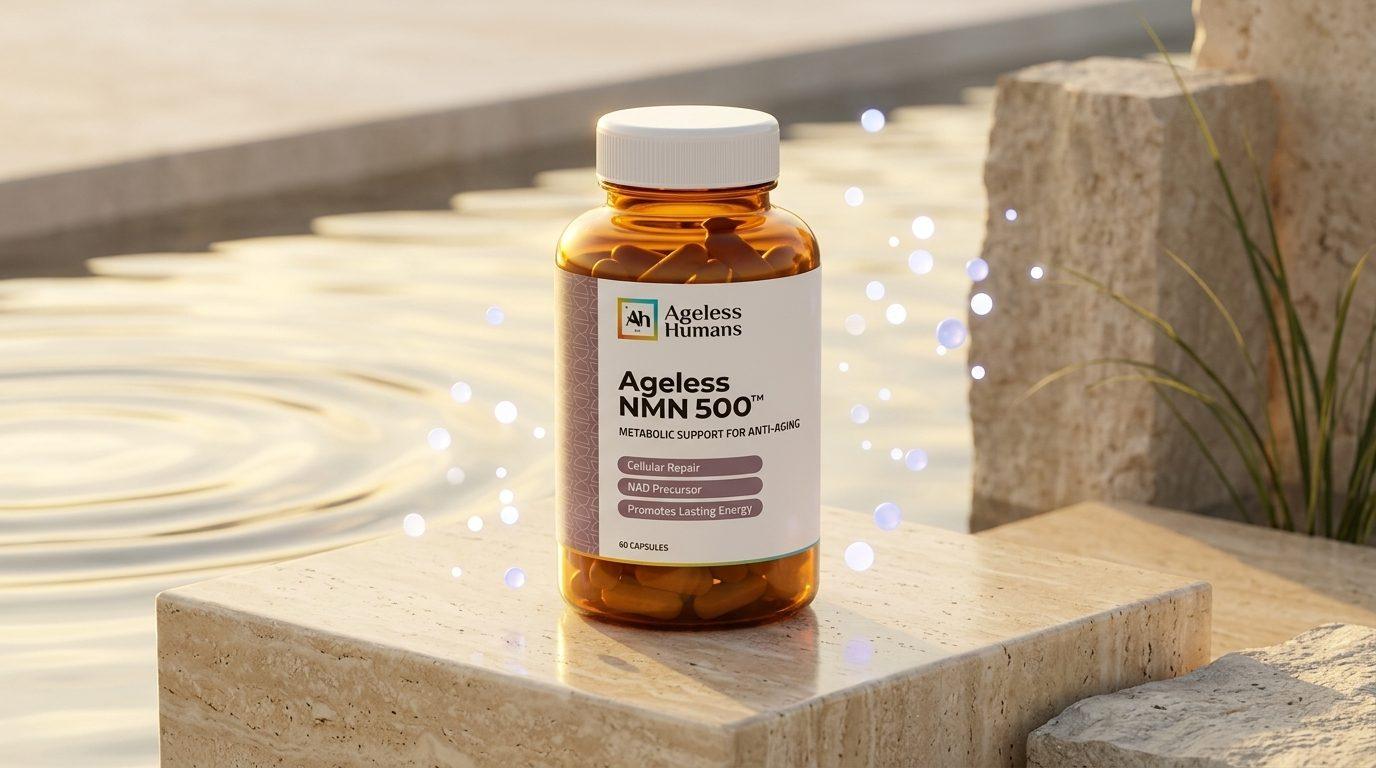
Vitamin B12 and NMN support energy in different ways, so the right choice depends on why you're tired. B12 matters most if your levels are low, because your body needs it to make red blood cells and turn food into usable energy. NMN is studied for supporting NAD+, a cellular energy molecule that declines with age, so it fits people whose B12 is already adequate and who want to support healthy aging at the cellular level.
The Short Answer: B12 Fills a Gap, NMN Supports a Gradual Decline
If you're low in B12, B12 is the priority. If your B12 is fine, more of it is unlikely to give you more energy, and NMN may be the more relevant option. That's the core difference, and most comparisons online skip it.
B12 is an essential vitamin. Your body can't make it, and when intake or absorption falls short, energy and focus often suffer. Correcting a shortfall is the clearest energy win B12 offers. But B12 isn't a stimulant. Once your levels are adequate, extra B12 doesn't add a boost on top.
NMN (nicotinamide mononucleotide) is not a vitamin. It's a precursor your cells use to make NAD+, a molecule involved in cellular energy production. Research suggests NAD+ levels tend to decline as we get older. NMN is studied as a way to support healthy NAD+ levels during that decline.
So the real question isn't which one is stronger. It's which problem you actually have: a nutrient gap, a gradual age-related shift, or something else entirely.
How Vitamin B12 Supports Energy
B12 supports energy by helping your body make healthy red blood cells and by supporting normal energy-yielding metabolism. Red blood cells carry oxygen to your tissues. When B12 runs low, that system works less efficiently, and fatigue, low motivation, and mental fog are commonly reported.
B12 also supports normal nervous system function. That's one reason low levels can show up as more than physical tiredness, including trouble concentrating or feeling mentally flat.
Here's the part most energy marketing leaves out: B12 helps maintain normal energy, not above-normal energy. If your levels are already in a healthy range, research does not show that extra B12 makes you feel more energetic. Your body uses what it needs and excretes or stores the rest.
Common supplemental forms include cyanocobalamin and methylcobalamin. Both are widely used. If you supplement, follow the label directions, and if you suspect a real shortfall, talk to a provider rather than guessing.
How NMN Supports Energy
NMN supports energy at the cellular level by giving your cells a building block for NAD+. NAD+ helps your mitochondria convert nutrients into ATP, the energy currency your cells run on. It also plays a role in cellular repair and maintenance processes.
Research suggests NAD+ levels decline with age. That's why NMN is studied mostly in the context of healthy aging rather than quick energy. It isn't meant to feel like coffee. People who take it are typically thinking long term: supporting how their cells produce energy as they get older.
Be realistic about the evidence. Much of the early NMN research comes from animal and lab studies. Human research is newer, often small, and results so far are mixed and still developing. Studies have looked at NAD+ levels, physical performance, and markers of healthy aging, but the science is not settled. Anyone who promises dramatic results is overselling.
For a deeper look at what's been studied, see our guide to NMN benefits.
Who Is More Likely to Run Low on B12
People most likely to run low on B12 include those who eat little or no animal food, older adults, and people taking certain medications. If any of these apply to you, checking B12 is a smart first step before trying anything else.
- Plant-based eaters. B12 occurs naturally almost only in animal foods. Vegans and many vegetarians rely on fortified foods or supplements.
- Adults over 50. Absorbing B12 from food depends on stomach acid and a protein called intrinsic factor, and both can decrease with age.
- People on certain long-term medications. Some acid-reducing medications and metformin have been associated with lower B12 levels in research.
- People who have had digestive surgery or have ongoing digestive issues that affect absorption.
- Heavy drinkers, since alcohol can affect nutrient absorption and status.
None of this means you're definitely low. It means your odds are higher, and a simple conversation with your provider can settle it. B12 shortfalls often develop slowly, so the tiredness can creep up in a way that feels like normal aging.
When NMN Makes More Sense
NMN makes more sense when your B12 and other basics check out, and your goal is supporting cellular energy as you age. It's a long-game supplement, not a fix for a nutrient gap.
NMN tends to fit people who:
- Are in their 40s, 50s, or beyond and interested in healthy aging
- Have already ruled out common causes of fatigue with their provider
- Eat a balanced diet and get adequate B12
- Want to support mitochondrial function and NAD+ levels rather than chase a short-term buzz
- Prefer an option that doesn't rely on stimulants
If you're in your 20s and exhausted, NMN is unlikely to be the missing piece. Sleep, nutrition, stress, and nutrient status are far more likely factors. NMN's relevance grows with age because that's when NAD+ decline is thought to matter most.
NMN vs B12 Side by Side
The simplest way to compare them: B12 is an essential nutrient that corrects a gap, and NMN is a precursor that supports an age-related decline.
- What it is: B12 is an essential vitamin. NMN is a naturally occurring compound that your body converts to NAD+.
- Main energy role: B12 supports red blood cell formation and normal energy metabolism. NMN supports NAD+, which helps mitochondria make cellular energy.
- Who benefits most: B12 helps most when levels are low. NMN is studied mostly for adults focused on healthy aging.
- Will more help? Not with B12 if levels are already adequate. With NMN, research on optimal intake is still evolving, so follow label directions.
- How it feels: Neither is a stimulant. Correcting low B12 can feel noticeable over weeks. NMN is a gradual, long-term support.
- Strength of evidence: B12's role in energy metabolism is well established. NMN human research is promising but early.
- Can you take both? They work through different pathways, and many people use both. If you take medications or have health concerns, check with your provider first.
Check Your Levels First: Neither Is a Substitute for a Provider
If you're tired all the time, start with a conversation with your healthcare provider, not a supplement. Persistent fatigue has many possible causes, and guessing can delay finding the real one.
A provider can help you look at the full picture. That may include B12 status, iron levels, thyroid function, vitamin D, blood sugar, and medication effects. For B12, your provider may order a serum B12 test and sometimes additional markers, since a single number doesn't always tell the whole story.
Also look honestly at the basics. Short or broken sleep, chronic stress, low protein intake, dehydration, too little movement, and heavy caffeine or alcohol use all drain energy. Supplements work best on top of those foundations, not in place of them.
Ask for testing if fatigue is new, getting worse, or comes with other changes you've noticed. Supplements can support normal function. They aren't a substitute for medical evaluation.
Building a Smarter Energy Routine
The most effective routine matches the tool to the reason you're tired and keeps stimulants in their place. Here's a practical order of operations:
1. Rule out gaps. Work with your provider to check B12 and other common nutrient levels. Correct any shortfall first. 2. Fix the foundations. Consistent sleep timing, daylight in the morning, protein at each meal, regular movement, and steady hydration. 3. Add long-term cellular support if it fits your goals. For adults focused on healthy aging, NMN is one option studied for supporting NAD+. 4. Use daytime support thoughtfully. If you want help feeling ready in the morning without relying on more coffee, explore our roundup of caffeine-free energy supplements.
Whatever you choose, quality matters. Every Ageless Humans product is made in our FDA-registered facility in Carlsbad, California, and every lot is third-party lab tested with a Certificate of Analysis. If it's not right for you, you're covered by our 60-day money-back guarantee.
Frequently asked questions
Is NMN or B12 better for energy?+
It depends on why you're tired. Vitamin B12 is most helpful when your levels are low, because it supports red blood cell formation and normal energy metabolism. NMN is studied for supporting NAD+, a cellular energy molecule that declines with age, so it fits adults with adequate B12 who are focused on healthy aging.
Will taking B12 give me more energy if my levels are normal?+
Probably not. B12 helps maintain normal energy, but research does not show that extra B12 raises energy above normal when your levels are already adequate. If you feel tired despite normal B12, talk with a healthcare provider about other possible causes.
Can I take NMN and vitamin B12 together?+
NMN and vitamin B12 work through different pathways, and many people take both as part of a daily routine. Follow the label directions for each product. If you take prescription medications or have a health condition, check with your healthcare provider before combining supplements.
How do I know if I'm low in vitamin B12?+
The only reliable way to know is to ask a healthcare provider, who may order a blood test such as serum B12 and sometimes additional markers. People at higher risk of low B12 include vegans and vegetarians, adults over 50, and people taking certain long-term medications. Fatigue alone is not enough to tell, because it has many possible causes.
Does NMN work like caffeine?+
No. NMN is not a stimulant and isn't designed to produce a quick jolt of energy. It's studied for supporting NAD+ levels and cellular energy production over time, especially as NAD+ declines with age. Human research on NMN is still early, so expectations should be realistic.
Who should consider NMN instead of B12?+
NMN may be a better fit for adults, typically 40 and older, whose B12 and other basics have been checked and are adequate, and who want to support healthy aging at the cellular level. If you might be low in B12, addressing that with your provider comes first. NMN is a long-term support, not a replacement for correcting a nutrient gap.