
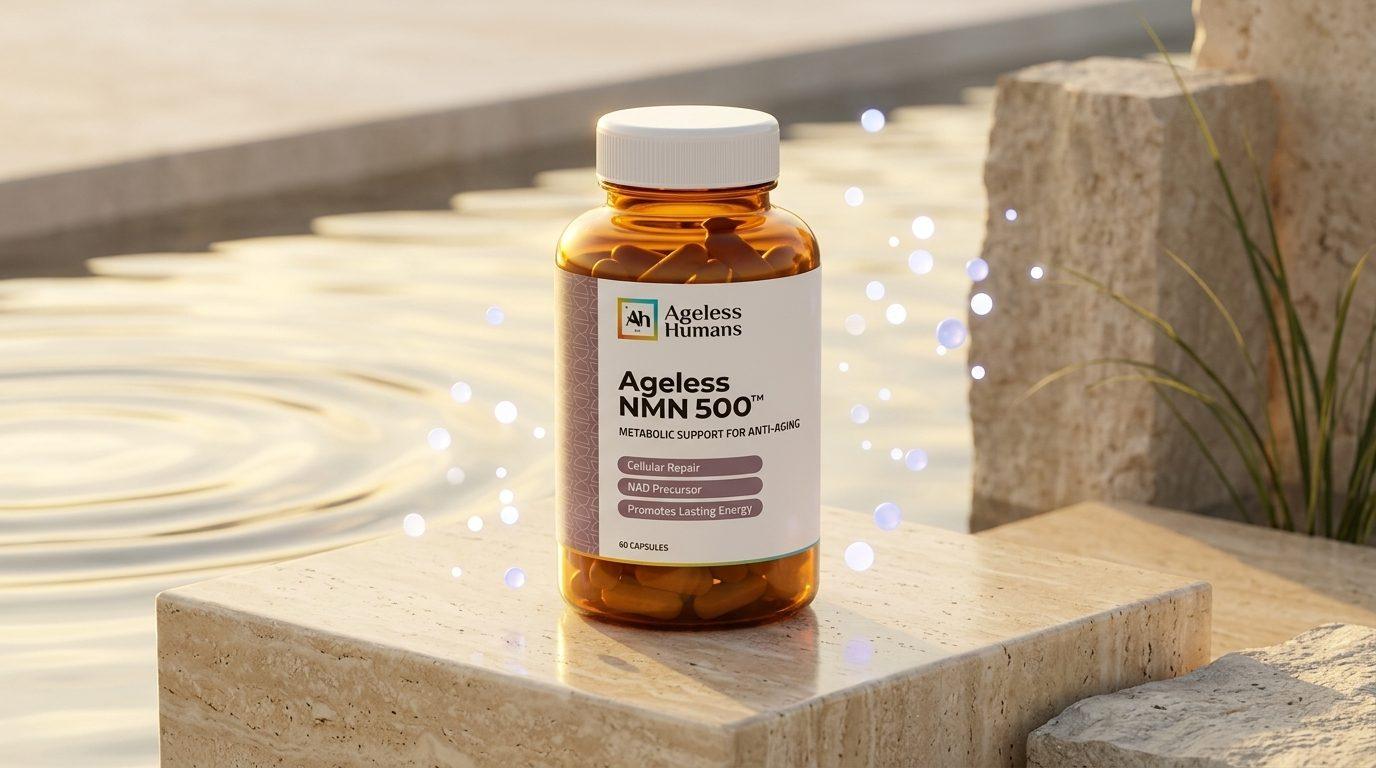
NMN and Ca-AKG work on different parts of the aging process. NMN is a direct precursor to NAD+, the coenzyme behind cellular energy and DNA-maintenance enzymes. Ca-AKG (calcium alpha-ketoglutarate) is a metabolic intermediate studied for its role in epigenetic regulation. They do not compete for the same job, so many people stack them, but the human evidence for both is still early and worth reading clearly.
The Short Answer: Different Mechanisms, Complementary Roles
NMN is about fuel. Ca-AKG is about regulation. NMN (nicotinamide mononucleotide) feeds the body's NAD+ supply. Ca-AKG supplies alpha-ketoglutarate, a molecule that sits inside the energy cycle of every cell and also acts as a required helper for enzymes that manage gene expression.
The overlap matters. Both compounds work in the mitochondria, and they depend on each other there. NAD+ is a cofactor for several steps of the Krebs cycle, including the enzyme that processes alpha-ketoglutarate itself. Neither is a substitute for the other.
The quick way to choose:
- Choose NMN first if your priority is cellular energy, NAD+ support, and the compound with the larger body of human trials.
- Choose Ca-AKG first if you are most interested in the epigenetic side of aging research and want a compound naturally present in human metabolism.
- Stack both if you want to cover energy metabolism and epigenetic support together, and you accept that no human trial has yet tested the combination.
What NMN Does: Supporting NAD+ Levels
NMN's job is to help maintain NAD+, a coenzyme that research suggests declines with age in many tissues. NAD+ is involved in hundreds of reactions. The most relevant for aging are mitochondrial energy production, the sirtuin family of enzymes linked to cellular stress responses, and the PARP enzymes involved in DNA maintenance.
NMN sits one step away from NAD+ in the body's salvage pathway. Once inside cells, a single enzymatic step converts it to NAD+. That short route is why NMN gets so much attention compared with older NAD+ precursors that take longer paths.
Researchers have proposed several reasons NAD+ falls with age. These include rising activity of NAD+-consuming enzymes such as CD38, higher demand from DNA repair, and lower efficiency of the recycling pathway. NMN is studied as a way to support the supply side of that equation.
For a deeper look at specific outcomes, see our full breakdown of NMN benefits.
What Ca-AKG Does: Metabolism and Epigenetic Support
Ca-AKG supplies alpha-ketoglutarate, a molecule with two jobs: energy metabolism and epigenetic regulation. In the Krebs cycle, alpha-ketoglutarate is one of the intermediates cells use to produce energy. It also links to amino acid metabolism, especially glutamine and glutamate.
Its second job is why longevity researchers became interested. Alpha-ketoglutarate is a required cofactor for a large family of enzymes called alpha-KG-dependent dioxygenases. These include:
- TET enzymes, which help modify DNA methylation marks
- Jumonji-domain histone demethylases, which help regulate how tightly DNA is packaged
- Prolyl hydroxylases, involved in collagen formation and cellular oxygen sensing
DNA methylation patterns change predictably with age, which is the basis of the epigenetic clocks used in aging research. Because alpha-ketoglutarate supports the enzymes that manage those marks, it is studied as a way to support healthy epigenetic regulation. Research also suggests circulating alpha-ketoglutarate levels decline with age.
The calcium salt form matters for practical reasons. Pure alpha-ketoglutaric acid is less stable and more acidic. Binding it to calcium creates a steadier, gentler ingredient, and it is the form used in the most-cited animal research.
The Evidence, Labeled Honestly
Both compounds have promising animal data and early human data. Neither has long-term human evidence on lifespan or aging outcomes. Here is where each one actually stands.
NMN
- Animal research: Strong and extensive. Many rodent studies report support for NAD+ levels, energy metabolism, and markers of healthy aging.
- Human research: Early but growing. Several small, short-term randomized controlled trials have been published. They generally report that NMN raises blood NAD+ levels and is well tolerated over the study periods. Results on functional outcomes such as physical performance and metabolic markers are mixed and vary by study.
- What is not shown: Long-term human outcomes, or effects on human lifespan.
Ca-AKG
- Animal research: Notable. A widely cited mouse study reported improved healthspan measures and a longer lifespan in mice given Ca-AKG late in life. Effects were larger in female mice. Worm and fly studies point the same way.
- Human research: Very early. A small, uncontrolled pilot study reported changes in a DNA methylation age estimate in participants taking an AKG-based formula. Without a placebo group, those results are hypothesis-generating, not proof. Larger controlled trials are underway or being planned.
- What is not shown: Confirmed effects on biological aging in humans from controlled trials.
Bottom line: NMN has more human trial data. Ca-AKG has a striking animal lifespan signal and an early epigenetic hypothesis. Be wary of any brand that claims more certainty than this.
Head-to-Head: NMN vs Ca-AKG at a Glance
The practical differences come down to mechanism, evidence depth, and what you want to support.
- Primary role: NMN supports NAD+ levels. Ca-AKG supports Krebs cycle metabolism and alpha-KG-dependent enzymes.
- Aging angle: NMN focuses on cellular energy and NAD+-dependent enzymes like sirtuins. Ca-AKG focuses on epigenetic regulation and metabolic flexibility.
- Natural presence: Both occur naturally. NMN appears in small amounts in some foods. Alpha-ketoglutarate is made inside your own cells.
- Human trial depth: NMN has more. Ca-AKG has less.
- Animal lifespan data: Ca-AKG's mouse lifespan finding gets wide attention. NMN's animal research leans toward healthspan and metabolic measures.
- Best-fit user: NMN suits people focused on energy and NAD+. Ca-AKG suits people focused on epigenetic aging research.
Neither compound wins outright. They answer different questions, which is why the stack-or-choose decision depends on your goals rather than on one being better.
Should You Stack NMN and Ca-AKG?
Stacking makes mechanistic sense, but no human study has tested the combination, so treat it as a reasoned choice, not a proven one. The case for pairing them rests on biology, not on trial results.
The logic works like this. The Krebs cycle needs both a steady supply of intermediates like alpha-ketoglutarate and enough NAD+ to keep its enzymes running. NMN supports the NAD+ side. Ca-AKG supports the intermediate side. One supports the energy system's coenzyme, and the other supports one of its raw materials and its epigenetic duties.
A sensible approach if you stack:
- Start one at a time. Take one compound for a few weeks before adding the second, so you know how each one feels.
- Follow label directions for each product. Do not adjust amounts on your own.
- Talk with your healthcare provider before starting, especially if you take medications, are pregnant or nursing, or have a medical condition.
- Track what you can measure. Energy, sleep, and training recovery are practical signals. Some people use commercial biological age tests, though these tools vary in reliability.
If you only want one, the deciding question is simple. Do you care more about energy and NAD+, or about the epigenetic side of aging? Answer that, and the choice follows.
How to Judge Quality in Either Supplement
For both NMN and Ca-AKG, quality comes down to purity, verified identity, and transparent testing. These are not compounds where you want to guess what is in the capsule.
Look for:
- A Certificate of Analysis (COA) for every lot, issued by an independent third-party lab, confirming identity, purity, and absence of contaminants
- A clear ingredient form. For AKG, the calcium salt. For NMN, the specific compound named on the label.
- Known manufacturing. A brand that tells you where and how its products are made
- A fair guarantee that shows the company stands behind the product
At Ageless Humans, every product is made in our FDA-registered facility in Carlsbad, California. Every lot is third-party lab tested with a COA, and every purchase is covered by a 60-day money-back guarantee. For a wider view of how these two fit among other well-studied compounds, see our guide to the best longevity supplements.
Frequently asked questions
What is the main difference between NMN and Ca-AKG?+
NMN is a precursor the body converts into NAD+, a coenzyme central to cellular energy and to enzymes like sirtuins. Ca-AKG supplies alpha-ketoglutarate, a Krebs cycle molecule that also acts as a cofactor for enzymes involved in epigenetic regulation. NMN focuses on energy and NAD+ support. Ca-AKG focuses on metabolism and healthy epigenetic function.
Can you take NMN and Ca-AKG together?+
Many people take NMN and Ca-AKG together because they support different but connected parts of mitochondrial metabolism. No human clinical trial has tested the combination yet, so stacking them rests on biological reasoning, not direct evidence. Follow each product's label directions, and check with a healthcare provider before starting, especially if you take medications.
Which has better evidence, NMN or Ca-AKG?+
NMN has more human research, including several small randomized controlled trials that generally report raised blood NAD+ levels and good tolerance over the study periods. Ca-AKG has a widely cited mouse study reporting improved healthspan and lifespan, but its human evidence is limited to very early, small studies. Neither compound has long-term human data on aging outcomes.
Does Ca-AKG lower biological age?+
This has not been established. A small, uncontrolled human pilot study reported changes in a DNA methylation age estimate with an AKG-based formula, but without a placebo group the results cannot confirm an effect. Ca-AKG is best described as studied for its role in supporting healthy epigenetic regulation, with controlled human trials still needed.
Why is AKG sold as calcium alpha-ketoglutarate?+
Alpha-ketoglutarate is bound to calcium to create a more stable, less acidic ingredient than the free acid. The calcium salt form, Ca-AKG, is also the form used in the most-cited animal longevity research. That makes it the most common choice for longevity-focused supplements.
Should I choose NMN or Ca-AKG if I can only take one?+
Choose NMN if your main goal is supporting cellular energy and NAD+ levels, and you want the compound with more human trial data. Choose Ca-AKG if you are most interested in the epigenetic side of aging research. Your goal should drive the choice, because the two compounds support different processes.