
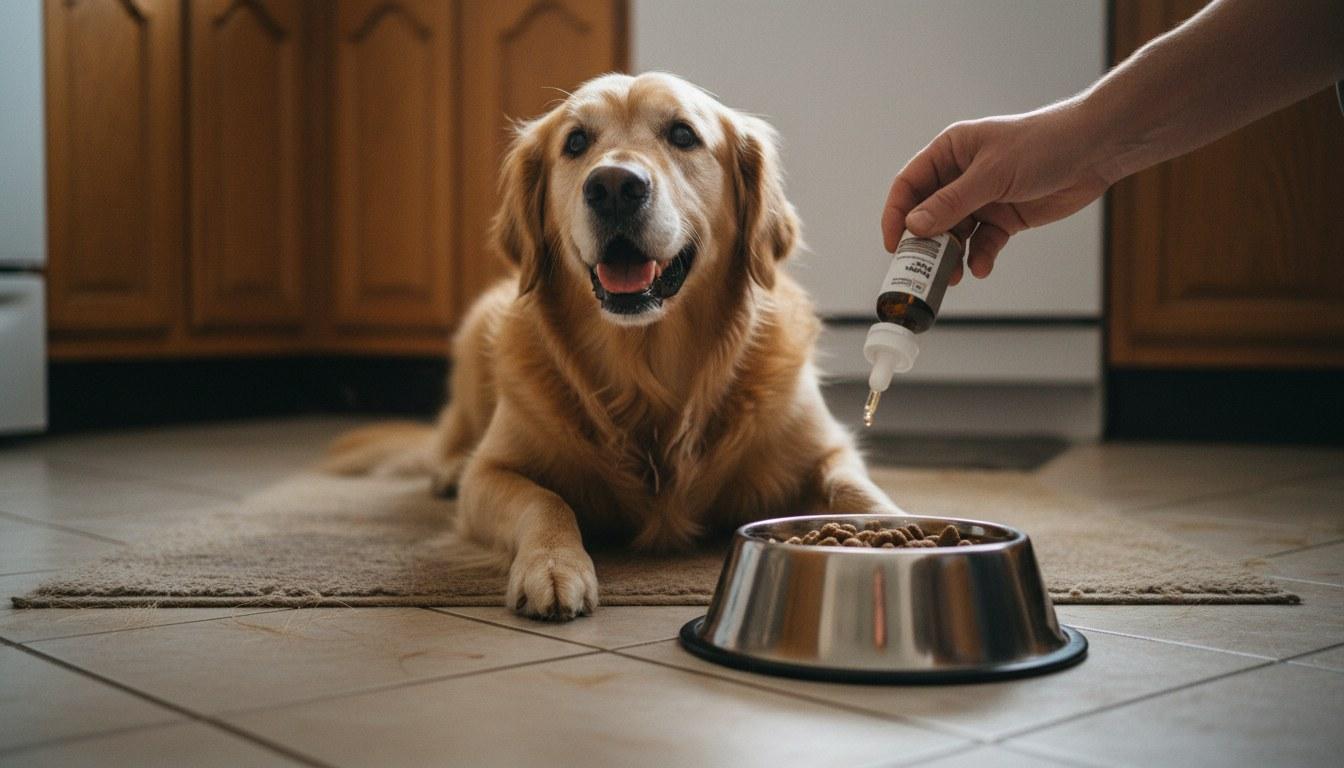
Peptides like BPC-157 and TB-500 are being used in dog supplements, but most of the research behind them comes from lab and rodent studies, not controlled trials in dogs. The safest approach is simple. Use only a product made for dogs, follow its label exactly, get your veterinarian's input before starting, and insist on third-party testing.
What Are Peptides, and Which Ones Are Used for Dogs?
Peptides are short chains of amino acids, the same building blocks that make up proteins. Your dog's body makes thousands of them, and they act as signals that help coordinate normal functions like tissue maintenance and recovery. Supplement peptides are usually lab-made copies or fragments of sequences found in nature.
Two peptides dominate the pet conversation:
- BPC-157: a sequence originally identified from a protein in gastric juice. It has been studied for its role in supporting tissue, joint, and gut comfort.
- TB-500: a synthetic fragment based on thymosin beta-4, a naturally occurring protein involved in cell movement and normal tissue repair processes.
Owners usually look at these peptides for active dogs, aging dogs, or dogs recovering from strenuous activity. They want mobility and recovery support beyond what a standard joint chew offers. For a deeper look at the first of these, see our full guide to BPC-157 for dogs.
What Does the Research Actually Show?
The honest answer is that research is promising but early, and very little of it was done in dogs. Most published work on BPC-157 and TB-500 comes from cell studies and rodent models. Those studies are useful for understanding how a compound might work. They don't tell you how a specific dog will respond to a specific product.
Here is what you can fairly say:
- BPC-157 has been studied in lab models for its potential to support tendon, ligament, muscle, and gut tissue. Researchers have published a large body of preclinical work on it.
- TB-500 and thymosin beta-4 have been studied for their role in cell migration and the body's normal tissue-maintenance processes.
- Human clinical data is limited, and dog-specific controlled studies are scarce.
Here is what you can't say. You can't claim peptides have been proven in dogs, or that results from rats translate directly to a Labrador. Be cautious of any brand that cites "clinical proof" without naming the study, the species, and the design. A trustworthy company will tell you where the evidence ends.
Are Peptides Safe for Dogs?
Preclinical studies have generally not flagged major safety concerns, but long-term safety in dogs hasn't been well established. That gap matters. A lack of reported problems is not the same thing as proof of safety. The real unknowns include long-term daily use, differences between breeds and sizes, and interactions with medications your dog already takes.
In practice, the biggest safety risk usually isn't the peptide itself. It's the product. Many peptides sold online are labeled "for research use only," meaning they were never meant to be given to any animal. These vials can have uncertain purity, unclear amounts, and no oversight of how they were made. Giving them to a dog means guessing on every count.
Talk to your veterinarian before starting a peptide, and take extra care in these cases:
- Puppies that are still growing
- Pregnant or nursing dogs
- Dogs taking prescription medications
- Dogs with a diagnosed health condition or an upcoming surgery
- Senior dogs with complex care plans
If your dog shows anything unusual after starting a new supplement, stop giving it and call your vet. That includes changes in appetite, energy, stool, or behavior.
Dosing by Weight: Why the Label and Your Vet Are the Only Sources
Give your dog only the amount on a dog-specific product's label, and adjust only under your veterinarian's direction. Weight matters for dogs, and a 10-pound terrier and a 90-pound shepherd shouldn't get the same amount. But a properly formulated pet product already builds weight ranges into its directions. You shouldn't need to do any math.
The internet is full of mg-per-kilogram charts, human-to-dog conversion calculators, and forum threads about mixing research vials. Skip all of them. This is why:
- Conversion formulas assume a known, pure starting product. Gray-market vials often aren't.
- Human products aren't formulated for dogs. They can contain flavorings, sweeteners, or other ingredients that aren't appropriate for pets. Xylitol is one example of a sweetener that is dangerous to dogs.
- Preparing and injecting peptides at home adds risks around measurement, sterility, and handling that a pet owner shouldn't take on alone.
- Your vet knows your dog. They can weigh age, size, health history, and current medications in a way no chart can.
To stay on track, weigh your dog before you start, match the weight to the label's directions, and write down the date and amount. Bring that record to your next vet visit.
What to Look for in a Pet Peptide Formula
A good pet peptide product is made for dogs, tested by an independent lab, and clear about what's inside. Use this checklist before you buy:
- Formulated for dogs. The label should say it's for canine use and give directions by weight. "Research use only" products don't qualify.
- Third-party testing with a COA. A Certificate of Analysis from an independent lab confirms identity and purity. Ask for it, and check that it matches the lot number on your product.
- Known manufacturing. Look for a named facility and a company that tells you where the product is made. An FDA-registered facility is a meaningful baseline.
- Transparent ingredient list. Every ingredient should be listed with no vague "proprietary blends" hiding the amounts.
- Pet-safe inactive ingredients. Make sure the product has no xylitol or other ingredients known to be harmful to dogs.
- Structure/function language. Honest brands say "supports" and "helps maintain." Brands that claim to treat or cure conditions in dogs are making claims supplements can't legally or scientifically back.
- A real guarantee. A money-back policy shows the company stands behind the product.
If a brand can't answer basic questions about testing and sourcing, move on.
Red Flags That Should Stop You From Buying
Walk away from any peptide product for dogs that is vague about testing, sourcing, or what it can do. These warning signs come up often:
- "For research purposes only" or "not for animal consumption" printed anywhere on the label or site
- No COA, or a COA that's generic, undated, or doesn't match the lot number
- Disease claims, such as promises to heal, cure, or replace your vet's treatment
- Before-and-after miracle stories with no context
- DIY kits that need you to reconstitute powder or draw up injections at home
- No company address, facility, or customer service contact
- Prices that seem too low for a tested, specialty ingredient
Any one of these is a reason to pause. Two or more is a reason to leave.
How to Start a Peptide Supplement the Right Way
Start with a vet conversation, a dog-specific product, and a simple tracking routine. Here's a practical sequence:
1. Talk to your vet first. Bring the product label and its COA. Mention every medication and supplement your dog already takes. 2. Confirm your dog's current weight so you match the label's directions accurately. 3. Follow the label exactly. Don't increase the amount on your own, even if you don't see changes right away. 4. Keep a short log. Note the start date, mobility, energy, appetite, and stool. A few words a day is enough. 5. Reassess with your vet at a set check-in, so you're judging the product against real observations, not guesswork.
Set realistic expectations. Supplements support normal function over time, and every dog responds differently. A peptide product is meant to support your dog's routine, not replace exercise, a good diet, a healthy weight, or professional veterinary care.
Frequently asked questions
Are peptides safe for dogs?+
Preclinical research on peptides like BPC-157 and TB-500 has generally not flagged major safety concerns, but long-term safety in dogs hasn't been well established. The bigger real-world risk is product quality, especially gray-market vials labeled for research use only. Choose a dog-specific, third-party tested product, follow the label, and check with your veterinarian first.
Is there research on BPC-157 or TB-500 in dogs?+
Most research on BPC-157 and TB-500 comes from cell and rodent studies, and dog-specific controlled studies are scarce. The early research is promising for supporting tissue, joint, and recovery processes, but it doesn't prove how any individual dog will respond. Be cautious of brands that claim clinical proof in dogs without citing specific studies.
How much peptide should I give my dog based on weight?+
Give only the amount listed on a dog-specific product's label for your dog's weight range, and change it only if your veterinarian tells you to. Don't use online mg-per-kilogram charts or human-to-dog conversions, since they assume a pure, known product and don't account for your dog's health history. Weigh your dog before starting so you match the label accurately.
Can I give my dog a human peptide supplement?+
No. Human peptide products aren't formulated or labeled for dogs, and they may contain flavorings or sweeteners that aren't safe for pets, such as xylitol. Use a product made for canine use with weight-based directions, and talk to your vet before starting.
What should I look for in a peptide supplement for dogs?+
Look for a product formulated and labeled for dogs, third-party lab tested with a lot-matched Certificate of Analysis, and made in a named, FDA-registered facility. It should have a transparent ingredient list with no harmful inactive ingredients and honest structure/function language. A money-back guarantee is another good sign that the company stands behind it.
Do I need to talk to my vet before giving my dog peptides?+
Yes. Your veterinarian can consider your dog's age, size, health history, and current medications before you start. This matters most for puppies, pregnant or nursing dogs, seniors, and dogs on prescriptions or with a diagnosed condition.