
The side effects people most often report with BPC-157 are mild and short-lived: nausea or stomach upset, headache, dizziness, fatigue, and, with injections, redness or irritation at the injection site. The honest problem is that almost all BPC-157 research comes from animal studies, so its long-term safety in humans has not been established. Pregnant or breastfeeding women, anyone under 18, people with a history of cancer, people taking prescription medications, and drug-tested athletes should avoid it or speak with a clinician first.
The Short Answer: Generally Well Tolerated in Animals, Largely Unstudied in Humans
BPC-157 has a reassuring safety record in animal research and very little controlled human data. Both halves of that sentence matter. If an article tells you only the first half, it is selling you something. If it tells you only the second half, it is skipping relevant evidence.
BPC-157 ("Body Protection Compound") is a synthetic peptide of 15 amino acids, modeled on a sequence found in a protein in human gastric juice. If you're new to it, start with our primer, what is BPC-157. In rodent studies, researchers have generally not reported toxic effects across a wide range of amounts. That is a meaningful signal, but it is not proof of human safety.
What we don't have is equally important: large, long-term, randomized human trials. Only a handful of small human reports exist. That means rare side effects, long-term effects, and drug interactions are mostly unknown. They are not ruled out.
Side Effects People Commonly Report
Most reported reactions are mild, temporary, and similar to what people describe with many supplements. These come mainly from user accounts and clinician observations, not controlled trials. Treat them as a field guide, not as measured rates.
Commonly reported with any form:
- Nausea, mild stomach upset, or changes in digestion
- Headache
- Dizziness or lightheadedness
- Fatigue or, less often, restlessness
- Flushing or a warm sensation
Additionally reported with injectable forms:
- Redness, itching, swelling, or a small lump at the injection site
- Bruising
- Risk of infection if sterile technique or product sterility fails
If you notice anything beyond mild, short-lived discomfort, stop and talk to a healthcare provider. That includes hives, swelling of the face or throat, a racing heart, chest discomfort, or severe dizziness. Allergic-type reactions are possible with any peptide.
What the Research Actually Shows (and Where It Falls Short)
The research base is promising but narrow. It is mostly preclinical, mostly from a small number of labs, and short on human trials. Here is what that means in practice.
Mostly animal and cell studies. BPC-157 has been studied in rodents for its role in supporting tendon, ligament, muscle, and gut tissue, and for its interaction with blood-vessel signaling. Animal results often don't translate directly to people. Dose, metabolism, and long-term exposure all behave differently in humans.
Concentrated authorship. A large share of published BPC-157 papers comes from one research group. That doesn't make the work wrong. But independent replication by unrelated teams is how science builds confidence, and that replication is still limited.
Few human studies, none large or long-term. There is no large controlled human trial establishing a safety profile. The questions that matter most for a substance people take for months are still open: rare reactions, cumulative effects, and interactions.
Regulators have noticed the gap. BPC-157 is not an FDA-approved drug. The FDA has flagged it as a bulk substance with potential safety concerns for compounding, citing insufficient human safety data. The World Anti-Doping Agency (WADA) lists BPC-157 as a prohibited substance.
Theoretical Concerns Worth Taking Seriously
The main theoretical concern is that BPC-157 appears to influence blood-vessel growth signaling, which is helpful for tissue repair but raises questions for people with certain health histories. "Theoretical" means these risks come from how the peptide is believed to work, not from documented harm in humans.
- Angiogenesis signaling. Animal research suggests BPC-157 interacts with pathways involved in forming new blood vessels, including VEGF-related signaling. That's part of why it's studied for tissue repair. The same process is something clinicians are cautious about in people with a current or past cancer diagnosis. No human evidence shows harm here, but no evidence rules it out either.
- Unknown long-term effects. Without multi-year human data, nobody can say what continuous use does over time.
- Immune reactions. Peptides can trigger immune responses in some people, and impurities raise that risk. This is one reason regulators cite limited data.
- Interactions. Because BPC-157 is studied for effects on blood flow and the gut, interactions with blood-pressure, blood-thinning, or other prescription medications haven't been characterized.
The honest takeaway is to weigh the unknowns, especially if any of these apply to you.
Who Should Avoid BPC-157 (or Talk to a Doctor First)
Some groups should not use BPC-157 at all, and others should only use it after a conversation with their clinician.
Avoid:
- Pregnant or breastfeeding women. There is no safety data for these groups.
- Anyone under 18.
- Competitive athletes subject to drug testing. BPC-157 and TB-500 are both on WADA's prohibited list, and "it was a supplement" is not a defense.
- People with a current or past cancer diagnosis, given the theoretical blood-vessel signaling concern above, unless their oncologist approves.
Talk to a clinician first if you:
- Take prescription medications, especially blood thinners or blood-pressure medications
- Have a chronic health condition, including kidney, liver, or cardiovascular concerns
- Have a scheduled surgery
- Have a history of allergic reactions to peptides or supplements
Bring the product label to your appointment so your provider can see exactly what is in it.
Does Oral vs. Injectable BPC-157 Change the Safety Picture?
Yes, the route matters. Oral forms avoid injection-specific risks like infection, site reactions, and sterility failures, while injectable forms carry those risks on top of everything else. Neither route has long-term human safety data.
Injecting any substance bypasses the body's first line of defense. If an injectable vial is contaminated, improperly stored, or not truly sterile, the consequences can be serious. That is a real concern with gray-market products sold "for research use only." Oral use removes that category of risk. GI effects like mild nausea may be more noticeable with oral forms.
BPC-157 has drawn interest partly because it appears relatively stable in gastric conditions, which is why oral forms are studied at all. For a full side-by-side on how the two routes compare, see oral BPC-157 vs. injection.
The Biggest Real-World Risk: What's Actually in the Bottle
For most people, the greatest practical BPC-157 risk isn't the peptide itself. It is buying a product with the wrong amount, the wrong ingredient, or contaminants. Much of the market sells "research chemicals" with a "not for human consumption" label. Those products come with no manufacturing accountability.
Before buying any peptide product, check for:
- A certificate of analysis (COA) for the specific lot you're buying, from an independent third-party lab. A generic or undated COA is not enough.
- A clear, traceable manufacturer. Know where it's made and under what standards.
- Clear label directions written for human use, not "research use only."
- A real return policy, which signals the company stands behind the product.
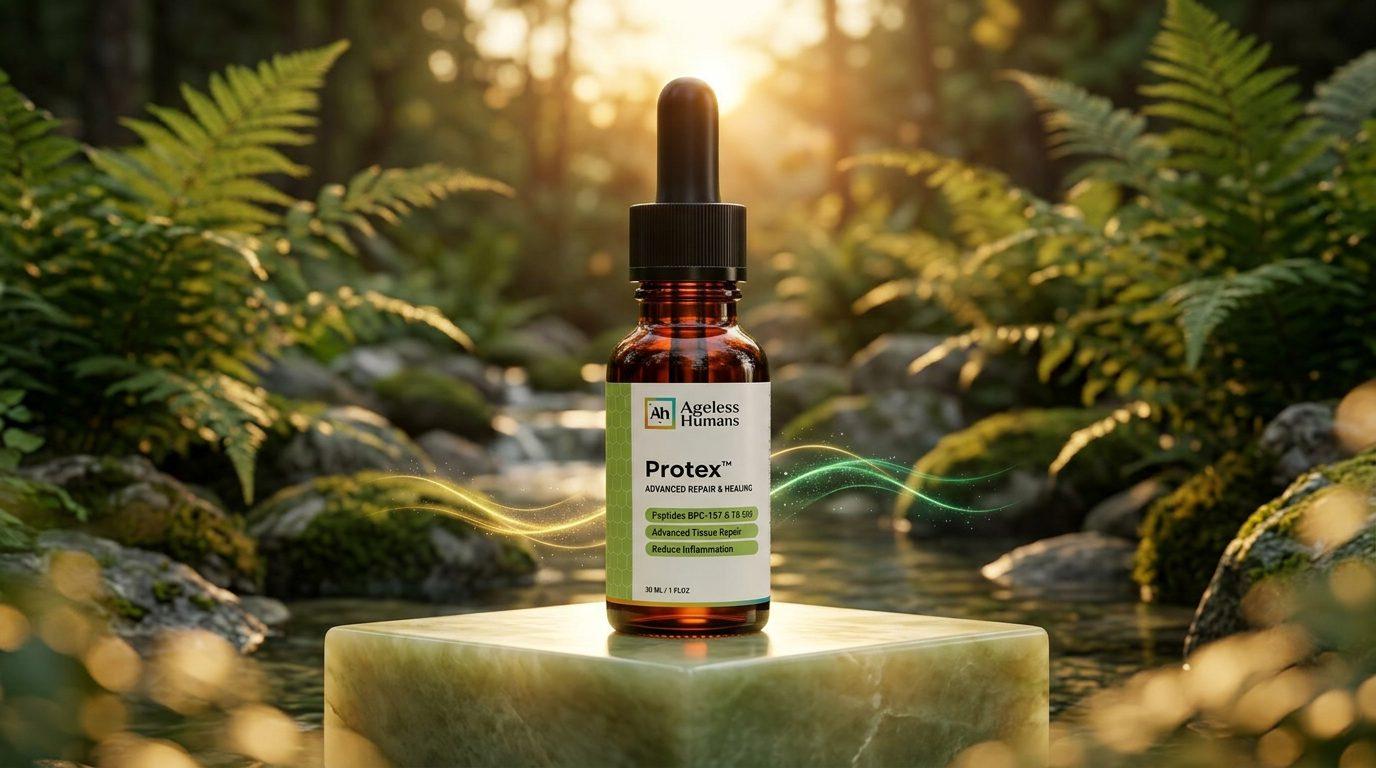
This is the standard we hold ourselves to. Every Ageless Humans product, including Protex BPC-157 & TB-500 oral peptides, is made in our FDA-registered facility in Carlsbad, California. Every lot is third-party lab tested with a COA, and it's backed by a 60-day money-back guarantee.
How to Make a Smart, Safety-First Decision
If you decide BPC-157 is right for you, use it deliberately: get clinician input, follow the label, and pay attention to how you respond.
1. Start with your doctor, especially if any "talk to a clinician" item above applies. 2. Follow label directions exactly. Don't stack extra servings on the theory that more is better. There is no evidence supporting that. 3. Introduce one new thing at a time so you can tell what is causing any reaction. 4. Track how you feel for the first couple of weeks. Note digestion, sleep, energy, and headaches. 5. Stop and seek care for any allergic-type reaction, chest symptoms, or anything that feels wrong. 6. Reassess regularly. Ask whether it's still serving your goals, and keep your provider in the loop.
BPC-157 is one of the most-discussed peptides in longevity and recovery circles for good reason. The research is genuinely interesting. Respecting its limits is part of using it well.
Frequently asked questions
What are the most common side effects of BPC-157?+
The most commonly reported side effects of BPC-157 are mild and temporary: nausea or stomach upset, headache, dizziness, fatigue, and flushing. Injectable forms can also cause redness, itching, or swelling at the injection site. These reports come mostly from user experience rather than controlled human trials, so how often they occur isn't well measured.
Is BPC-157 safe for humans?+
BPC-157 has been generally well tolerated in animal studies, but its long-term safety in humans has not been established. Few controlled human studies exist, and none are large or long-term. Anyone considering it should talk with a healthcare provider, follow label directions, and choose a third-party tested product.
Who should not take BPC-157?+
Pregnant or breastfeeding women, anyone under 18, and drug-tested athletes should avoid BPC-157. It is on the World Anti-Doping Agency's prohibited list. People with a current or past cancer diagnosis should avoid it unless their oncologist approves. People taking prescription medications or managing chronic health conditions should consult a clinician first.
Is oral BPC-157 safer than injecting it?+
Oral BPC-157 avoids injection-specific risks such as infection, injection-site reactions, and problems from non-sterile products. Oral forms may be more likely to cause mild digestive upset. Neither route has long-term human safety data, so product quality and clinician guidance matter either way.
Is BPC-157 banned in sports?+
Yes. The World Anti-Doping Agency (WADA) lists BPC-157 as a prohibited substance, and TB-500 is also prohibited. Athletes subject to drug testing under WADA-aligned rules should not use products containing either peptide, including oral supplements.
How can I tell if a BPC-157 product is high quality?+
Look for a lot-specific certificate of analysis (COA) from an independent third-party lab. The product should come from a traceable manufacturer with a registered facility and carry clear directions for human use. Avoid products labeled "for research use only" or "not for human consumption," because they carry no accountability for purity or accuracy.