
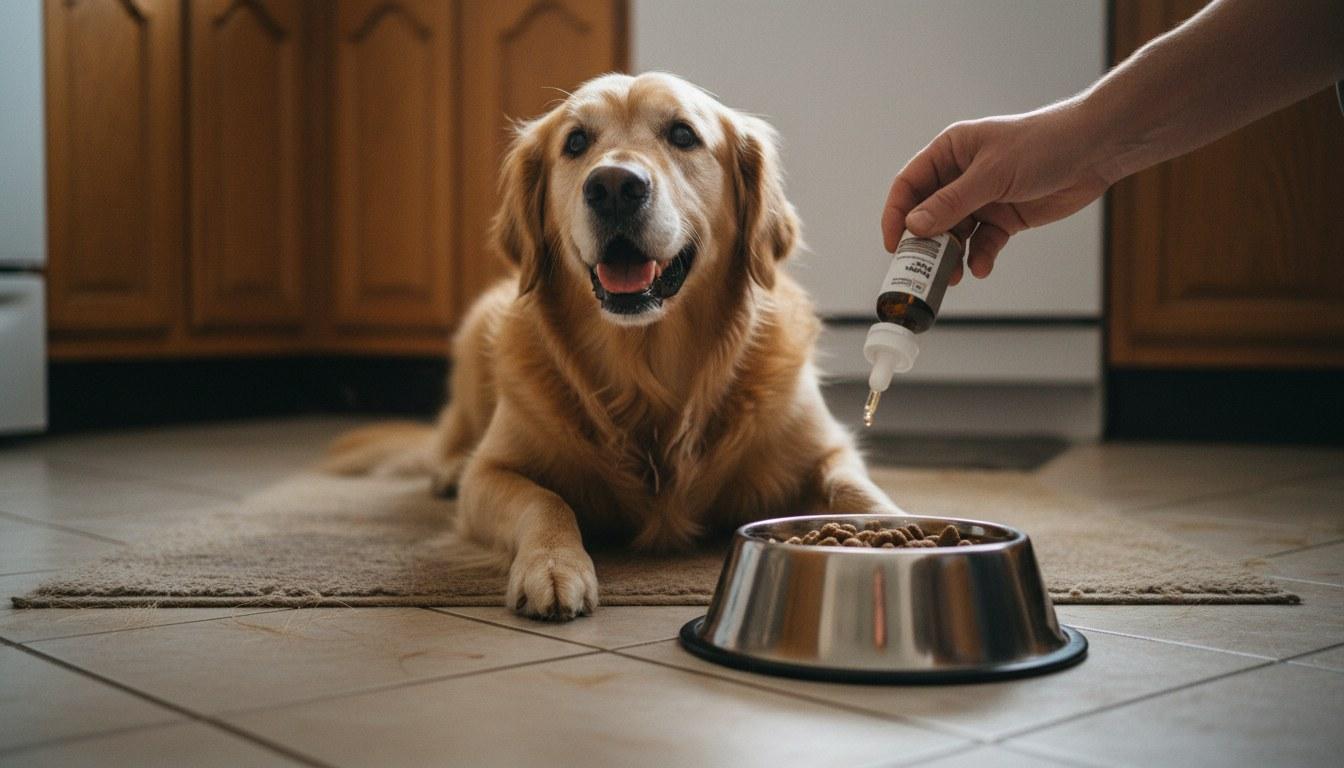
BPC-157 is a lab-made peptide studied for its role in the body's natural tissue repair processes, and some dog owners use it to support joint comfort, mobility, and recovery after activity. Most research so far comes from rodent and cell studies, not controlled trials in dogs. Start with your veterinarian, get a diagnosis for any lameness or pain, and choose only third-party tested products made for dogs.
What Is BPC-157?
BPC-157 is a short peptide (a chain of 15 amino acids) based on a sequence found in a protein in gastric juice. "BPC" stands for Body Protection Compound. The version in supplements is made in a lab. It is not extracted from animals.
Researchers have studied BPC-157 for its possible role in how the body maintains and rebuilds connective tissue: tendons, ligaments, muscle, and the gut lining. Proposed ways it may work include supporting new blood vessel formation, interacting with growth factor signaling, and influencing nitric oxide pathways. These are proposed mechanisms from early-stage research. They are not settled science.
For a deeper look at the peptide itself, see our full guide: What Is BPC-157?.
Why Dog Owners Are Looking Into BPC-157
Most dog owners who research BPC-157 want to support their dog's joints, soft tissue, and recovery, especially for active, working, or senior dogs. The interest makes sense. Dogs put heavy loads on their knees, hips, and shoulders. Sprinting, jumping, and quick turns stress tendons and ligaments, and the joints of aging dogs often need extra support.
Common situations where owners ask about BPC-157:
- Senior dogs that move more stiffly or slowly than they used to
- Athletic and working dogs in agility, hunting, herding, or dock diving
- Large and giant breeds whose joints carry a lot of body weight
- Dogs recovering after vet-directed rest or rehab, whose owners want to support the body's natural repair processes
In each case, the peptide is a possible addition to a vet-guided plan. It does not replace one.
What the Research Does and Doesn't Show
The honest answer: BPC-157 has a fairly large body of preclinical research, but very little published evidence in dogs specifically. Anyone selling or recommending it should tell you this plainly.
What research suggests:
- Most published BPC-157 studies use rats and mice, or cells in a lab dish.
- These studies have explored tendon-to-bone repair, ligament and muscle tissue, and gut lining integrity, with results researchers have described as promising.
- Rodent studies have generally reported that the peptide was well tolerated at the amounts studied.
What research does not yet show:
- We are not aware of large, controlled clinical trials of BPC-157 in dogs.
- Results in rodents don't always carry over to dogs, which differ in size, metabolism, and physiology.
- Long-term safety data in any companion animal is limited.
In short, BPC-157 has been studied for tissue support, and the early science is interesting. It is not proven in dogs. Any product claiming it will "fix" or "heal" your dog's joints is promising more than the evidence supports.
BPC-157 and TB-500: Why They're Often Paired
BPC-157 is often paired with TB-500, a synthetic fragment of a naturally occurring protein called thymosin beta-4. Thymosin beta-4 is found in nearly all animal cells. Researchers have studied it for its role in cell movement and in organizing actin, a structural protein cells use to move and rebuild.
The reasoning behind the pairing is that the two peptides have been studied for different, possibly complementary roles. BPC-157 is associated with connective tissue and blood vessel signaling. TB-500 is associated with cell migration and tissue organization. Together, they're used to support the body's overall recovery processes.
The same caveat applies to both. Most TB-500 research is preclinical, and dog-specific evidence is limited. A combination product isn't automatically better. It's a different formulation, and you should discuss it with your vet just as you would a single peptide.
Safety First: Questions to Ask Your Vet
Before giving your dog BPC-157 or any peptide, talk to your veterinarian, especially if your dog is limping, painful, or acting differently. A supplement should never cover up a problem that needs a diagnosis. Sudden lameness, swelling, yelping, or refusing to bear weight calls for a vet exam, not a supplement.
Bring these questions to the appointment:
1. What is causing my dog's stiffness or discomfort? Get a diagnosis first. 2. Is a peptide supplement appropriate alongside the current plan? That plan might include rest, rehab, weight management, or prescribed medications. 3. Could it interact with anything my dog already takes? 4. Are there reasons my dog in particular should avoid it?
Talk to your vet before use if your dog is:
- Pregnant, nursing, or a young, still-growing puppy
- On prescription medications
- Living with an ongoing health condition, or has a history of abnormal growths. Because BPC-157 has been studied for its role in blood vessel formation, ask your vet whether that matters for your dog.
- Scheduled for surgery or anesthesia
Always follow the product's label directions. Never change the amount without your veterinarian's guidance.
How to Choose a Quality BPC-157 Product for Dogs
The best BPC-157 product for dogs is made for dogs, made in a registered facility, and backed by third-party testing you can actually see. Peptide quality varies widely, and that matters a lot for a small animal.
Use this checklist:
- Third-party lab testing with a Certificate of Analysis (COA). The COA should confirm identity and purity for the specific lot you're buying.
- Formulated for dogs. Human products may contain ingredients that are unsafe for dogs. Xylitol, for example, is toxic to dogs. Read every inactive ingredient.
- Transparent manufacturing. Know where and how the product is made. A registered facility with consistent quality controls is a baseline, not a bonus.
- Clear, honest labeling. Look for plain directions, a full ingredient list, and no disease claims. Labels promising to "cure" or "treat" are a red flag.
- A real guarantee. A company that stands behind its product makes it easy to stop if your dog doesn't do well with it.
Skip anonymous "research chemical" sellers, products with no COA, and anything labeled "not for animal or human use."
Setting Realistic Expectations
BPC-157 is a support tool, not a shortcut. The things that matter most for a dog's joints and tissues haven't changed: healthy body weight, appropriate exercise, vet-directed rest and rehab, good footing at home, and quality nutrition.
If you and your vet decide to try a peptide supplement, keep a simple log. Note your dog's energy, willingness to play, ease getting up, and comfort on stairs. Share it at follow-up visits. A written log is more reliable than memory, and it gives your vet useful information.
Stop use and call your vet if you notice anything unusual, such as changes in appetite, digestion, behavior, or energy. Watching your dog closely is part of using any supplement responsibly.
The Bottom Line
BPC-157 for dogs is an emerging area. The early research is promising, but dog-specific evidence is thin, so a vet-first approach is the only sensible one. Get a diagnosis for any pain or lameness. Ask your vet whether a peptide fits your dog's plan. Choose a dog-specific, third-party tested product. Follow label directions exactly.
Used this way, as one part of a full plan that also includes weight, movement, and rest, BPC-157 may be a reasonable option for owners who want to support their dog's joints, mobility, and natural recovery.
Frequently asked questions
Is BPC-157 safe for dogs?+
BPC-157 has generally been well tolerated in rodent studies, but there is very little published safety research in dogs specifically. Its long-term safety in dogs has not been established. Talk to your veterinarian before use, choose a third-party tested product made for dogs, and follow label directions exactly.
What is BPC-157 used for in dogs?+
Dog owners use BPC-157 to support joint comfort, mobility, and the body's natural tissue repair processes, especially in senior, large-breed, and athletic dogs. It has been studied in rodents for its role in tendons, ligaments, muscle, and the gut lining. It should complement a vet-guided care plan, not replace one.
Is BPC-157 FDA-approved for dogs?+
No. BPC-157 is not an FDA-approved veterinary drug, and it has not been evaluated by the FDA to treat any condition in animals. Products containing it are sold as supplements. That is why manufacturing quality, third-party testing, and vet guidance matter so much.
How much BPC-157 should I give my dog?+
Follow the product's label directions and your veterinarian's guidance. Don't use human products or adjust the amount on your own. The right approach depends on your dog's size, health, and current medications, which only your vet can assess.
What is the difference between BPC-157 and TB-500 for dogs?+
BPC-157 is a 15-amino-acid peptide studied for its role in connective tissue and blood vessel signaling. TB-500 is a synthetic fragment of thymosin beta-4, studied for its role in cell movement and tissue organization. They are often combined to support overall recovery, though dog-specific research on both is limited.
Should I talk to my vet before giving my dog BPC-157?+
Yes, always. Your vet can rule out problems that need medical treatment, check for interactions with current medications, and decide whether a peptide supplement suits your dog. This matters most for puppies, pregnant or nursing dogs, dogs on medication, and dogs with ongoing health conditions.