
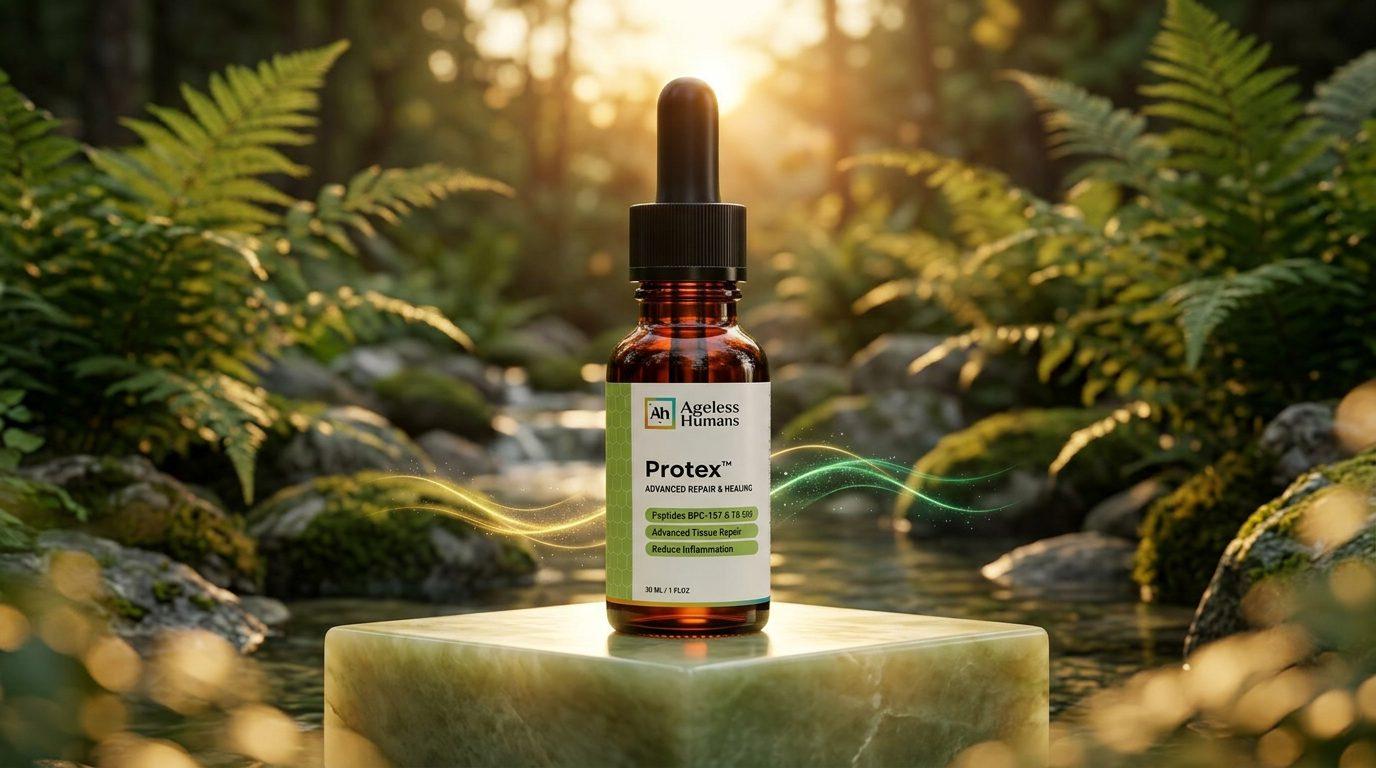
An athlete recovery stack works in layers. Sleep and nutrition form the base, and targeted tools sit on top: oral peptides like BPC-157 and TB-500, NAD+ support for cellular energy, and topicals for local relief. Each layer does a different job, so the order you build them in matters more than any single product.
What an Athlete Recovery Stack Actually Is
A recovery stack is a deliberate set of habits and supplements, each covering a different part of how your body bounces back from training. It is not a pile of products bought at once. Serious athletes think in layers because recovery happens at several levels: whole-body repair during sleep, the raw materials from food, cellular energy production, and how specific muscles and joints feel after hard sessions.
The five layers most athletes use:
1. Sleep: the main recovery window, and nothing replaces it. 2. Nutrition and hydration: the building blocks. 3. Peptides: targeted support, studied for their role in tissue recovery processes. 4. NAD+ support: helps maintain cellular energy and metabolism. 5. Topicals: local support where you feel the work.
The rule is simple. Build from the bottom up. A peptide cannot make up for five hours of sleep, and a topical cannot fix a protein deficit. Get each base layer working before you add the next. For a wider look at individual ingredients, see our complete guide to recovery supplements.
Layer 1: Sleep Is the Foundation
Sleep is the most powerful recovery tool you have, and every other layer works better when it's in place. During deep sleep your body releases growth-related hormones, clears metabolic byproducts, and consolidates the motor learning from your training. When sleep runs short, research consistently links it to slower recovery, worse perceived effort, and poorer decision-making on the field.
What serious athletes do:
- Keep a fixed wake time. Consistency anchors your circadian rhythm better than a set bedtime does.
- Keep the room cold, dark and quiet. Small changes to temperature and light make a real difference.
- Leave a buffer after late training. Hard evening sessions raise core temperature and alertness. Give yourself time to wind down.
- Track trends, not single nights. Heart rate variability and resting heart rate from a wearable can show whether recovery is keeping up with your training load.
If you change only one thing this month, make it sleep. It is free, and it multiplies the value of everything else in the stack.
Layer 2: Nutrition and Hydration Supply the Raw Materials
Your body can only rebuild with what you give it, so enough protein, energy and fluid is a non-negotiable layer. Muscle and connective tissue are rebuilt from amino acids. Glycogen is restored from carbohydrates. Hydration affects nearly every recovery process.
The essentials:
- Protein spread across the day. Several protein-rich meals tend to beat one large serving.
- Carbohydrates after hard or long sessions. These restore glycogen before your next workout.
- Fluids and electrolytes. Replace sweat losses, especially in heat or during two-a-days.
- Don't chronically under-eat. Low energy availability is one of the most common hidden reasons athletes stop recovering.
Foundational supplements like protein powder, electrolytes, creatine and magnesium often sit in this layer. They fill gaps rather than replace food. Our recovery supplements guide covers what each one is studied for.
Layer 3: Peptides for Targeted Recovery Support
BPC-157 and TB-500 are the two peptides athletes discuss most for recovery. Both are studied for their roles in tissue recovery processes, but most of that research comes from animal and lab models, not large human trials. You should know that before you add them.
- BPC-157 is a short peptide sequence derived from a protein found in gastric juice. In preclinical research it has been studied for its interaction with blood vessel formation, connective tissue, and gut lining processes.
- TB-500 is a synthetic fragment related to thymosin beta-4, a naturally occurring protein involved in cell migration and tissue remodeling. Researchers have looked at how it may support those processes.
Athletes often pair the two because the research points to different mechanisms. Format matters too. Oral peptides avoid needles and fit easily into a daily routine. Products like ProteX BPC-157 and TB-500 oral peptides are built around this pairing. Follow the label directions and nothing more.
Tested athletes, read this: BPC-157 and TB-500 both appear on the World Anti-Doping Agency's prohibited list. If you compete under WADA, NCAA, or any league with drug testing, check your governing body's current rules before you use them. This layer suits recreational and masters athletes who aren't subject to testing. For a deeper comparison of options, see our guide to the best peptides for recovery.
Layer 4: NAD+ for Cellular Energy
NAD+ is a coenzyme every cell uses to turn food into energy, and supporting your NAD+ levels helps maintain the cellular machinery that training puts under stress. It plays a central role in mitochondrial function and in enzymes linked to cellular repair and healthy aging.
Why athletes care:
- Training is an energy demand. Hard sessions put heavy load on mitochondria, which depend on NAD+ to produce energy.
- Levels appear to decline with age. Research suggests NAD+ falls as we get older, which is one reason masters athletes are especially interested in this layer.
- Precursors are the common route. Many supplements use precursors such as NR or NMN, which the body converts into NAD+.
Be realistic about the evidence. Research supports NAD+'s biological role well, and human studies show precursors can raise NAD+ levels. Direct evidence that this improves athletic performance or recovery in humans is still limited and mixed. Treat NAD+ as long-term support for cellular health, not a quick fix for sore legs.
Layer 5: Topicals for Local Relief
Topicals cover the one thing oral supplements can't: support exactly where you feel the work, right when you need it. Applied to specific muscles or joints, they're the most targeted layer in the stack.
Common topical categories:
- Cooling agents such as menthol. These create a cooling sensation that many athletes find soothing after training.
- Warming agents. Useful before activity or for stiffness.
- Botanicals and magnesium-based formulas. Often used as part of a post-training massage routine.
Part of a topical's value is the application itself. Massaging a product into a tight area adds a few minutes of soft-tissue work, which many athletes already rely on. Pair topicals with foam rolling or mobility work. Apply to intact skin only, and patch-test anything new before a big event.
How to Layer It: A Daily Framework
Run the foundation every day, add targeted layers around training, and change only one variable at a time. This simple rhythm is how serious athletes avoid guesswork.
Every day:
- Fixed wake time, a sleep-friendly evening, and steady protein and fluids
- NAD+ support and peptides, taken as directed on the label
Around hard sessions:
- Carbohydrates and electrolytes afterward
- Topicals on the areas that took the most load
- Extra wind-down time if you trained late
Rest days:
- Keep the daily foundation
- Light movement, mobility work, and topicals as needed
The one-change rule: Add a new layer, then give it several weeks before you add another. Watch how you feel, your training quality, and your sleep and HRV trends. Starting everything at once leaves you with no idea what's working.
If you'd rather not assemble layers one product at a time, the Athlete Advanced Cellular Recovery Kit brings several of them together in one coordinated package. Check the product page for exact contents.
Common Mistakes and How to Judge Quality
The biggest recovery stack mistakes are skipping the foundation, stacking too much at once, and trusting products you can't verify. Avoiding these matters more than which brand you pick.
- Supplements in place of sleep. No layer above sleep can offset chronic sleep loss.
- Adding everything on day one. You lose the ability to tell what helps.
- Going beyond the label. More is not better. Follow label directions, and talk with a qualified healthcare provider if you have health conditions or take medications.
- Ignoring testing rules. Competitive athletes need to check prohibited lists first.
- Buying unverified products. Peptides in particular vary widely in quality.
What to look for: a known manufacturer, a lab-tested certificate of analysis (COA) for each lot, and a fair return policy. Ageless Humans products are made in our FDA-registered facility in Carlsbad, California. Every lot is third-party lab tested with a COA, and every order is backed by a 60-day money-back guarantee.
Frequently asked questions
What should be in an athlete recovery stack?+
An athlete recovery stack usually has five layers: sleep, nutrition and hydration, peptides such as BPC-157 and TB-500, NAD+ support for cellular energy, and topicals for local relief. Sleep and nutrition are the foundation and should be in place first. The targeted layers add support on top of that base but can't replace it.
Can you take BPC-157 and TB-500 together?+
Many athletes pair BPC-157 and TB-500 because research suggests they work through different mechanisms related to tissue recovery. Most of that research comes from animal and lab studies, and human data is limited. If you use a combined product, follow the label directions. Both peptides are on the WADA prohibited list, so tested athletes should check their governing body's rules first.
Does NAD+ help athletic recovery?+
NAD+ is essential for cellular energy production, and research suggests levels decline with age. Supplementing with NAD+ precursors can raise NAD+ levels. Direct human evidence for improved athletic recovery is still limited and mixed. Most athletes use NAD+ support as long-term support for cellular health rather than for immediate recovery.
Are BPC-157 and TB-500 allowed in competitive sports?+
No. Both BPC-157 and TB-500 appear on the World Anti-Doping Agency's prohibited list. Athletes competing under WADA, NCAA, or other drug-tested leagues should not use them without checking their governing body's current rules. They are generally used by recreational and masters athletes who aren't subject to testing.
What is the most important part of a recovery stack?+
Sleep is the most important part of any recovery stack. Deep sleep is when the body does much of its physical repair and hormonal recovery, and no supplement can make up for chronic sleep loss. A consistent wake time and a cool, dark bedroom are the highest-return changes most athletes can make.
How long should I wait before adding a new supplement to my stack?+
Add one new layer at a time and give it several weeks before you add another. This lets you judge its effect on how you feel, your training quality, and your sleep or HRV trends. Starting several products at once makes it impossible to know which one is working.