
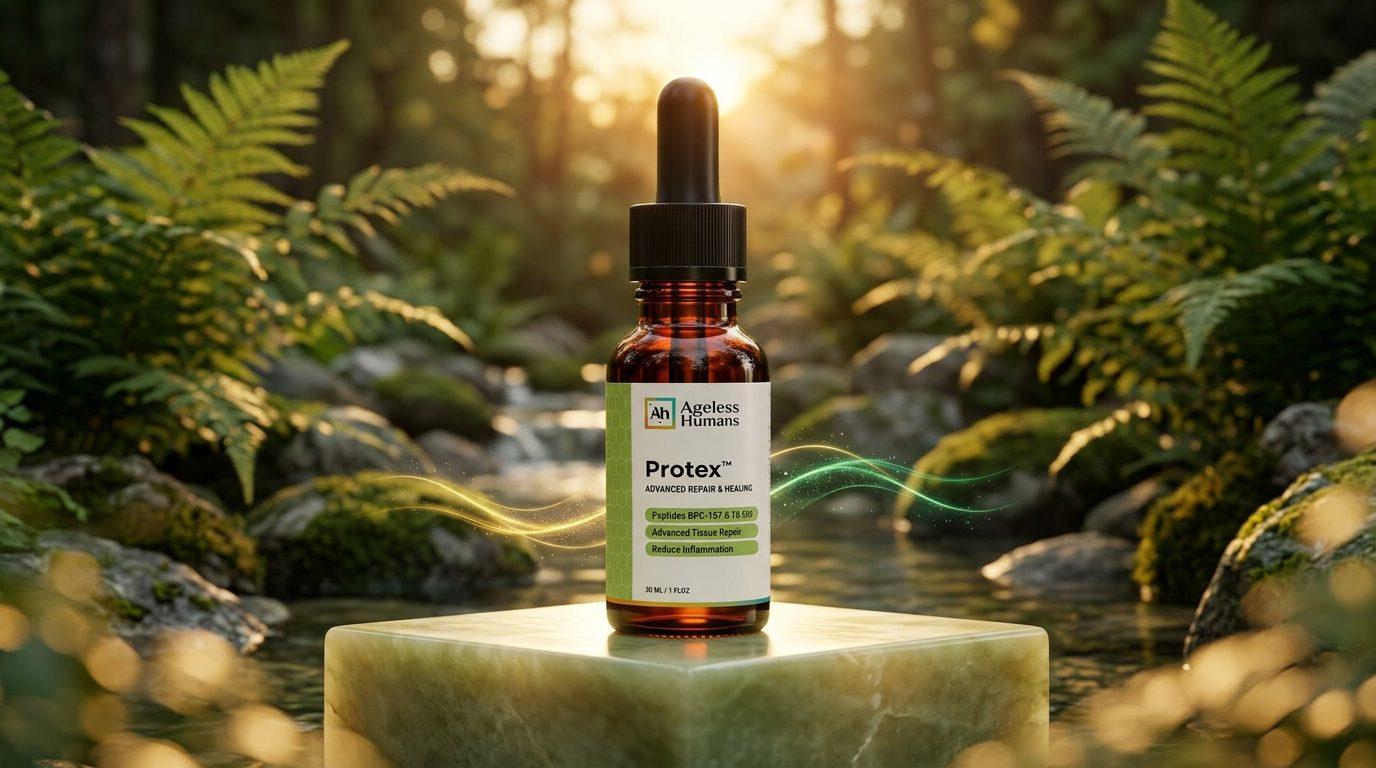
The best recovery supplements over 40 start with the basics: protein, creatine, magnesium, omega-3s, vitamin D, and collagen with vitamin C. These cover the most common gaps and have the deepest research behind them. Add NAD+ precursors once those are in place, and consider peptides like BPC-157 and TB-500 last, because their research is still mostly early-stage.
Why Recovery Slows After 40
Recovery slows after 40 because the systems that rebuild you get less efficient. You aren't imagining it. The soreness lasts longer, a tweaked shoulder lingers, and a hard week of training takes more out of you. Three changes explain most of it.
1. Cellular energy declines. NAD+ is a coenzyme your cells use to turn food into usable energy and to run repair processes. Research suggests NAD+ levels drop with age in several tissues, which may help explain why repair feels slower. 2. Collagen turnover slows. Tendons, ligaments, cartilage, and skin rely on collagen. With age, your body makes new collagen more slowly. That's one reason connective tissue often recovers more slowly than muscle does. 3. Muscle responds less to the same inputs. Researchers call this "anabolic resistance." Older muscle seems to need a stronger signal, such as more protein per meal and consistent resistance training, to build and repair at the same rate.
Sleep quality also tends to shift in midlife, and most physical repair happens during deep sleep. No supplement fully makes up for short or broken sleep. Keep that in mind as you read the rest of this guide.
The Honest Priority Order: Basics Before Peptides
Fix nutrient gaps first, support cellular energy second, and treat peptides as an optional final layer. Many people over 40 do this in reverse. They buy the most exciting compound while they're short on protein, low in magnesium, and sleeping six hours.
The order matters because the foundation supplies the raw materials and signals that everything else depends on. A connective-tissue product can't do much if you aren't eating enough protein to build tissue. An energy-support product can't make up for a vitamin D gap.
Here's the priority stack we recommend:
- Tier 1 (foundation): protein, creatine, magnesium, omega-3s, vitamin D
- Tier 2 (connective tissue): collagen peptides with vitamin C
- Tier 3 (cellular energy): NAD+ precursors like NMN
- Tier 4 (targeted, optional): peptides such as BPC-157 and TB-500
For a full breakdown of every major ingredient, see our complete guide to recovery supplements. This article focuses on how age changes the order.
Tier 1: The Foundation That Does the Most Work
Protein and creatine have the strongest research support for recovery after 40, with magnesium, omega-3s, and vitamin D close behind. None of these are new or trendy. They earn the top tier because they're well studied and because so many adults fall short on them.
- Protein: Muscle repair needs amino acids, and older muscle appears to need a stronger protein signal per meal. Spreading protein across your meals is an easy place to start. A protein powder simply makes that more convenient.
- Creatine monohydrate: This is one of the most researched supplements in sports nutrition. It supports strength, power output, and muscle recovery, and it's increasingly studied in older adults.
- Magnesium: It's involved in muscle contraction, relaxation, and energy production. Many diets come up short. Many people also take it in the evening to support relaxation and sleep quality.
- Omega-3s (EPA/DHA): They support a healthy inflammatory response and joint comfort. They're especially useful if you rarely eat fatty fish.
- Vitamin D: It supports muscle function and bone health. Levels are often low in people who spend most of the day indoors.
If you take only this tier and pair it with consistent sleep and resistance training, you've captured most of the recovery benefit supplements can offer. Follow each label's directions, and ask your clinician about bloodwork if you're unsure whether you're low in vitamin D or other nutrients.
Tier 2: Collagen and Vitamin C for Connective Tissue
If your joints and tendons recover more slowly than your muscles, collagen paired with vitamin C is the logical next step. Connective tissue gets less blood flow than muscle and turns over slowly. Slower collagen production with age adds to that.
Collagen peptides supply glycine, proline, and hydroxyproline, the amino acids that make up most of collagen's structure. Vitamin C is required for your body to build collagen in the first place, which is why the two are often studied together. Some research has looked at taking collagen with vitamin C before loading exercise, with the goal of supporting tendon and ligament tissue. The findings are promising but still early.
Be realistic about the timeline. Connective tissue adapts over weeks to months, not days. Collagen is a consistency supplement. Take it daily as part of your routine and judge it over a full training cycle, not a single session.
Tier 3: NAD+ and NMN for Cellular Energy
NAD+ precursors like NMN are studied for supporting cellular energy and the repair processes that rely on it. That makes them a reasonable Tier 3 addition once your foundation is solid. This is the layer most directly tied to the age-related decline described above.
Here is what the research shows and doesn't show. Animal studies on NAD+ precursors have been encouraging for energy metabolism and markers of cellular aging. Human trials on NMN are newer and smaller. Some show that NMN can raise NAD+ levels in the blood. Research on functional outcomes, such as muscle performance and recovery, is still developing, and results have been mixed. Anyone who promises dramatic, fast results is getting ahead of the science.
Why consider it at all? Because it targets something the basics don't. Protein supplies building blocks. NAD+ supports the energy your cells need to use them. If you're over 40, already have Tier 1 and Tier 2 in place, and want to support how you feel day to day, an NAD+ and NMN supplement is a sensible next layer. Take it as directed on the label.
Tier 4: Where Peptides Like BPC-157 and TB-500 Fit
BPC-157 and TB-500 are the most-discussed recovery peptides, but most of their research comes from animal and lab studies. Treat them as an optional final layer, not a starting point. This is where honesty matters most, because online hype often outruns the data.
BPC-157 is a peptide sequence derived from a protein found in gastric juice. In preclinical research, it has been studied for its role in supporting tendon, ligament, and soft-tissue repair. TB-500 is a synthetic fragment of thymosin beta-4, a protein involved in cell migration and tissue remodeling. It has been studied in similar preclinical settings. The two are often paired because they've been studied through different mechanisms. Well-controlled human trials, however, are limited.
What this means for you:
- Peptides don't replace protein, sleep, or training load management. They sit on top of those.
- They make the most sense for people who already have the basics dialed in and want targeted support for connective tissue.
- Competitive athletes should know that BPC-157 and TB-500 appear on anti-doping prohibited lists. Check your sport's rules before using them.
- Talk with your clinician first, especially if you take medications or have a health condition.
If you want an oral option, our ProTex BPC-157 and TB-500 peptides combine both in one formula. For a deeper comparison of individual peptides, read our guide to the best peptides for recovery.
Quick Chooser: Match the Stack to Your Situation
Choose based on your main bottleneck, not on what's trending. Find the situation that sounds most like you:
- "I'm sore for days after workouts." Start with Tier 1. Check your protein intake first, then add creatine and magnesium. This is the most common gap.
- "My muscles feel fine, but my joints and tendons complain." Make sure Tier 1 is covered, then add collagen with vitamin C. After a full training cycle, consider peptides if you want targeted connective-tissue support.
- "I recover okay, but I feel flat and low on energy." Check your sleep and vitamin D first. Then NAD+/NMN is a reasonable addition.
- "I've done the basics for months and want to optimize." This is the right time to consider Tier 3 and Tier 4 together.
- "I'm new to all of this." Don't buy everything at once. Start with Tier 1 for four to six weeks so you can tell what's actually helping.
If you'd rather not build a stack piece by piece, The Recovery Starter Pack bundles our recovery essentials so you can start with one coordinated routine.
How to Judge Quality Before You Buy
After 40, sourcing matters as much as the ingredient list. Look for transparent manufacturing and independent lab testing. The supplement market varies widely, and newer categories like NMN and peptides have the most quality variation.
Use these checks before you buy:
- Third-party testing with a Certificate of Analysis (COA) for every lot, so you can confirm identity and purity.
- A known manufacturing facility, ideally FDA-registered, not an anonymous supply chain.
- Clear labels with exact amounts, not proprietary blends that hide doses.
- Honest claims. Be wary of any brand that says a supplement will "heal," "cure," or "reverse" anything.
- A real guarantee, so you can try a product over a meaningful timeframe.
At Ageless Humans, every product is made in our own FDA-registered facility in Carlsbad, California. Every lot is third-party lab tested with a COA, and every order is backed by a 60-day money-back guarantee. Sixty days is also about the right window to fairly judge a recovery supplement.
Frequently asked questions
What is the best supplement for recovery after 40?+
There's no single best supplement, but protein and creatine have the strongest research support for muscle recovery after 40. Magnesium, omega-3s, and vitamin D round out the foundation. Collagen with vitamin C, NAD+ precursors, and peptides are best added after these basics are covered.
Why does recovery take longer after 40?+
Several age-related changes slow recovery. Research suggests NAD+ levels, which support cellular energy and repair, decline with age. Collagen turnover in tendons and ligaments slows, and muscle needs a stronger protein and training signal to rebuild. Changes in sleep quality also play a major role.
Should I take peptides like BPC-157 before trying basic supplements?+
No. Most research on BPC-157 and TB-500 comes from animal and lab studies, while basics like protein, creatine, and magnesium have much deeper human evidence. Start with the foundation, and consider peptides as an optional later layer after talking with your clinician. Competitive athletes should also note that these peptides appear on anti-doping prohibited lists.
Does NMN help with recovery?+
NMN is a precursor to NAD+, a coenzyme involved in cellular energy and repair, and human studies show it can raise NAD+ levels. Research on direct recovery outcomes in people is still early and mixed. It's best viewed as a cellular-energy support layer, not a replacement for protein, sleep, and training.
How long does it take for recovery supplements to work?+
It depends on the supplement. Creatine and magnesium are often noticed within a few weeks of consistent use. Collagen and connective-tissue support usually need several weeks to months because tendons and ligaments adapt slowly. Give any new recovery supplement a consistent trial of about two months before judging it.
Is collagen worth taking for joint recovery over 40?+
Collagen is a reasonable choice if your joints and tendons recover more slowly than your muscles. It supplies the amino acids your body uses to build collagen, and vitamin C is needed for that process. Research is promising, though still developing, and results depend on consistent daily use.