
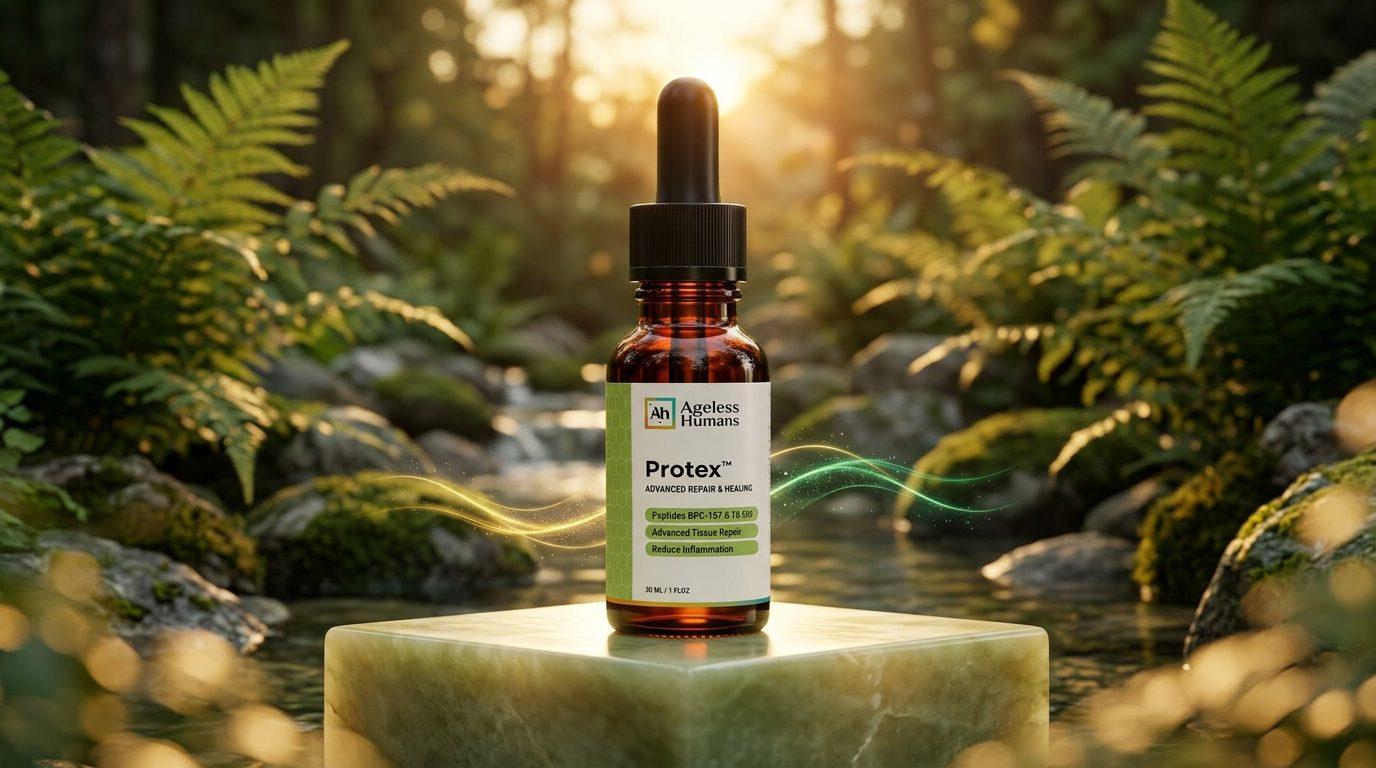
BPC-157 and collagen peptides do different jobs. BPC-157 is a short signaling peptide studied, mostly in animals, for how it may influence the body's own repair processes. Collagen peptides are digested protein fragments that supply raw materials for connective tissue, with a larger body of human research behind them. Asking which is better is like asking whether a foreman or a pallet of bricks matters more. A build needs both.
The short answer: one gives instructions, one supplies materials
BPC-157 is a messenger. Collagen peptides are mostly material. Most "vs" articles miss this point, and it changes how you should think about both.
- BPC-157 (Body Protection Compound-157) is a synthetic chain of 15 amino acids. It is modeled on a fragment of a protein found in human gastric juice. Researchers study it as a signaling molecule, meaning it may influence how cells behave instead of becoming part of tissue.
- Collagen peptides (hydrolyzed collagen) are collagen protein from animal hides, bones, or fish skin, broken into small fragments. Your body digests them into amino acids and small di- and tripeptides. These are rich in glycine, proline, and hydroxyproline, the building blocks of connective tissue.
One may tell the crew what to do. The other stocks the job site. They are not substitutes, so "which one should I take instead of the other?" is usually the wrong question.
What BPC-157 is studied for, and how strong the evidence really is
BPC-157 is studied for supporting the body's natural tissue-repair signaling, especially in tendons, ligaments, muscle, and the gut lining. Nearly all of that research comes from animal and cell studies. Be clear about that before you form expectations.
In preclinical research, scientists have looked at BPC-157 in relation to:
- Blood vessel formation (angiogenesis), which supports nutrient delivery to recovering tissue
- Fibroblast activity and migration. Fibroblasts are the cells that lay down new collagen.
- Growth factor signaling pathways involved in normal tissue remodeling
- Gut lining integrity. This reflects the peptide's origin in gastric juice.
Here is the limitation. Published, controlled human trials are scarce. Animal results are a reason for interest. They do not prove the same effects occur in people, at the same strength, or by the same route of intake. Anyone who tells you BPC-157 is "proven" in humans is overselling it. Anyone who calls it worthless is ignoring a sizable preclinical literature. The honest position sits between those two.
For a closer look at the connective-tissue research specifically, see our breakdown of BPC-157 for joint and tendon support.
What collagen peptides are studied for, and why the evidence is different
Collagen peptides have more human research than BPC-157, mostly on skin, joint comfort, and connective tissue support. That research includes randomized, placebo-controlled trials. The results are generally modest and depend on the product and the population studied.
Collagen's main research areas include:
- Skin, including elasticity and hydration
- Joint comfort during activity, often in active adults
- Tendon and ligament support, sometimes studied alongside exercise and vitamin C (a required cofactor for your body's own collagen production)
- Bone and body-composition outcomes, usually combined with resistance training
Collagen is also not purely a pile of bricks. Some small peptides that survive digestion, such as prolyl-hydroxyproline, appear in the bloodstream after people take collagen. Researchers are studying whether these fragments also act as mild signals to fibroblasts. So collagen may do some light messaging of its own. Its core job, though, is still supplying amino acids your body uses to build and maintain connective tissue.
One caveat: eating collagen does not mean it lands directly in your knee. Your body breaks it down and sends the parts where it needs them.
Why the "vs" comparison misleads
Comparing BPC-157 to collagen peptides pits a signal against a substrate, and the head-to-head framing creates three common mistakes.
1. Judging them by the same yardstick. Collagen is often judged on whether you "get enough protein building blocks." BPC-157 is judged on whether it influences cell behavior. A gram-for-gram comparison means nothing because they don't do the same thing. 2. Assuming the evidence is equal. Collagen has human trials. BPC-157 has mostly animal data. Lumping them together either inflates BPC-157 or undersells collagen. 3. Thinking you must pick one. Tissue maintenance needs signals and materials. Strong signaling with too few raw materials, or plenty of materials with weak signaling, leaves part of the job undone.
A better question is: What part of the recovery process am I trying to support, and what does the evidence actually say for that part?
How they could complement each other
In principle, BPC-157 and collagen peptides support different stages of the same process, so they fit together logically. Connective tissue remodeling needs three things:
- Signals that recruit cells and support blood flow to the area. This is where BPC-157 research focuses.
- Raw materials such as glycine, proline, and hydroxyproline to build new collagen. This is collagen peptides' lane.
- Cofactors and load. Vitamin C supports collagen synthesis. Appropriate movement tells tendons and ligaments how to organize new fibers.
To be clear, we are not aware of published human trials testing BPC-157 and collagen together. This complementary logic comes from mechanism, not from a proven combined outcome. It is a reasonable way to think about a stack. It is not a guarantee.
Many people also pair BPC-157 with TB-500, a synthetic fragment related to thymosin beta-4. It is studied, again mostly preclinically, for its role in cell migration and tissue remodeling. For a wider view of the options, read our guide to the best peptides for recovery.
Side-by-side: BPC-157 vs collagen peptides
Use this as a quick reference, not a scorecard.
- Category: BPC-157 is a synthetic signaling peptide. Collagen peptides are a hydrolyzed food protein.
- Primary role: BPC-157 may influence repair signaling. Collagen supplies connective-tissue building blocks.
- Size: BPC-157 is 15 amino acids. Collagen peptides are a mix of fragments that digest into amino acids and small peptides.
- Main evidence base: BPC-157 research is mostly animal and cell studies. Collagen has multiple human randomized trials.
- Typical focus areas: BPC-157 is studied for tendons, ligaments, muscle, and gut lining. Collagen is studied for skin, joint comfort, and connective tissue.
- Amount used: BPC-157 is used in microgram amounts. Collagen is used in gram amounts, like a protein. Follow the label on whatever product you use.
- Sport status: BPC-157 is on the World Anti-Doping Agency's prohibited list. Collagen is a standard food protein.
That last point matters. Competitive athletes subject to drug testing should not use BPC-157. Check current rules with your sport's governing body.
How to choose, and how to buy either one wisely
Start with your goal and your tolerance for early-stage evidence, then demand proof of quality.
- If you want an established, food-based foundation for skin and connective tissue, collagen peptides are the conservative starting point.
- If you are comfortable with promising but mostly preclinical research and want to support the signaling side of recovery, BPC-157 (often with TB-500) is the one to consider.
- If you want both sides covered, using them together is a mechanism-based choice. Introduce one at a time so you can tell how each affects you.
Quality matters more for peptides than for most supplements. BPC-157 sold online varies widely in purity and labeling. Look for:
- A Certificate of Analysis (COA) for the specific lot, from an independent third-party lab
- A known manufacturer and facility, not an anonymous reseller
- Clear label directions. Never exceed them.
- "Research use only" warnings, which tell you a product is not made for human consumption
If you are pregnant, nursing, taking medication, or managing a health condition, talk with your healthcare provider before adding either one.
Frequently asked questions
Is BPC-157 a type of collagen?+
No. BPC-157 is a synthetic 15-amino-acid peptide modeled on a fragment of a protein found in gastric juice, and it is studied as a signaling molecule. Collagen peptides are digested fragments of collagen protein that supply building blocks like glycine and proline. They are different compounds with different roles.
Can you take BPC-157 and collagen peptides together?+
Many people do, because the two support different parts of connective tissue maintenance: BPC-157 is studied for repair signaling, and collagen supplies raw materials. No published human trials have tested the combination, so the rationale is mechanistic rather than proven. Follow each product's label and check with your healthcare provider if you take medications.
Which has more scientific evidence, BPC-157 or collagen peptides?+
Collagen peptides have more human evidence, including randomized placebo-controlled trials on skin and joint comfort, though results are generally modest. BPC-157 research is mostly animal and cell studies, with very little controlled human data. That makes collagen the better-established option and BPC-157 the earlier-stage one.
Does collagen do the same thing as BPC-157 for tendons?+
Not exactly. Collagen peptides supply amino acids your body can use to build and maintain tendon tissue, and some studies pair them with exercise and vitamin C. BPC-157 is studied, mainly in animals, for influencing the cell signaling and blood flow involved in tissue remodeling. One supports the materials, the other the instructions.
Is BPC-157 allowed in sports?+
No. BPC-157 is on the World Anti-Doping Agency's prohibited list, so athletes subject to drug testing should not use it. Collagen peptides are a standard food protein and are not restricted the same way. Always confirm current rules with your sport's governing body.
What should I look for when buying BPC-157?+
Look for a lot-specific Certificate of Analysis from an independent third-party lab, a known manufacturer with a registered facility, and clear label directions. Avoid products labeled "for research use only," since they are not intended for human consumption. Purity varies widely in this category, so verification matters.