
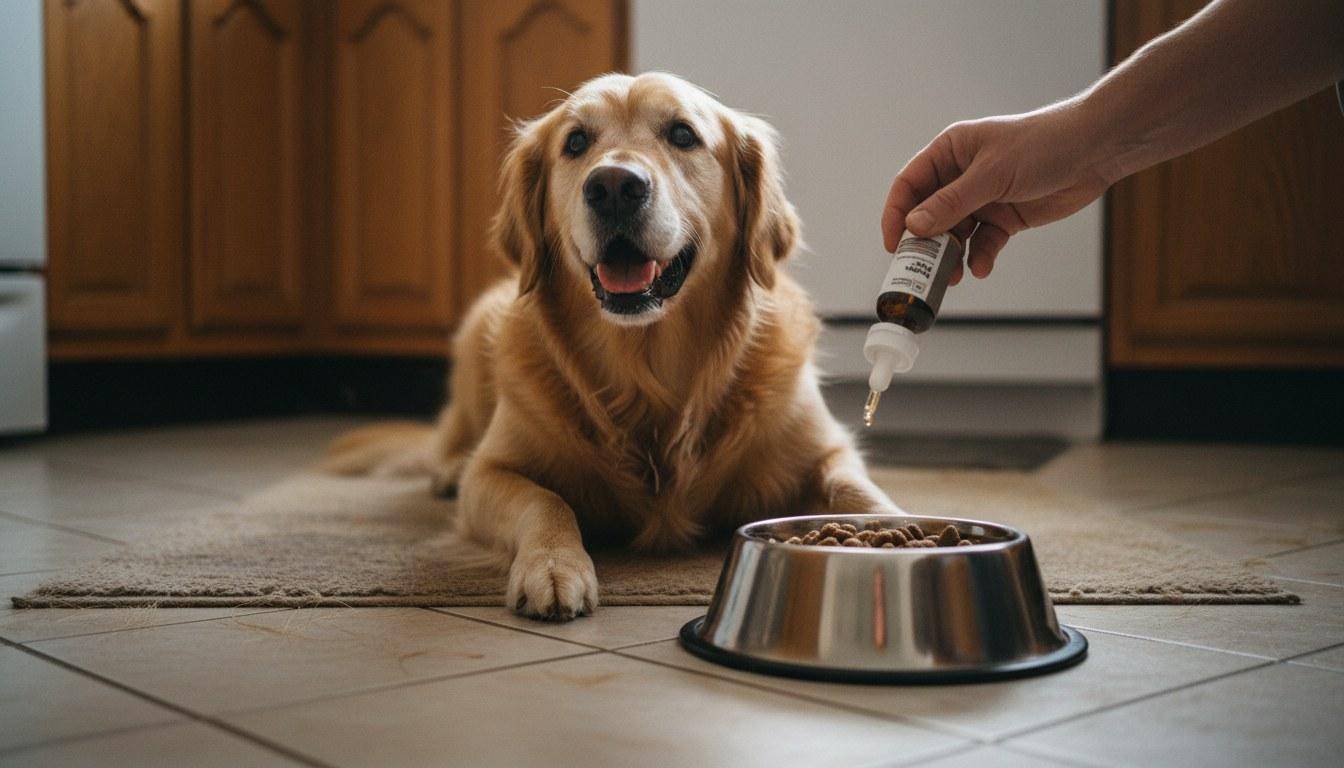
For most dogs, glucosamine is the reasonable first step for everyday joint support. It is widely used, generally well tolerated, and has a long track record in canine supplements. BPC-157 is a newer peptide studied mainly in lab animals for connective tissue support, so it is better treated as a vet-discussed option for active or recovering dogs than as a replacement for the glucosamine default.
The Short Answer: Start With the Default, Discuss Peptides With Your Vet
Glucosamine is the default for a reason. BPC-157 is the newer option worth a conversation. If your dog is aging, slowing down on walks, or simply needs routine joint maintenance, glucosamine is the most established place to start. It has been used in canine products for decades, and most vets know it well.
BPC-157 belongs in a different category. It is a short peptide that researchers have studied for its role in supporting tendons, ligaments, muscle, and the gut lining, almost entirely in lab-animal models. That research is interesting. It is not the same as decades of real-world canine use. Owners usually look at peptides when their dog is very active, recovering from hard exertion, or no longer seems to get much from a basic joint chew.
The honest framing is that these two are not direct rivals. Glucosamine supplies building material for cartilage. BPC-157 is studied as a signaling molecule involved in the body's own tissue-maintenance processes. Neither replaces a veterinary exam, and the right choice depends on your dog's age, activity, health history, and current medications.
What Glucosamine Does, and What It Doesn't
Glucosamine is a natural amino sugar the body uses to build cartilage components, and supplements aim to support that supply. Cartilage is the smooth tissue that cushions joints. Glucosamine is a raw material for glycosaminoglycans, molecules that help cartilage hold water and stay resilient. Most supplemental glucosamine comes from shellfish shells, though some versions are made by fermentation.
In dog products, glucosamine rarely appears alone. You will often see it paired with:
- Chondroitin, another cartilage building block
- MSM, a sulfur compound common in joint formulas
- Omega-3 fatty acids from fish oil, studied for joint comfort and coat health
- Green-lipped mussel, a whole-food source of several of these compounds
Here is the honest part. Research on glucosamine in dogs is mixed. Some studies suggest a benefit for mobility and comfort, and others show modest or unclear effects. Many vets still recommend it because it is low-risk and well tolerated, and because some owners report clear improvements. Expectations matter too. Glucosamine works slowly, so owners usually judge it over weeks of consistent use, not days.
What glucosamine does not do: it does not rebuild a damaged joint, and it is not a fix for sudden pain or injury. It is a maintenance tool.
What BPC-157 Is, and What the Research Actually Shows
BPC-157 is a synthetic 15-amino-acid peptide based on a sequence found in a protective protein in stomach fluid. It has been studied mostly in rodents for connective tissue and gut support. The name stands for Body Protection Compound. In lab studies, researchers have looked at how it may interact with blood vessel formation, growth factor signaling, and the repair processes in tendons, ligaments, and muscle.
The gaps matter just as much:
- Most published research is preclinical. It uses lab animals, not dogs in a clinic.
- Controlled canine trials are scarce. There is not a body of dog-specific evidence comparable to glucosamine.
- It is not an FDA-approved drug for people or animals. In the U.S. it is sold as a research compound or within supplement formulas, which puts it in a regulatory gray area.
- Long-term safety data in dogs is limited.
One reason BPC-157 shows up in oral pet products is that researchers have noted it appears relatively stable in gastric conditions. That is unusual for peptides, which often break down in the gut. It is a promising detail, not proof of results in your dog.
Many canine peptide formulas pair BPC-157 with TB-500, a synthetic fragment of thymosin beta-4. TB-500 has also been studied in lab models for tissue repair and flexibility. For a deeper look at the peptide itself, see our full guide to BPC-157 for dogs.
Side-by-Side: Glucosamine vs BPC-157 for Dogs
Glucosamine wins on track record and simplicity. BPC-157 is newer, more targeted at soft tissue, and less proven in dogs. Here is how they compare on the factors owners actually care about.
- What it is: Glucosamine is an amino sugar, a cartilage building block. BPC-157 is a synthetic peptide studied as a tissue-signaling molecule.
- Main focus: Glucosamine targets cartilage and everyday joint maintenance. BPC-157 is studied for tendons, ligaments, muscle, and the gut lining.
- Evidence in dogs: Glucosamine has mixed but real canine research and long clinical use. BPC-157 has mostly lab-animal research and little dog-specific data.
- Vet familiarity: Nearly every vet knows glucosamine. Familiarity with peptides varies widely, so expect more questions.
- Typical user: Glucosamine suits senior dogs and routine maintenance. BPC-157 draws interest from owners of active, athletic, or recovering dogs.
- Speed: Glucosamine is a slow, cumulative build. Peptide timelines in dogs are not well established.
- Regulatory clarity: Glucosamine is a common, well-understood supplement ingredient. BPC-157 sits in a gray area.
- Quality risk: Both vary by maker. Quality is especially important for peptides, where purity and dosing accuracy are harder to verify.
Neither column is a medical treatment. Both are supplements meant to support normal structure and function.
Which One Fits Your Dog?
Match the supplement to your dog's situation, and let your vet confirm the plan. Here are the common scenarios.
Senior dog, general stiffness, no injury. Start with a quality glucosamine formula, ideally one that also has chondroitin or omega-3s. It is the conservative, well-understood choice.
Active, sporting, or working dog. Dogs that run, jump, hike, or compete put steady load on tendons and ligaments. This is where owners most often ask their vet about peptide support alongside a basic joint formula.
Dog on glucosamine that seems to have plateaued. Don't simply stack more products. Get a recheck first. A plateau can signal something that needs a diagnosis, not another supplement.
Puppy, pregnant or nursing dog, or a dog on prescription medication. Talk to your vet before adding anything. This applies most of all to a newer compound like BPC-157, where data in these groups is essentially absent.
Dog with a diagnosed condition. Supplements may support overall wellness, but they are not a substitute for the care plan your vet builds. Bring every product to that conversation.
Safety First: Red Flags and Quality Checks
Some signs mean your dog needs a vet today, not a supplement. See your vet promptly if your dog:
- Starts limping suddenly or won't put weight on a leg
- Has a swollen, hot, or painful joint
- Yelps when touched or moved
- Shows changes in appetite, energy, or bathroom habits along with stiffness
Supplements are for supporting a healthy dog. They are not for masking new pain.
Quality checks for any joint product:
- Use pet-formulated products only. Human supplements can contain ingredients that are unsafe for dogs. Xylitol is a well-known example.
- Look for third-party testing and a Certificate of Analysis (COA) you can actually read.
- Know where it is made. Manufacturing transparency matters, especially for peptides.
- Check allergens. Most glucosamine comes from shellfish, which matters for dogs with seafood sensitivities.
- Introduce one new product at a time so you can tell what is helping and what might be upsetting your dog's stomach.
- Follow label directions and your vet's guidance. Never improvise amounts.
For a complete checklist on evaluating canine peptide products, read our peptides for dogs safety guide.
How to Talk to Your Vet About Peptides
Come prepared with the product label, a clear goal, and a few weeks of notes on your dog's baseline. Vets give better guidance when they see exactly what is in the bottle and why you are interested.
Questions worth asking:
1. Is there anything in my dog's health history or medications that makes this a poor fit? 2. Should we try glucosamine first, or does my dog's activity level justify discussing peptides? 3. What changes should I watch for, good or bad? 4. When should we check in to decide whether it's worth continuing?
Track a simple mobility log before you start: how easily your dog rises, handles stairs, jumps into the car, and finishes a usual walk. Notes like these make any change easier to judge objectively.
If you and your vet decide to explore peptide support, choose a formula made specifically for dogs. Our Protex Pets BPC-157 + TB-500 for dogs is made in Ageless Humans' FDA-registered facility in Carlsbad, California. Every lot is third-party lab tested with a COA, so you can share exactly what is in it with your vet.
Can You Use Glucosamine and BPC-157 Together?
Some owners do layer them, but there is very little research on the combination, so it is a decision to make with your vet. In principle the two have different roles. Glucosamine supplies cartilage building material, and BPC-157 is studied as a tissue-signaling peptide. That is why some owners see them as complementary rather than redundant.
If your vet agrees to try both, add them one at a time. Give the first product a fair trial before you introduce the second, and keep your mobility log going. If something changes, good or bad, you will know which product to credit.
One more note for owners: keep human and pet products clearly separated. If you are curious about peptides for your own recovery routine, Protex BPC-157 and TB-500 oral peptides is the human formula. It is not meant for your dog. Your dog's version is formulated for dogs.
Frequently asked questions
Is BPC-157 better than glucosamine for dogs?+
BPC-157 isn't proven better than glucosamine for dogs. Glucosamine has a long track record and mixed but real canine research. BPC-157 has been studied mostly in lab animals and has little dog-specific data. For routine joint maintenance, glucosamine is the usual starting point, while peptides are a newer option to discuss with your vet.
Is BPC-157 safe for dogs?+
Long-term safety data for BPC-157 in dogs is limited because most research has been done in lab animals. That makes vet guidance, a pet-specific formula, and third-party testing with a COA especially important. Talk to your vet before using it, particularly if your dog is a puppy, pregnant, or on medication.
How long does glucosamine take to work in dogs?+
Glucosamine works gradually, so owners typically judge it over several weeks of consistent use rather than days. Keeping a simple mobility log can help you notice subtle changes. If you see no difference after a fair trial, ask your vet whether to adjust the plan.
Can I give my dog human BPC-157 or human glucosamine?+
Use products formulated for dogs. Human supplements can contain flavorings, sweeteners, or other ingredients unsafe for dogs, such as xylitol, and their amounts are not designed for pets. Always choose a pet-specific product and follow its label directions.
Can dogs take BPC-157 and glucosamine together?+
Some owners use both because they play different roles: glucosamine supplies cartilage building material, and BPC-157 is studied as a tissue-signaling peptide. Research on the combination is very limited, so get your vet's approval first. Introduce one product at a time so you can tell which one is making a difference.
When should I see a vet instead of trying a joint supplement?+
See your vet promptly if your dog limps suddenly, won't bear weight, has a swollen or hot joint, yelps when touched, or shows changes in appetite or energy. These signs need a proper exam. Joint supplements are meant to support a healthy dog, not to address new or sudden pain.