
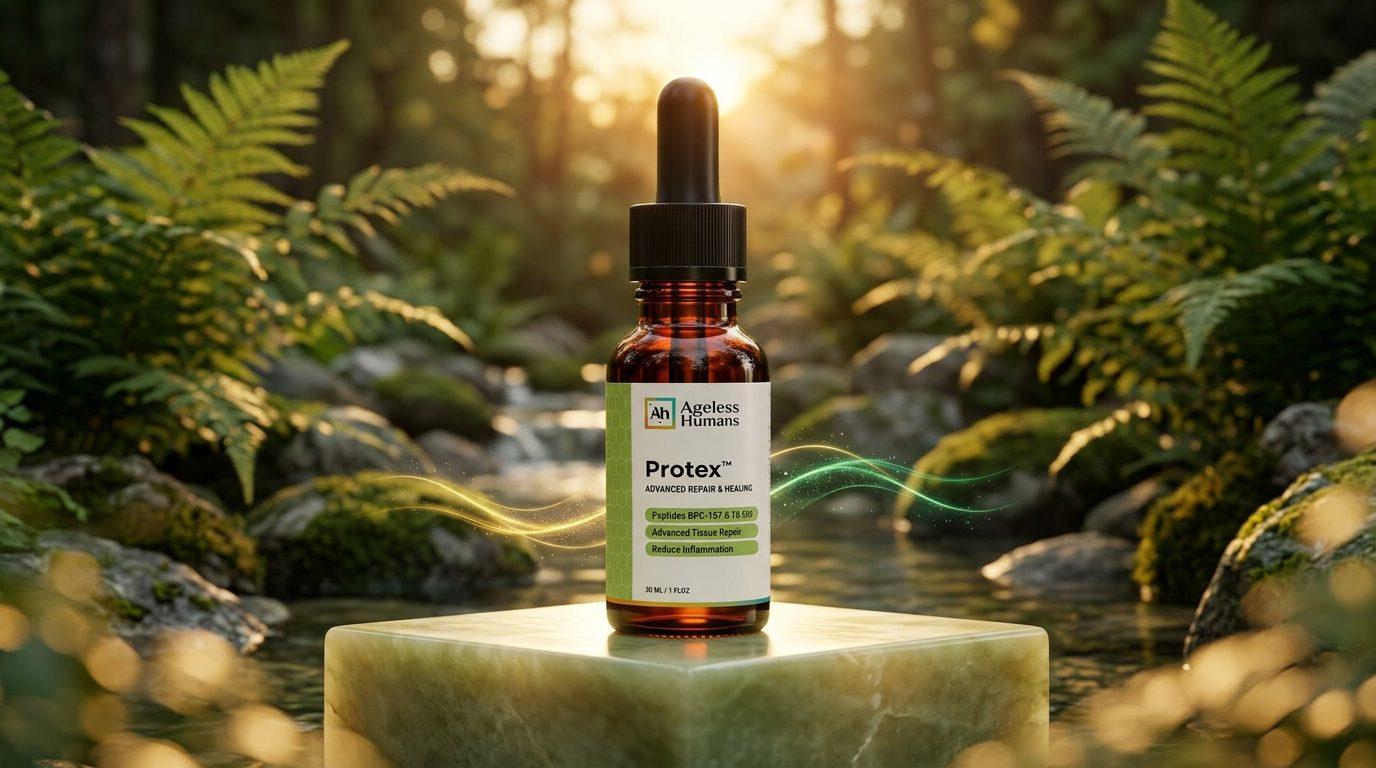
BPC-157 is a 15-amino-acid peptide fragment derived from a protein in human gastric juice. It is mostly studied for targeted, tissue-specific repair signaling, including blood vessel formation, tendon and ligament cell activity, and gut lining integrity. TB-500 is a synthetic fragment of thymosin beta-4, a protein that binds actin. It is studied for how cells move and organize throughout the body. In short, BPC-157 is the targeted specialist and TB-500 is the systemic generalist, which is why many people pair them instead of choosing one.
The Short Answer: Targeted Signaling vs. Body-Wide Cell Movement
BPC-157 and TB-500 work through different mechanisms, so the useful question is which job you need done, not which peptide is better. BPC-157 research centers on signaling pathways tied to blood vessel growth, nitric oxide balance, and fibroblast activity in specific tissues. TB-500 research centers on actin, the structural protein cells use to change shape and migrate.
That difference gives you a practical frame:
- BPC-157: studied for where repair signaling happens. It is often discussed for tendons, ligaments, and the gut lining.
- TB-500: studied for how cells reach and organize in tissue. It is often discussed for broad, whole-body recovery and flexibility.
- Together: the two pathways are complementary rather than redundant. That is the core reason stacks exist.
One caveat runs through this whole article. Most of the mechanistic research on both peptides comes from cell and animal studies. Human data is limited. Anyone claiming certainty is overselling.
What BPC-157 Is: A Gut-Origin Peptide Studied for Targeted Repair
BPC-157 ("Body Protection Compound") is a stable 15-amino-acid sequence derived from a larger protein found in human gastric juice. That gut origin matters for two reasons. It explains why so much early research looked at the stomach and intestinal lining. It also explains why BPC-157 is unusually stable in acidic digestive conditions compared with many peptides.
In preclinical research, BPC-157 has been studied for its interaction with several repair-related pathways:
- Angiogenesis signaling: activity linked to VEGF receptor pathways, which govern new blood vessel formation in recovering tissue.
- Nitric oxide system: a modulating role in the NO pathway, which supports healthy blood flow.
- Tendon and ligament fibroblasts: cell studies looking at fibroblast survival, migration, and growth hormone receptor expression.
- Gut barrier integrity: a long line of animal research on the stomach and intestinal lining.
The "localized" label needs one honest correction. BPC-157 is not confined to one spot. Animal studies have given it many ways and observed effects in multiple tissues. "Localized" describes its research focus on specific tissue repair signaling, not a physical limit on where it goes.
What TB-500 Is: An Actin-Binding Fragment Studied System-Wide
TB-500 is a synthetic peptide based on the active region of thymosin beta-4 (Tβ4), a 43-amino-acid protein present in nearly every cell type in the body. Tβ4's main known job is binding G-actin, the single-unit form of actin. That binding regulates how cells build and break down their internal scaffolding, and that scaffolding controls how cells move.
Cell movement is the heart of TB-500 research. Repair depends on the right cells reaching the right place: fibroblasts, endothelial cells that build blood vessels, and supporting cells. Research suggests Tβ4 and its fragments help coordinate that migration. TB-500 has been studied in animal and cell models of:
- Cell migration and tissue remodeling after strain
- Flexibility and range of motion in soft tissue
- Blood vessel formation alongside cell migration
- Skin and connective tissue repair processes
Because Tβ4 is found throughout the body and works at the level of basic cell mechanics, TB-500 is usually described as systemic. For a deeper look at what the research covers, see our full breakdown of TB-500 benefits.
BPC-157 vs TB-500 Side by Side
The clearest way to separate them is by origin, mechanism, and research focus.
| BPC-157 | TB-500 | |
|---|---|---|
| Origin | Fragment of a gastric juice protein | Fragment of thymosin beta-4 |
| Size | 15 amino acids | Short synthetic fragment of a 43-amino-acid protein |
| Core mechanism studied | Growth factor, angiogenesis, and nitric oxide signaling | Actin binding and cell migration |
| Research profile | Targeted: tendons, ligaments, gut lining | Systemic: whole-body tissue remodeling and flexibility |
| Stability in digestion | Notably stable in gastric conditions | Less studied for oral stability |
| Human evidence | Limited | Limited |
Two rows deserve attention. The stability row matters if you are weighing oral formats, because BPC-157's gut origin gives it a stronger rationale for oral use than most peptides. The human evidence row is identical for a reason. Neither peptide has the large controlled human trials that would let anyone make firm outcome promises.
What the Research Does and Doesn't Show
Research suggests both peptides influence real biological repair pathways, but the evidence is mostly preclinical. That means cell cultures and animal models, not large human trials. This is the most important point in any honest comparison, and most pages skip it.
What the research supports, with appropriate hedging:
- Both peptides interact with known repair-related biology. They are not speculative compounds with no proposed mechanism.
- Their mechanisms differ in ways that make a complementary pairing biologically logical.
- BPC-157 shows unusual stability in gastric environments.
What the research does not establish:
- That results in rodents or cell dishes carry over to people at the same magnitude.
- Head-to-head human data comparing BPC-157 and TB-500 directly.
- Controlled human evidence that a combination outperforms either peptide alone.
Regulators have taken notice. Both compounds appear on the World Anti-Doping Agency's prohibited list, so competitive athletes subject to testing should avoid them and check the current WADA list. Anyone who is pregnant, nursing, taking medication, or managing a health condition should talk with a qualified clinician first. Follow label directions only.
Why BPC-157 and TB-500 Are Stacked Together
People stack BPC-157 and TB-500 because their research pathways cover different parts of the recovery process. BPC-157 is studied for the signaling that tells tissue to rebuild, such as blood supply and fibroblast activity. TB-500 is studied for the cell movement that delivers repair cells where they're needed. One emphasizes the signal, the other the logistics.
A simple way to picture it is a construction site. BPC-157 research looks at the permits and supply lines, meaning blood vessels and growth signaling. TB-500 research looks at the crews moving around the site, meaning cell migration. A project needs both.
This pairing is a mechanistic rationale, not a proven outcome. No large human trial has validated the combination. The logic is sound enough, though, that the stack has become the default approach for many people focused on active recovery. For protocols, timing considerations, and common mistakes, read our dedicated BPC-157 and TB-500 stack guide.
How to Choose: A Simple Decision Framework
Choose based on whether your goal is specific or general, and whether you prefer one variable or a combined approach. Use this logic:
- Your focus is one area, such as a specific tendon, ligament, or gut comfort: BPC-157 lines up most closely with that research profile.
- Your focus is whole-body recovery, flexibility, or general training wear and tear: TB-500's systemic, actin-based research profile fits better.
- You want to support both targeted repair signaling and body-wide cell movement: a combined BPC-157 and TB-500 formula covers both pathways in one routine.
- You prefer oral over other formats: BPC-157 has the stronger stability rationale, so oral formulas built around it make sense.
- You compete in tested sports: skip both and check WADA rules.
Most people asking "BPC-157 or TB-500?" are recovering from hard training and want broad support, not a single-pathway experiment. That is why combined formulas are popular. Ageless Humans' Protex BPC-157 and TB-500 oral peptides pair both in a capsule format, so you don't have to choose between targeted and systemic support.
Quality Matters More With Peptides Than Almost Any Other Supplement
With research peptides, what's actually in the bottle matters as much as the molecule on the label. Peptides are sensitive to manufacturing conditions, purity, and degradation. The category also has more than its share of unverified sellers. Before buying any BPC-157 or TB-500 product, check these four things:
1. Where it's made. Ageless Humans products are made and manufactured in our own FDA-registered facility in Carlsbad, California. 2. Third-party testing. Every lot is tested by an independent lab, with a Certificate of Analysis (COA) available. 3. Clear labeling. Look for disclosed peptide content and plain label directions, not vague "proprietary blends." 4. A real guarantee. We back every order with a 60-day money-back guarantee.
Recovery is more than one compound. Sleep, protein intake, training load, and hydration all shape how you bounce back. If you want a structured starting point that pairs peptide support with recovery basics, The Recovery Starter Pack bundles core recovery products into one routine.
Frequently asked questions
What is the main difference between BPC-157 and TB-500?+
BPC-157 is a 15-amino-acid peptide derived from a protein in human gastric juice. It is studied mainly for targeted repair signaling, such as blood vessel formation and tendon, ligament, and gut lining support. TB-500 is a synthetic fragment of thymosin beta-4 that binds actin and is studied for body-wide cell migration and tissue remodeling. BPC-157 is the targeted peptide and TB-500 is the systemic one.
Is BPC-157 or TB-500 better for recovery?+
Neither is universally better, because they are studied for different mechanisms. BPC-157 aligns with targeted, tissue-specific recovery support, while TB-500 aligns with general, whole-body recovery and flexibility. Many people combine them to cover both pathways. Human research on both peptides is still limited.
Can you take BPC-157 and TB-500 together?+
Yes, BPC-157 and TB-500 are commonly combined because their research pathways complement each other. BPC-157 is studied for repair signaling and TB-500 for cell movement. This pairing rests on mechanistic logic rather than large human trials. Follow the label directions on any combined product, and consult a clinician if you take medications or have a health condition.
Does oral BPC-157 work?+
BPC-157 is notably stable in gastric conditions, which reflects its origin in a gastric juice protein. That stability gives oral BPC-157 a stronger rationale than most peptides, and animal research has used oral administration. Controlled human data on oral effectiveness is limited, so expectations should stay realistic.
Are BPC-157 and TB-500 banned in sports?+
Yes. Both BPC-157 and TB-500 (as a thymosin beta-4 derivative) appear on the World Anti-Doping Agency's prohibited list. Athletes subject to drug testing should avoid both and check the current WADA list and their sport's own rules before using any peptide product.
How long does it take to notice BPC-157 or TB-500?+
There is no reliable human data establishing a standard timeline for either peptide, and individual experiences vary with training load, sleep, nutrition, and consistency. Anyone promising a specific timeline is going beyond the evidence. Use any product as directed on the label and give your overall recovery routine consistent time.