
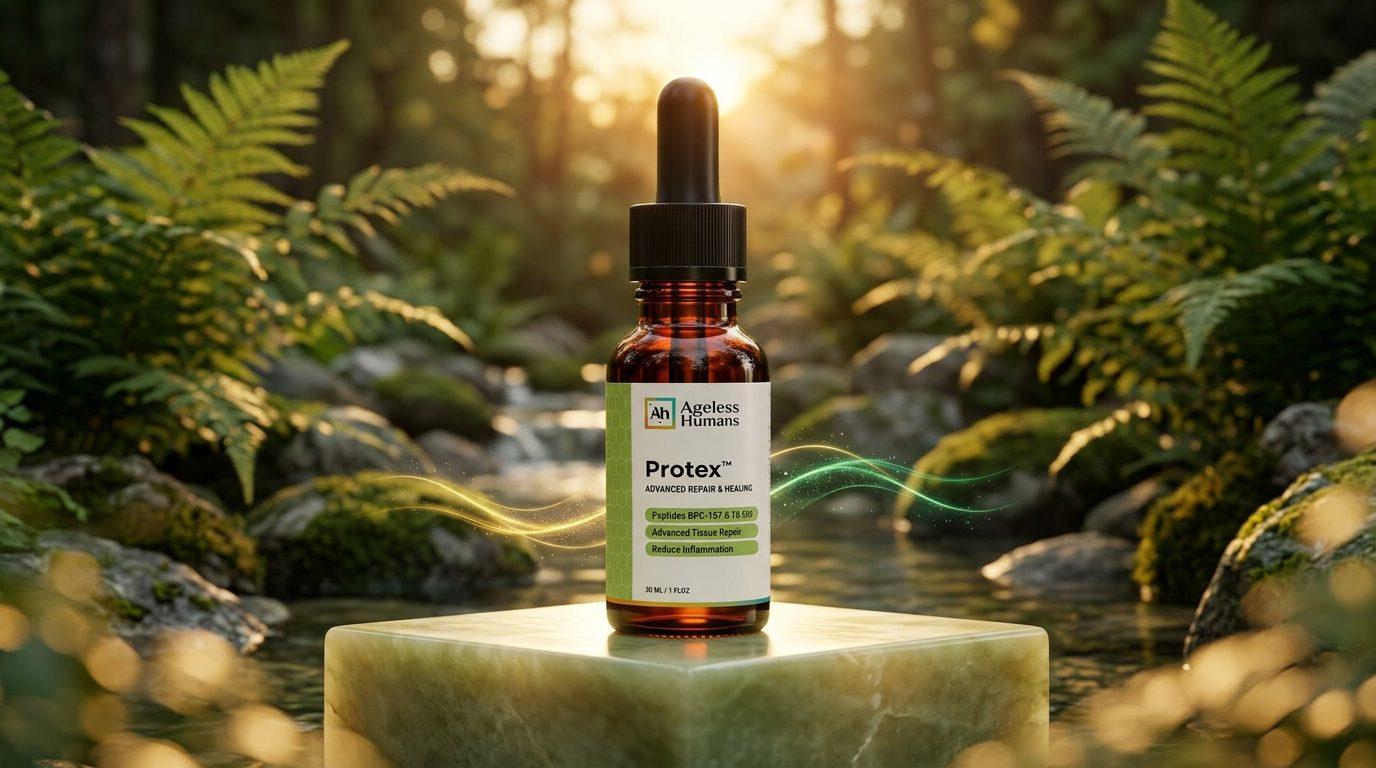
GHK-Cu and hyaluronic acid aren't competitors. They do two different jobs. Hyaluronic acid is a hydrator: it pulls water into the skin's surface so skin looks plumper and smoother right away. GHK-Cu is a signaling peptide, studied for how it supports skin's own renewal processes and the look of firmness over time. For most routines, apply hyaluronic acid first on damp skin, then GHK-Cu, then seal with a moisturizer. Start with whichever one matches your main concern.
The Short Answer: Hydration Works Now, Signal Works Over Time
Hyaluronic acid (HA) changes how your skin looks today. GHK-Cu is aimed at how your skin looks in a few months. That is the whole difference, and it's why asking which one is better misses the point.
HA is a humectant. It attracts and holds water, so dehydrated skin looks fuller and fine lines from dryness soften within minutes. When you stop using it, that effect fades. It doesn't instruct skin cells to do anything.
GHK-Cu is a messenger. It's a small copper-binding peptide that research suggests can influence how skin cells behave, including processes tied to the skin's structural proteins. Results, when people notice them, show up gradually as improved texture, firmness, and overall tone.
One gives water, the other gives instructions. Skin that is well hydrated and getting the right signals usually looks better than skin getting only one of them.
What Hyaluronic Acid Actually Does (and Doesn't Do)
Hyaluronic acid is a water magnet that supports surface hydration and a smoother, plumper look. Your skin already makes it. Topical HA adds more to the surface layers, where it binds water and helps reduce the tight, crepey look of dehydrated skin.
What matters in a formula:
- Molecular weight. High-molecular-weight HA sits on the surface and forms a hydrating film. Lower-molecular-weight forms are studied for reaching a bit deeper. Many good serums blend several sizes.
- Damp application. HA works best when there is water nearby to grab. Applied to bone-dry skin in a dry climate, it can feel tight instead of dewy.
- A seal on top. Without an occlusive or moisturizer over it, some of that water can evaporate.
What HA does not do: it doesn't signal cells to rebuild, it doesn't support firmness at a structural level, and its effects don't build up much over time. It is a reliable, low-risk foundation, and that's a strong reason to use it. It just isn't a long-game ingredient.
What GHK-Cu Actually Does (and What the Research Shows)
GHK-Cu is a naturally occurring copper peptide studied for supporting skin renewal, the look of firmness, and smoother texture. It is found in human plasma, and research suggests levels drop as we age. That decline is one reason it gets attention in longevity-focused skincare.
In lab research, GHK-Cu has been studied for its role in signaling around collagen and other structural components of skin, and for its connection to antioxidant activity. Smaller cosmetic studies have looked at topical use for the appearance of fine lines, firmness, and skin density. We break this down in detail in our guide to GHK-Cu benefits.
To be clear about the evidence:
- Strong: the mechanism and lab data are interesting and consistent.
- Moderate: topical cosmetic studies exist, but they're smaller and shorter than you'd want.
- Unknown: how every commercial formula performs, because stability, concentration, and delivery vary a lot.
That's why formulation and testing matter as much as the ingredient name on the label.
Why It's Not Either/Or
Use both if you can, because they support different parts of the same goal. Hydrated skin is more comfortable and better able to handle an active routine. Signaling ingredients do their job on skin that isn't stressed and flaking.
Think of it like training and water. Training sends the signal to get stronger. Water keeps you functioning while that happens. Nobody asks whether to train or drink water.
The pairing is practical too:
- They're compatible. HA is gentle and doesn't react with copper peptides.
- HA offsets dryness. If any active leaves your skin feeling tight, a hydrating layer helps keep skin comfortable.
- The timelines cover each other. HA gives you visible results in week one, which helps you stay consistent while slower GHK-Cu effects build.
For how these two fit into a full routine with sun protection, cleansing, and lifestyle basics, see our skin longevity guide.
Layering Order: The Routine That Works
Apply thinnest to thickest: hyaluronic acid on damp skin, then GHK-Cu, then moisturizer, then SPF in the morning. If your GHK-Cu comes in a cream, it can be your moisturizer step.
Evening routine:
1. Cleanse with something gentle. Leave skin slightly damp. 2. Hyaluronic acid serum. Press a few drops into damp skin. 3. GHK-Cu. If it's a serum, apply it next. If it's a cream, go straight to step 4 with it. 4. Moisturizer to seal in water and actives (skip if your GHK-Cu cream is rich enough).
Morning routine:
1. Gentle cleanse or water rinse. 2. Hyaluronic acid on damp skin. 3. GHK-Cu, if the label directs daytime use. 4. Moisturizer. 5. Broad-spectrum sunscreen. Non-negotiable. No peptide can keep up with daily sun damage to skin's appearance.
Give each layer 30 to 60 seconds to settle. You don't need long waits. You just want each step absorbed enough that the next one doesn't pill.
What Not to Mix With GHK-Cu
Keep GHK-Cu separate from strong exfoliating acids and pure vitamin C, and alternate it with retinoids if your skin is sensitive. HA, on the other hand, gets along with almost everything.
General formulator guidance:
- AHAs and BHAs (glycolic, lactic, salicylic): a low pH may affect copper peptide stability. Use acids on different nights or at a different time of day.
- L-ascorbic acid (pure vitamin C): many formulators suggest separating them. Vitamin C in the morning, GHK-Cu at night is a common split.
- Retinoids: not chemically incompatible, but both are active. If you're new to either, alternate nights first.
- Niacinamide, ceramides, peptides, HA: generally fine to layer.
When in doubt, follow your product label and introduce one new active at a time. Patch test on your jaw or inner arm for a few days before using it on your full face.
Who Should Start Where
Start with hyaluronic acid if your skin feels tight or dry. Start with GHK-Cu if hydration is already handled and you care most about firmness and texture. Once one feels routine, add the other.
Start with hyaluronic acid if:
- Your skin feels tight after cleansing or looks dull and crepey.
- You live in a dry climate or spend a lot of time in heated or air-conditioned rooms.
- You're new to skincare and want an easy, low-risk first step.
Start with GHK-Cu if:
- Your skin already feels comfortable and hydrated.
- Your main goals are the look of firmness, smoother texture, and more even tone.
- You're building a longer-term routine focused on how skin ages.
Use both from the start if:
- You're 35 or older and want visible hydration now plus support over time.
- You already tolerate actives well.
Go slower if your skin is reactive. Add one product, wait two weeks, then add the next. Changes from signaling ingredients take consistent use over weeks to months, so judge results at around the 8 to 12 week mark, not after a few days.
How to Choose a Quality GHK-Cu Product
Look for transparent sourcing, third-party testing, and a formula built to keep the peptide stable. Peptides are delicate. A great ingredient in a poorly made formula won't do much.
Check for:
- A Certificate of Analysis (COA) from a third-party lab, so you know what's in each batch.
- Manufacturing transparency. Know where and how it's made.
- Supporting ingredients that support hydration and barrier health, so the formula is pleasant enough to use every day.
- A guarantee. Brands confident in their formula let you test it.
At Ageless Humans, everything is made in our FDA-registered facility in Carlsbad, California. Every lot is third-party lab tested with a COA, and every product comes with a 60-day money-back guarantee. That's enough time to judge a slower-acting ingredient fairly.
Frequently asked questions
Can I use GHK-Cu and hyaluronic acid together?+
Yes. GHK-Cu and hyaluronic acid are compatible and work well together. Hyaluronic acid supports surface hydration, and GHK-Cu is a signaling peptide studied for supporting the look of firmness and smoother texture. Apply hyaluronic acid first on damp skin, then GHK-Cu, then moisturizer.
Which goes first, hyaluronic acid or copper peptides?+
Apply hyaluronic acid first, on slightly damp skin, followed by your copper peptide serum or cream. The general rule is thinnest to thickest. If your GHK-Cu comes in a cream, it can also act as your moisturizer step.
Is GHK-Cu better than hyaluronic acid?+
Neither is better because they do different jobs. Hyaluronic acid hydrates and plumps skin's appearance within minutes, but the effect is temporary. GHK-Cu is studied for supporting skin renewal and the look of firmness over weeks to months. Most people with aging-related skin goals benefit from using both.
What should you not mix with GHK-Cu?+
Avoid applying GHK-Cu at the same time as strong exfoliating acids like glycolic or salicylic acid, or pure L-ascorbic acid vitamin C, since a low pH may affect copper peptide stability. Use those at a different time of day or on alternate nights. Hyaluronic acid, niacinamide, and ceramides are generally fine to layer with it.
How long does GHK-Cu take to show results?+
GHK-Cu works gradually because it's a signaling ingredient, not an instant hydrator. Most people should judge it after about 8 to 12 weeks of consistent use as directed. Hyaluronic acid, by contrast, shows a visible hydration effect right after you apply it.
Can I use GHK-Cu in the morning?+
Many people use GHK-Cu at night, but it can be used in the morning if the product label allows it. If you use vitamin C in the morning, apply GHK-Cu at night to keep them separate. Always finish your morning routine with broad-spectrum sunscreen.